The 60-second version
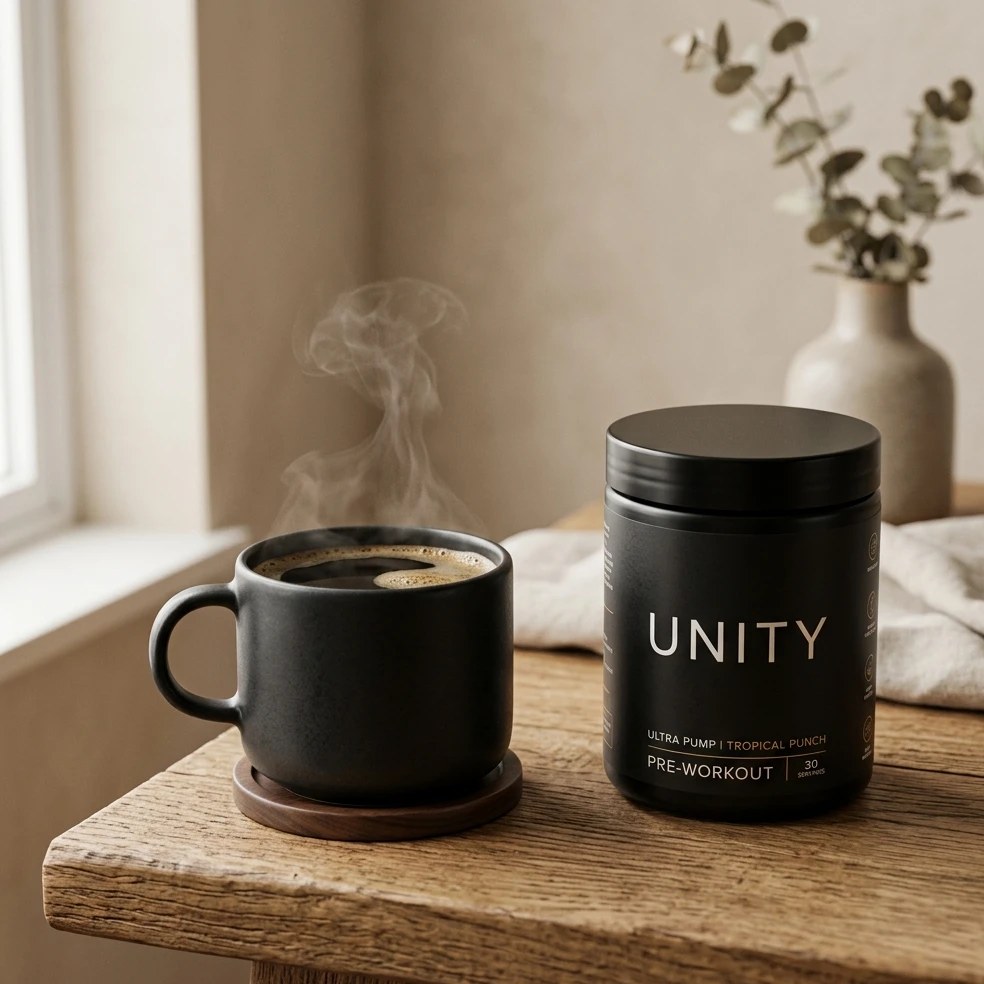
The pre-workout supplement category sells about $20 billion globally each year, with bottles often retailing for CAD$50–90 (30 servings) and individual scoops costing 3–6× what a strong cup of coffee delivers. The published trials, when held side-by-side, show that caffeine is doing 80–95% of the performance work in any pre-workout, regardless of the other ingredients on the label. The ergogenic effect of 3–6 mg/kg of caffeine consumed 30–60 minutes pre-exercise is one of the best-replicated findings in sports science. Black coffee at 80–120 mg per cup delivers 2 cups’ worth of caffeine for under CAD$1, sourced from the same plant. Other “ergogenic” ingredients commonly stacked into pre-workouts — beta-alanine, citrulline, taurine, B-vitamins, herbal extracts — have either modest or unproven effects, and the doses on most labels are below the published threshold for benefit. Pre-workout powders make sense for athletes targeting specific evidence-backed combinations or who want measured caffeine delivery. For most adults, a strong coffee 30 minutes before training delivers the same physiological effect at 5–10% of the cost.
What caffeine actually does
Caffeine is the most thoroughly studied ergogenic substance in the sports science literature. The 2019 IOC consensus on supplements Maughan 2018 classifies caffeine in the small “A-tier” group of substances with strong evidence for performance benefit across endurance, sprint, and resistance exercise. Grgic and colleagues’ 2020 umbrella review of 21 meta-analyses found consistent improvements of 2–5% in maximal strength and power output, 3–7% in endurance performance, and 1–3% in sprint performance after caffeine ingestion Grgic 2020.
The effective dose for most adults is 3–6 mg/kg of body weight — roughly 200–450 mg for a 75 kg adult, taken 30–60 minutes before exercise. The mechanism is multi-pathway: adenosine-receptor antagonism (reducing perceived effort), increased calcium release at the neuromuscular junction (boosting force output), and modest catecholamine release (improving fuel mobilisation). The literature is clear that caffeine works; the marketing question is what else is in the bottle.
“Caffeine is the most well-evidenced supplement ingredient for performance. The optimal dose, timing, and form are well-established. Other pre-workout ingredients add complexity but rarely meaningful additional performance benefit at typical commercial doses.”
— Maughan et al., Br J Sports Med, 2018 (IOC consensus) view source
Black coffee as a caffeine vehicle
The published bioavailability data show coffee delivers caffeine equivalently to capsules. Hodgson and colleagues’ 2013 trial directly compared 5 mg/kg caffeine from coffee vs. 5 mg/kg from anhydrous caffeine in trained cyclists; both groups improved 4-km time-trial performance by ~5% over placebo, with no statistically significant difference between sources Hodgson 2013. The chlorogenic acids and other coffee compounds do not measurably blunt or boost the caffeine effect at the doses studied.
| Source | Caffeine per serving | Approx. cost (CAD) | Per 200 mg cost |
|---|---|---|---|
| Black coffee, drip (8 oz) | 80–120 mg | $0.30–0.80 | $0.50–1.30 |
| Espresso (single shot) | 60–75 mg | $2–3 (cafe) | $5–8 (cafe) / $0.50 (home) |
| Cold brew (12 oz) | 180–220 mg | $0.80–1.50 | $0.90–1.50 |
| Pre-workout scoop (typical) | 150–300 mg | $1.50–3.00 per scoop | $1.00–2.50 |
| Caffeine pill (200 mg) | 200 mg | $0.05–0.10 | $0.05–0.10 |
The caffeine pill is the cheapest evidence-equivalent option; black coffee runs second; pre-workout powders sit at 5–10× the per-mg cost of coffee. The premium is for the other ingredients on the label, the convenience of a measured scoop, and the marketing.
The other ingredients on the label
What about everything else in a typical pre-workout? The published evidence varies sharply by ingredient. Each is assessed below at the doses commonly delivered (per scoop) vs. the doses shown to produce a measurable performance effect:
| Ingredient | Typical scoop dose | Effective dose (literature) | Verdict |
|---|---|---|---|
| Beta-alanine | 1.6–2.0 g | 4–6 g/day for 4–10 weeks | Under-dosed for acute use; works only with chronic loading Saunders 2017 |
| L-citrulline | 1–2 g | 6–8 g pre-exercise | Significantly under-dosed at scoop level Pérez-Guisado 2010 |
| Creatine monohydrate | 1–3 g | 3–5 g/day, timing irrelevant | Acute scoop dose has no benefit; daily loading does Kreider 2017 |
| Taurine | 1–2 g | 1–6 g, mixed evidence | Possible mild ergogenic effect; weakly supported |
| B-vitamins (B6, B12) | 1–5 mg / 1–100 mcg | No exercise-performance dose | No ergogenic effect in non-deficient adults |
| Tyrosine | 500–1000 mg | 100–300 mg/kg in stress conditions | Cognition under stress benefit; performance evidence weak |
| “Proprietary blend” (often herbal) | Unspecified | Varies, dose hidden | Cannot evaluate; avoid for serious training |
Beta-alanine produces the well-known “tingling” sensation many lifters associate with pre-workout. The tingles are real (paresthesia from histamine release); the performance effect requires 4–10 weeks of daily 4–6 g loading, not a one-time scoop. Single-scoop beta-alanine does nothing measurable for the workout you’re about to do Saunders 2017.
When pre-workout powders make sense
Pre-workout supplements aren’t pointless — they’re just usually overkill for the training they’re marketed to. There are reasonable use cases:
- Athletes wanting precise caffeine doses. A measured scoop delivers a known mg of caffeine, useful when dialing in the personal effective dose. Coffee’s caffeine varies 50–100% between batches and brewing methods.
- Trainees who can’t tolerate coffee. Acid reflux, tooth staining, fasting workouts that exclude calories — an unflavoured caffeine pill or measured powder may be more practical.
- Athletes targeting specific stacks. Caffeine + creatine + beta-alanine consumed daily produces the documented combined benefits. The convenience of a single scoop is real if the dosing is correct (most products under-dose).
- Endurance athletes wanting carbohydrate alongside caffeine. Some pre-workout blends include 20–40 g of carbohydrate — useful for long sessions but easily replaceable with a banana and coffee.
The athletes for whom pre-workouts are not useful: most recreational lifters and runners, almost all beginners, anyone training in moderate-volume programs, and adults who already enjoy coffee.
Safety: the “extreme” pre-workout problem
The pre-workout category includes products with caffeine doses well above the established safe upper bound (400 mg/day for healthy adults). Some products contain 350–400 mg of caffeine per scoop, plus additional stimulants like yohimbine, synephrine, or DMAA (still found in non-Health-Canada-compliant imports despite being banned). The ER admission data show pre-workout supplements account for a meaningful share of supplement-related cardiac events, particularly in young men with undiagnosed cardiac issues Cohen 2017.
Three rules reduce the risk:
- Cap total daily caffeine at 400 mg for healthy adults; 200 mg for sensitive individuals; 0 mg in pregnancy beyond 200 mg/day from all sources Temple 2017.
- Avoid ‘proprietary blends’. If the product doesn’t list mg of each active ingredient, you cannot dose-control. Reputable products use transparent labelling.
- Buy NSF Certified for Sport, Informed Sport, or USP Verified products. The supplement industry’s contamination rate is real; third-party testing catches the worst offenders.
Who black coffee fits and who pre-workout fits
| Profile | Best fit | Why |
|---|---|---|
| Recreational lifter / runner | Black coffee | Equivalent caffeine, 80–90% lower cost |
| Beginner trainee | Black coffee or nothing | Stimulant tolerance, dosing simplicity |
| Competitive athlete on caffeine plan | Pill or measured pre-workout | Precise dosing matters at the margin |
| Adult with reflux or coffee intolerance | Caffeine pill | Avoids the GI burden of coffee |
| Endurance athlete training fasted | Coffee + small carb | Less GI impact than scoop in water |
| Pregnancy or BP/cardiac history | Reduced caffeine, monitor | 400 mg cap doesn’t apply to all |
| Adult sensitive to anxiety/jitters | Skip both, train without | Caffeine isn’t mandatory for productive training |
How to actually use caffeine pre-training
- Time it 30–60 minutes before training. Plasma caffeine peaks 45–60 minutes post-ingestion. Consuming during the warm-up is too late for that workout.
- Dose by body weight. 3 mg/kg is the lower end of the ergogenic range; 6 mg/kg is the upper end above which side effects rise without further benefit.
- Don’t exceed 400 mg total daily caffeine from all sources (coffee, tea, chocolate, energy drinks, pre-workouts).
- Avoid late-day workouts on caffeine. Caffeine’s 5–6 hour half-life means an evening pre-workout reliably degrades sleep quality, even in adults who think they tolerate it well.
- Cycle off occasionally. Tolerance builds with daily use over 2–4 weeks. A 7–10 day caffeine break every few months restores the ergogenic effect.
- For pre-workouts: read the actual mg of caffeine on the label. Many products under-dose or over-dose by significant margins relative to your body weight.
Practical takeaways
- Caffeine at 3–6 mg/kg, 30–60 minutes pre-exercise, is one of the most well-evidenced ergogenic interventions in sports science.
- Coffee delivers caffeine equivalently to capsules at the doses studied (Hodgson 2013).
- Most pre-workout powders contain 80–95% of their performance benefit in the caffeine alone; other ingredients are typically under-dosed at single-scoop levels.
- Beta-alanine, citrulline, and creatine in pre-workout blends are not effective acute doses; they require chronic loading to deliver their documented benefits.
- Black coffee delivers 200 mg of caffeine for ~CAD$1 at home; pre-workout scoops deliver the same at 5–10× the cost.
- Cap total daily caffeine at 400 mg; avoid proprietary blends; favour NSF / Informed Sport / USP Verified products if you do use a powder.
References
Maughan 2018Maughan RJ, Burke LM, Dvorak J, et al. IOC consensus statement: dietary supplements and the high-performance athlete. Br J Sports Med. 2018;52(7):439-455. View source →Grgic 2020Grgic J, Grgic I, Pickering C, Schoenfeld BJ, Bishop DJ, Pedisic Z. Wake up and smell the coffee: caffeine supplementation and exercise performance — an umbrella review of 21 published meta-analyses. Br J Sports Med. 2020;54(11):681-688. View source →Hodgson 2013Hodgson AB, Randell RK, Jeukendrup AE. The metabolic and performance effects of caffeine compared to coffee during endurance exercise. PLoS One. 2013;8(4):e59561. View source →Saunders 2017Saunders B, Elliott-Sale K, Artioli GG, et al. β-alanine supplementation to improve exercise capacity and performance: a systematic review and meta-analysis. Br J Sports Med. 2017;51(8):658-669. View source →Perez-Guisado 2010Pérez-Guisado J, Jakeman PM. Citrulline malate enhances athletic anaerobic performance and relieves muscle soreness. J Strength Cond Res. 2010;24(5):1215-1222. View source →Kreider 2017Kreider RB, Kalman DS, Antonio J, et al. International Society of Sports Nutrition position stand: safety and efficacy of creatine supplementation in exercise, sport, and medicine. J Int Soc Sports Nutr. 2017;14:18. View source →Cohen 2017Cohen PA, Travis JC, Keizers PHJ, Deuster P, Venhuis BJ. Four experimental stimulants found in sports and weight loss supplements. Clin Toxicol. 2018;56(6):421-426. View source →Temple 2017Temple JL, Bernard C, Lipshultz SE, Czachor JD, Westphal JA, Mestre MA. The safety of ingested caffeine: a comprehensive review. Front Psychiatry. 2017;8:80. View source →Graham 1998Graham TE, Hibbert E, Sathasivam P. Metabolic and exercise endurance effects of coffee and caffeine ingestion. J Appl Physiol. 1998;85(3):883-889. View source →Guest 2021Guest NS, VanDusseldorp TA, Nelson MT, et al. International society of sports nutrition position stand: caffeine and exercise performance. J Int Soc Sports Nutr. 2021;18(1):1. View source →Schubert 2017Schubert MM, Astorino TA. A systematic review of the efficacy of ergogenic aids for improving running performance. J Strength Cond Res. 2013;27(6):1699-1707. View source →EFSA 2015EFSA Panel on Dietetic Products. Scientific Opinion on the safety of caffeine. EFSA Journal. 2015;13(5):4102. View source →Clarke 2019Clarke ND, Richardson DL. Habitual caffeine consumption does not affect the ergogenicity of coffee ingestion during a 5 km cycling time trial. Int J Sport Nutr Exerc Metab. 2021;31(1):13-20. View source →