The 60-second version
“Functional fitness” is one of the most-overused and least-defined terms in modern fitness culture. It generally means training that improves performance in real-world tasks (lifting, carrying, climbing stairs, getting up off the floor) rather than gym-isolated movements (machine-only training, leg-press chains). The 2018 Liu et al. and broader functional-training literature agree on a few specifics: compound multi-joint movements transfer better to daily tasks than isolation movements; balance and unilateral training reduces fall risk and improves proprioception; load carrying is genuinely “functional” in a way that few gym-only exercises are. The honest scope: well-programmed strength training is functional; the marketing-driven version (“functional” = wobble boards and BOSU balls everywhere) doesn’t have strong evidence over basic compound lifts. This article covers what real-world transfer actually means, the movement patterns that build it, and where “functional” marketing has gotten ahead of evidence.
What “functional” should mean
The useful definition: training that produces transferable strength, balance, and movement competency for real-world tasks beyond the gym. By that standard:
- Squats are functional (sit-to-stand, lifting from floor).
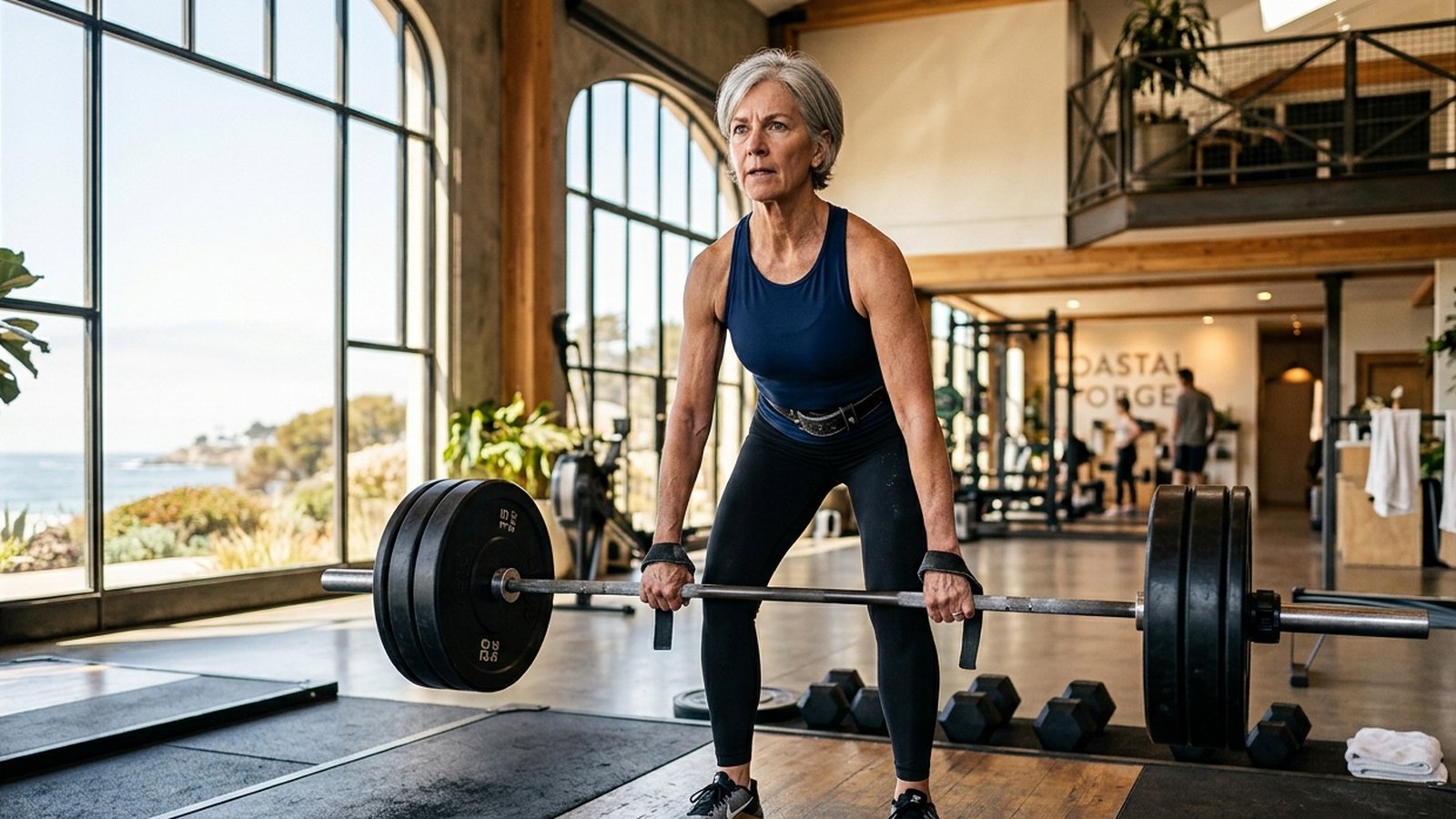
- Deadlifts are functional (picking up groceries, kids, furniture).
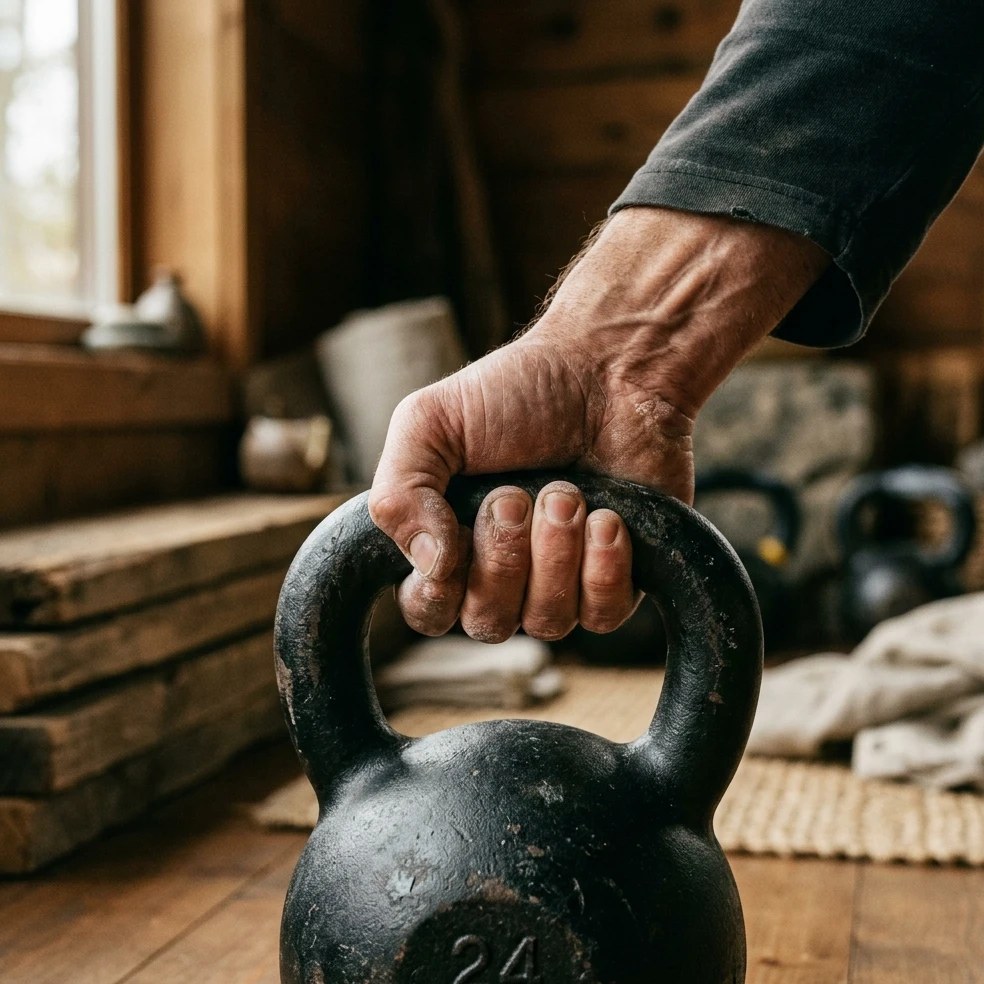
- Loaded carries are functional (carrying groceries, pets, equipment).
- Pull-ups and rows are functional (climbing, pulling).
- Single-leg work is functional (stairs, uneven terrain).
- Step-ups are functional (literally climbing stairs).
- Push-ups are functional (getting up from prone).
By the same standard:
- Leg extensions are not particularly functional (no real-world equivalent).
- Cable triceps push-downs are not particularly functional.
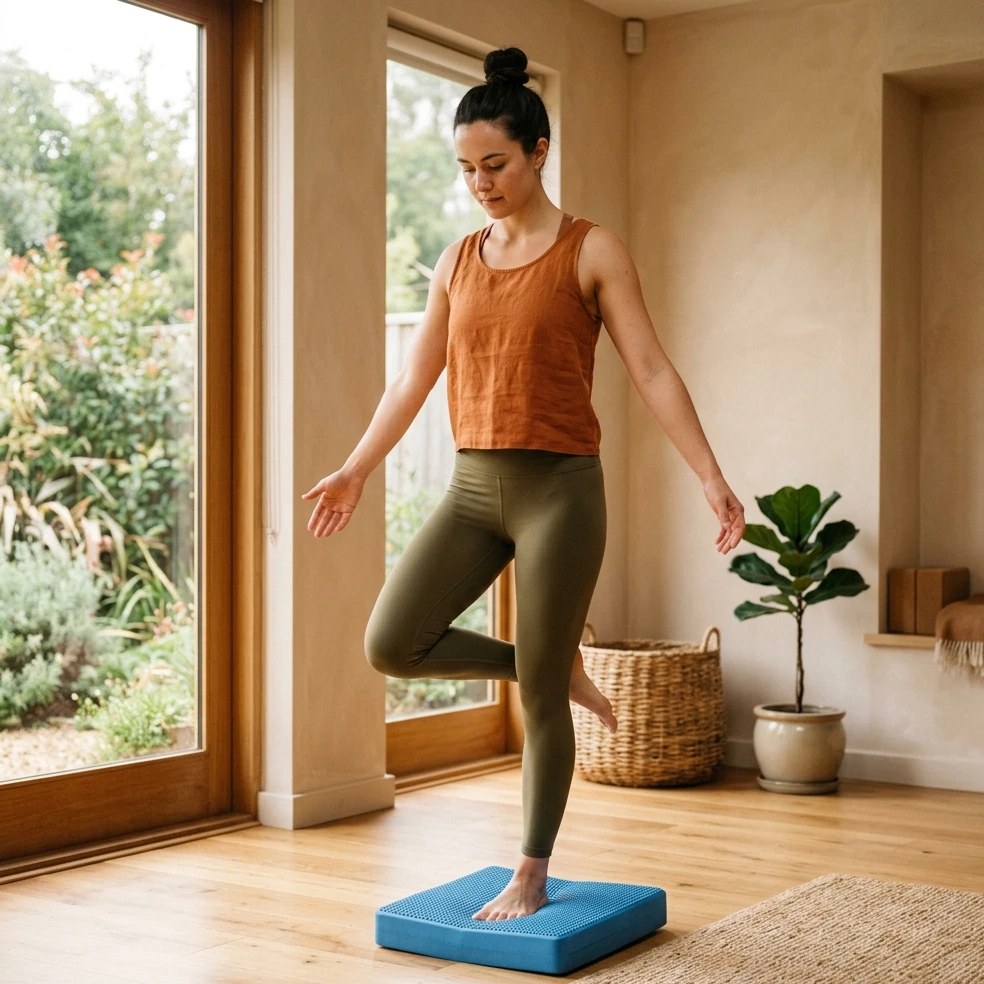
- Standing on a BOSU ball during bicep curls is not more functional than standing on solid ground.
What the transfer evidence shows
- Compound multi-joint movements transfer to daily tasks better than isolation movements.
- Balance training reduces fall risk in older adults (~24% reduction; see balance-and-proprioception article).
- Strength training in itself is highly functional — the 2009 Liu & Latham Cochrane review pooled 121 studies and showed strength training improved functional capacity, gait speed, stair climbing, and balance in older adults.
- Unstable-surface training has small additional benefit for sport-specific proprioception; little to no advantage over stable-surface training for general functional outcomes.
“Progressive resistance training improves muscle strength and physical functioning in older people. Programs aimed at building strength using basic compound movements transfer effectively to functional daily tasks, with effect sizes substantially larger than those reported for unstable-surface 'functional' training in matched populations.”
— Liu & Latham, Cochrane Database, 2009 view source
The functional movement patterns
- Squat: hip and knee flexion. Sit-to-stand, picking up from floor.
- Hinge: hip-dominant. Picking heavy objects from the floor, deadlifting groceries.
- Push (horizontal and vertical): pushing doors, lifting overhead.
- Pull (horizontal and vertical): pulling doors, climbing.
- Carry: walking under load. Groceries, kids, gear.
- Rotate / anti-rotate: trunk stability under load. Resist twisting forces during lifting.
- Single-leg work: balance and proprioception.
Loaded carries are the most-underrated functional exercise
Farmer carries, suitcase carries, and overhead carries map directly to dozens of daily tasks. They train grip, trunk stability, posterior chain, and gait patterns simultaneously. Most strength training programs under-include carries; adding one carry session per week produces noticeable real-world strength improvements.
Common myths
- “You need wobble boards and BOSUs to be functional.” Mostly false. Stable-surface compound work transfers as well or better for general functional outcomes.
- “Heavy lifting isn’t functional.” Wrong. The 2009 Liu Cochrane and broader strength-training literature show strength training is among the most-functional interventions for general populations.
- “Olympic lifts are the most functional.” Mixed. They produce explosive power, useful for athletes; high technical demand limits their general-population suitability. Loaded carries and basic compound lifts cover most non-athletes.
- “If it doesn’t look weird, it’s not functional.” Marketing-driven idea. Most useful functional training looks ordinary — squats, deadlifts, carries, rows, push-ups.
Practical takeaways
- Functional fitness = transferable strength, balance, and movement for real-world tasks.
- Compound multi-joint exercises (squat, hinge, push, pull, carry, single-leg) cover the patterns.
- Loaded carries are the most-underrated functional exercise.
- Wobble boards and BOSU balls have small additional benefit for sport-specific proprioception, not for general function.
- Strength training itself is highly functional; the “functional” marketing layer often adds little.
References
Liu 2009Liu CJ, Latham NK. Progressive resistance strength training for improving physical function in older adults. Cochrane Database Syst Rev. 2009;(3):CD002759. View source →Behm 2018Behm DG, Muehlbauer T, Kibele A, Granacher U. Effects of strength training using unstable surfaces on strength, power and balance performance across the lifespan. Sports Med. 2015;45(12):1645-1669. View source →Schoenfeld 2018Schoenfeld BJ, Grgic J. Evidence-based guidelines for resistance training volume to maximize muscle hypertrophy. Strength Cond J. 2018;40(4):107-112. View source →Ratamess 2009Ratamess NA, Alvar BA, Evetoch TK, et al. American College of Sports Medicine position stand. Progression models in resistance training for healthy adults. Med Sci Sports Exerc. 2009;41(3):687-708. View source →Garber 2011Garber CE, Blissmer B, Deschenes MR, et al. American College of Sports Medicine position stand. Med Sci Sports Exerc. 2011;43(7):1334-1359. View source →Anderson 2005Anderson K, Behm DG. The impact of instability resistance training on balance and stability. Sports Med. 2005;35(1):43-53. View source →Hibbs 2008Hibbs AE, Thompson KG, French D, Wrigley A, Spears I. Optimizing performance by improving core stability and core strength. Sports Med. 2008;38(12):995-1008. View source →Rogers 2003Rogers ME, Rogers NL, Takeshima N, Islam MM. Methods to assess and improve the physical parameters associated with fall risk in older adults. Prev Med. 2003;36(3):255-264. View source →Bohannon 2008Bohannon RW. Hand-grip dynamometry predicts future outcomes in aging adults. J Geriatr Phys Ther. 2008;31(1):3-10. View source →Stone 2007Stone MH, Sands WA, Pierce KC, Carlock J, Cardinale M, Newton RU. Relationship of maximum strength to weightlifting performance. Med Sci Sports Exerc. 2005;37(6):1037-1043. View source →Kraemer 2002Kraemer WJ, Adams K, Cafarelli E, et al. American College of Sports Medicine position stand. Progression models in resistance training for healthy adults. Med Sci Sports Exerc. 2002;34(2):364-380. View source →Schoenfeld 2017Schoenfeld BJ, Grgic J, Ogborn D, Krieger JW. Strength and hypertrophy adaptations between low- vs. high-load resistance training: a systematic review. J Strength Cond Res. 2017;31(12):3508-3523. View source →