The 60-second version
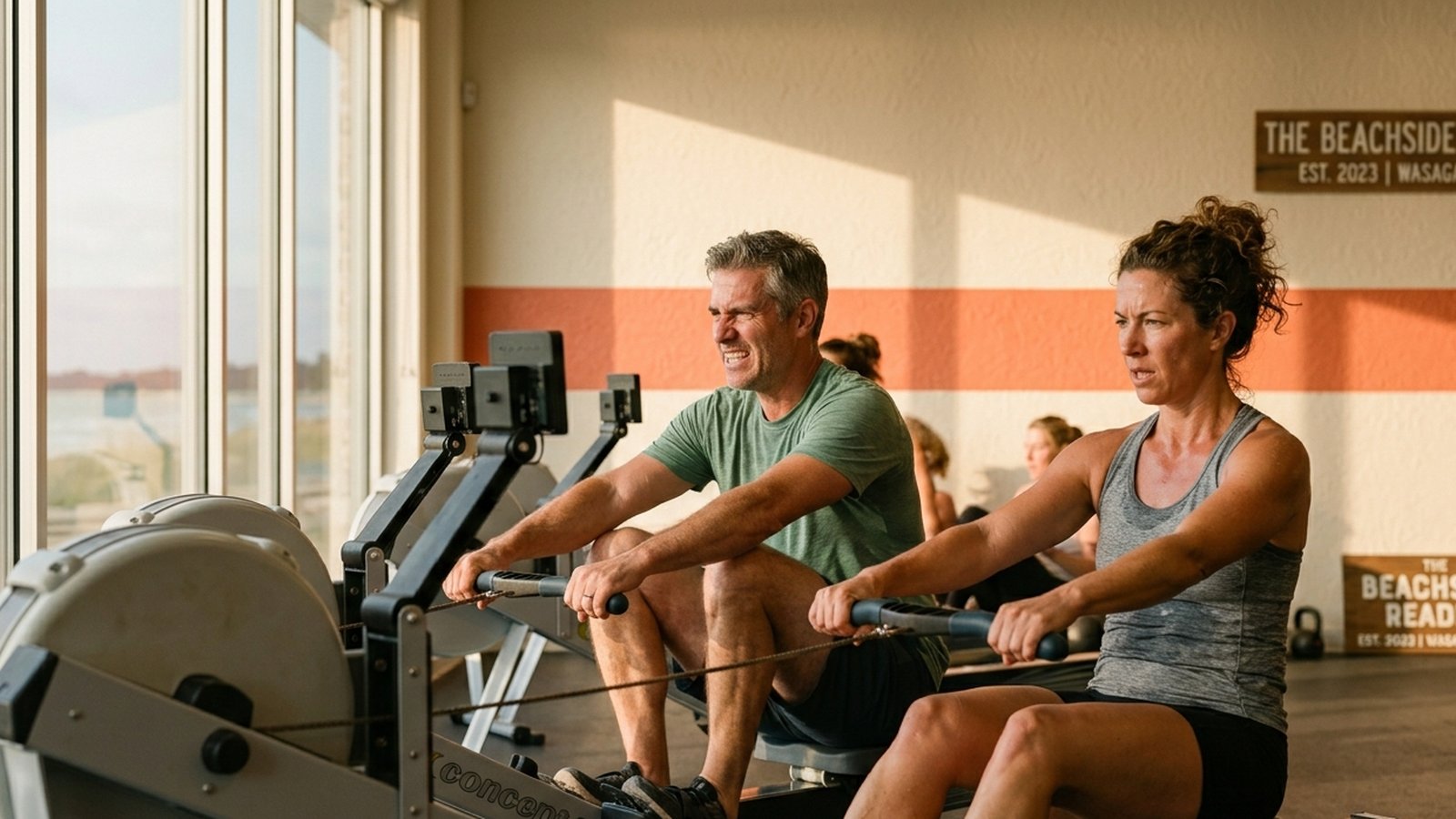
For decades, the orthodox advice was that exercise had to last at least 10 minutes to count for cardiovascular benefit. The published evidence has overturned this. Three to five short bouts of moderate-to-vigorous activity totalling as little as 5 minutes per day are associated with substantial reductions in cardiovascular and all-cause mortality. The 2022 Nature Medicine analysis of 25,241 UK Biobank participants who never did any structured exercise found that those who accumulated 4–5 minutes of vigorous incidental activity daily — brief stair climbs, hurried walking, carrying groceries upstairs — had a 40% lower all-cause mortality and 49% lower cardiovascular mortality than those who did no vigorous activity. The mechanism is not magical: brief, repeated cardiovascular and metabolic stress drives many of the same adaptations that longer training produces, particularly mitochondrial density and insulin sensitivity. Micro-workouts — deliberate 1-to-5-minute exercise snacks scattered through the day — deliver many of these benefits without the time commitment of a structured session. The remaining gap (skill, strength, hypertrophy, race fitness) requires the longer sessions, but the foundational health benefits are accessible in fragments most adults already have.
What changed in the evidence
Until 2018, the WHO physical activity guidelines required minimum bout lengths — usually 10 minutes — for activity to count toward weekly totals. The 2018 US Physical Activity Guidelines committee reviewed the accumulating evidence and removed the bout-length requirement entirely Piercy 2018. The 2020 WHO guidelines followed suit. The reasoning was simple: the dose-response benefit of physical activity scales with total volume, not session length. Three short walks delivering 30 minutes of total moderate activity produces approximately the same cardiovascular adaptation as one 30-minute walk.
The Stamatakis 2022 Nature Medicine analysis went further. Using accelerometer data from 25,241 adults who reported no structured exercise, the researchers identified vigorous intermittent lifestyle physical activity (VILPA) — brief bursts (mostly 1-2 minutes each) of activity intense enough to raise heart rate and breathing significantly. They found that as little as 4–5 minutes of total daily VILPA was associated with a 40% reduction in all-cause mortality and a 49% reduction in cardiovascular mortality over 7 years Stamatakis 2022. The dose-response relationship was non-linear: the first few minutes produced the largest mortality reductions, with diminishing returns above 12-15 minutes per day.
“Just three to four 1- to 2-minute bouts per day of vigorous activity are associated with substantial reductions in mortality — comparable in magnitude to the effects of vigorous structured exercise. The implications for public health are considerable: this is a dose of activity available to nearly anyone with a flight of stairs.”
— Stamatakis et al., Nature Medicine, 2022 view source
Why brief bouts work
The cardiovascular adaptation to exercise is driven primarily by repeated exposure to elevated heart rate and intramuscular metabolic stress — not by session length. Brief, intense bouts produce many of the same molecular signals (AMPK activation, PGC-1α expression, mitochondrial biogenesis) as longer sessions. The skeletal-muscle research shows that even 20-second sprints trigger AMPK pathways comparable to 30-minute moderate cycling Gillen 2014.
The cardiovascular signal is more dependent on heart-rate elevation than total work. A 90-second flight-of-stairs climb that takes heart rate to 75% of maximum produces meaningful CV adaptation; the same volume spread over 5 minutes of slow walking does not. The intensity matters more than the duration for short bouts Jenkins 2019.
Protocols the published trials use
The most rigorous micro-workout protocols come from Martin Gibala’s lab at McMaster University, the Stamatakis group at Sydney, and military-fitness research. The common findings:
| Protocol | Bout structure | Effect documented |
|---|---|---|
| Stair sprints (3 flights, vigorous) | 3 × 60 sec, 3 times/week | VO2peak +5% in 6 weeks Allison 2017 |
| Body-weight circuits (squats, push-ups, lunges) | 5-7 min, 3-5 times/week | VO2max +12% in 12 weeks McRae 2012 |
| VILPA (incidental life activity) | 3-5 bouts of 60-90 sec daily | 40% all-cause mortality reduction Stamatakis 2022 |
| 1-min all-out cycling | 3 × 20 sec, 3 times/week | Aerobic and metabolic gains equivalent to 50-min moderate cycling Gillen 2016 |
The Gillen 2016 PLOS ONE trial is particularly striking: 12 weeks of three 10-minute sessions per week, of which only 3 minutes was actual hard work (3 × 20 sec all-out cycling sprints), produced VO2max and insulin-sensitivity improvements equivalent to a control group doing 150 minutes per week of moderate continuous exercise. The total weekly hard-work time was 9 minutes; the control group’s was 450 minutes. The outcomes were essentially identical.
What micro-workouts can’t do
The headline mortality and cardiovascular benefits emerge with low total volumes. The remaining benefits of structured training do not. Specifically:
- Skill development. Running form, swimming stroke, lifting technique — all require sustained, focused practice. A 5-minute ‘exercise snack’ doesn’t teach a deadlift.
- Strength and hypertrophy beyond the beginner stage. Volume — total sets per muscle per week — drives strength and size adaptations. Schoenfeld 2017’s meta-analysis found a clear dose-response relationship between weekly sets and hypertrophy that micro-workouts cannot match Schoenfeld 2017.
- Race-specific endurance. A 5K race demands sustained 20-30-minute output; micro-workouts don’t train the cardiovascular drift, fuel utilisation, or pacing skills the event requires.
- Maximal aerobic capacity. The very top end of VO2max requires longer-duration interval work.
For these goals, micro-workouts are a complement, not a replacement. For health benefits and modest fitness improvements, they can do the entire job.
Who micro-workouts fit and who they do not
| Profile | Micro-workout fit | Why |
|---|---|---|
| Time-constrained adult who has tried structured exercise and quit | Excellent | Removes the ‘not enough time’ barrier; mortality benefit accessible |
| Adult new to exercise | Excellent | Lower psychological barrier; produces measurable improvements quickly |
| Older adult with safe stair access | Excellent | Stair climbs are joint-friendly, calibrate easily, build leg strength |
| Athlete training for a specific event | Useful supplement | Add VILPA on rest days; doesn’t replace sport-specific work |
| Adult with cardiovascular contraindications | Defer or modify | Brief vigorous bouts are still vigorous; medical clearance first |
| Adult wanting hypertrophy or strength gains | Insufficient alone | Volume too low; pair with structured resistance training |
Practical micro-workout examples
Workable patterns that fit into typical work and home days:
- The 3-stair-climb day. Take stairs three times during a typical workday: morning arrival, post-lunch, end-of-day. If your building has 3 flights, that’s 3 minutes of vigorous activity at 80%+ HRmax. The Allison 2017 protocol is exactly this: 3 × 60-second bouts, 3 days a week.
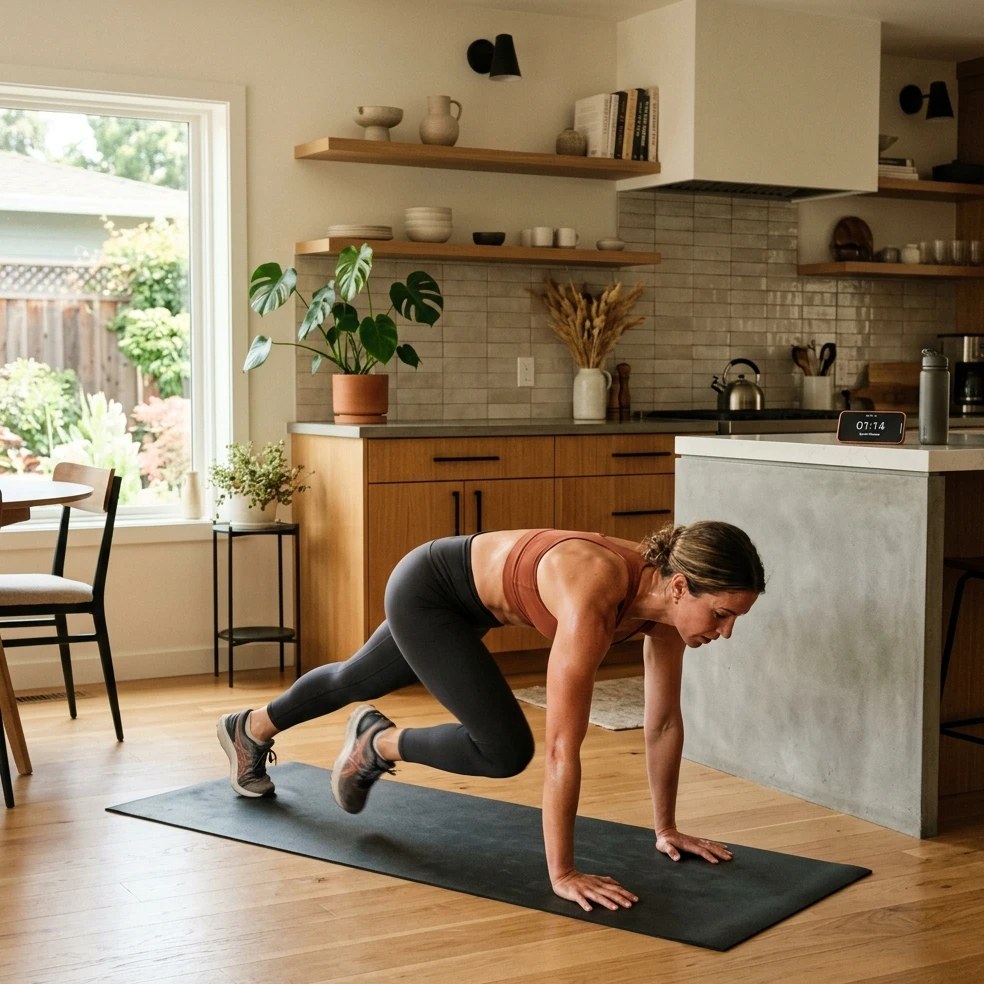
- The 5-minute morning snack. 30 sec each: jumping jacks, push-ups (modified if needed), squats, mountain climbers, plank. Repeat twice. 5 minutes total. The McRae 2012 trial used this format with VO2max improvements of 12% in 12 weeks.
- The hill walk. Walk briskly to a moderate hill (200-400 m), climb at 70-80% effort, walk down to recover. Repeat 2-3 times. Total: 10-15 minutes for a strong CV stimulus.
- The grocery commute. Carry groceries home up stairs at a deliberately fast pace, in 2-3 trips of 60-90 seconds each. The load-and-stair combination produces VILPA-grade exposure with no equipment.
- The phone-call walk. Take work calls while pacing briskly. Each 10-15 minute call accumulates as moderate activity and chains naturally into a daily total.
The frequency matters more than the polish. Three days per week with 5-minute sessions outperforms one session per week of 60 minutes for the cardiovascular outcomes the trials document.
Safety considerations
Vigorous bouts are still vigorous. Most micro-workout protocols are safe for previously sedentary adults, but two patterns appear in the published injury data:
- Cardiac events during all-out efforts in untrained adults. The risk is small but not zero. Adults with known cardiovascular disease, uncontrolled hypertension, or a family history of sudden cardiac death should obtain medical clearance before adding vigorous-intensity micro-workouts.
- Musculoskeletal overuse from repeated stair sprints in poorly conditioned legs. The first 2-3 weeks of a stair-sprint protocol produce predictable calf and quadriceps soreness; build slowly, use handrails, and don’t skip the warm-up walk that precedes the climb.
The published trials uniformly include a brief warm-up (60-90 seconds of moderate activity) before the vigorous bout. This is non-negotiable for the protocols’ safety profile to apply.
Practical takeaways
- Stamatakis 2022: 4-5 minutes of daily VILPA — brief vigorous bouts of incidental activity — was associated with a 40% reduction in all-cause mortality.
- Gillen 2016: 3 minutes of all-out work per week (3 × 20-sec sprints, 3 times/week) produced VO2max and insulin-sensitivity gains equivalent to 150 minutes/week of moderate continuous exercise.
- The dose-response is non-linear: the first few minutes produce the largest mortality reduction; benefits flatten above 12-15 min/day.
- Micro-workouts deliver the cardiovascular and metabolic benefits of structured training. They do not deliver the strength, hypertrophy, skill, or race-specific endurance benefits.
- Three flights of stairs, three times a day, three days a week — the Allison 2017 protocol — produced a 5% VO2peak gain in 6 weeks. The bar for ‘effective’ is lower than most adults assume.
- Vigorous bouts are still vigorous. Warm up for 60-90 seconds. Get medical clearance if you have cardiovascular risk factors.
References
Stamatakis 2022Stamatakis E, Ahmadi MN, Gill JMR, et al. Association of wearable device-measured vigorous intermittent lifestyle physical activity with mortality. Nat Med. 2022;28(12):2521-2529. View source →Piercy 2018Piercy KL, Troiano RP, Ballard RM, et al. The Physical Activity Guidelines for Americans. JAMA. 2018;320(19):2020-2028. View source →Gillen 2014Gillen JB, Gibala MJ. Is high-intensity interval training a time-efficient exercise strategy to improve health and fitness? Appl Physiol Nutr Metab. 2014;39(3):409-412. View source →Gillen 2016Gillen JB, Martin BJ, MacInnis MJ, et al. Twelve weeks of sprint interval training improves indices of cardiometabolic health similar to traditional endurance training despite a five-fold lower exercise volume and time commitment. PLoS One. 2016;11(4):e0154075. View source →Allison 2017Allison MK, Baglole JH, Martin BJ, MacInnis MJ, Gurd BJ, Gibala MJ. Brief intense stair climbing improves cardiorespiratory fitness. Med Sci Sports Exerc. 2017;49(2):298-307. View source →McRae 2012McRae G, Payne A, Zelt JG, et al. Extremely low volume, whole-body aerobic-resistance training improves aerobic fitness and muscular endurance in females. Appl Physiol Nutr Metab. 2012;37(6):1124-1131. View source →Jenkins 2019Jenkins EM, Nairn LN, Skelly LE, Little JP, Gibala MJ. Do stair climbing exercise ‘snacks’ improve cardiorespiratory fitness? Appl Physiol Nutr Metab. 2019;44(6):681-684. View source →Schoenfeld 2017Schoenfeld BJ, Ogborn D, Krieger JW. Dose-response relationship between weekly resistance training volume and increases in muscle mass: a systematic review and meta-analysis. J Sports Sci. 2017;35(11):1073-1082. View source →Ekelund 2020Ekelund U, Tarp J, Fagerland MW, et al. Joint associations of accelero-meter measured physical activity and sedentary time with all-cause mortality: a harmonised meta-analysis in more than 44,000 middle-aged and older individuals. Br J Sports Med. 2020;54(24):1499-1506. View source →WHO 2020Bull FC, Al-Ansari SS, Biddle S, et al. World Health Organization 2020 guidelines on physical activity and sedentary behaviour. Br J Sports Med. 2020;54(24):1451-1462. View source →Warburton 2017Warburton DER, Bredin SSD. Health benefits of physical activity: a systematic review of current systematic reviews. Curr Opin Cardiol. 2017;32(5):541-556. View source →Ainsworth 2011Ainsworth BE, Haskell WL, Herrmann SD, et al. 2011 Compendium of Physical Activities: a second update of codes and MET values. Med Sci Sports Exerc. 2011;43(8):1575-1581. View source →Strain 2020Strain T, Wijndaele K, Sharp SJ, Dempsey PC, Wareham N, Brage S. Impact of follow-up time and analytical approaches to account for reverse causality on the association between physical activity and health outcomes in UK Biobank. Int J Epidemiol. 2020;49(1):162-172. View source →