The 60-second version
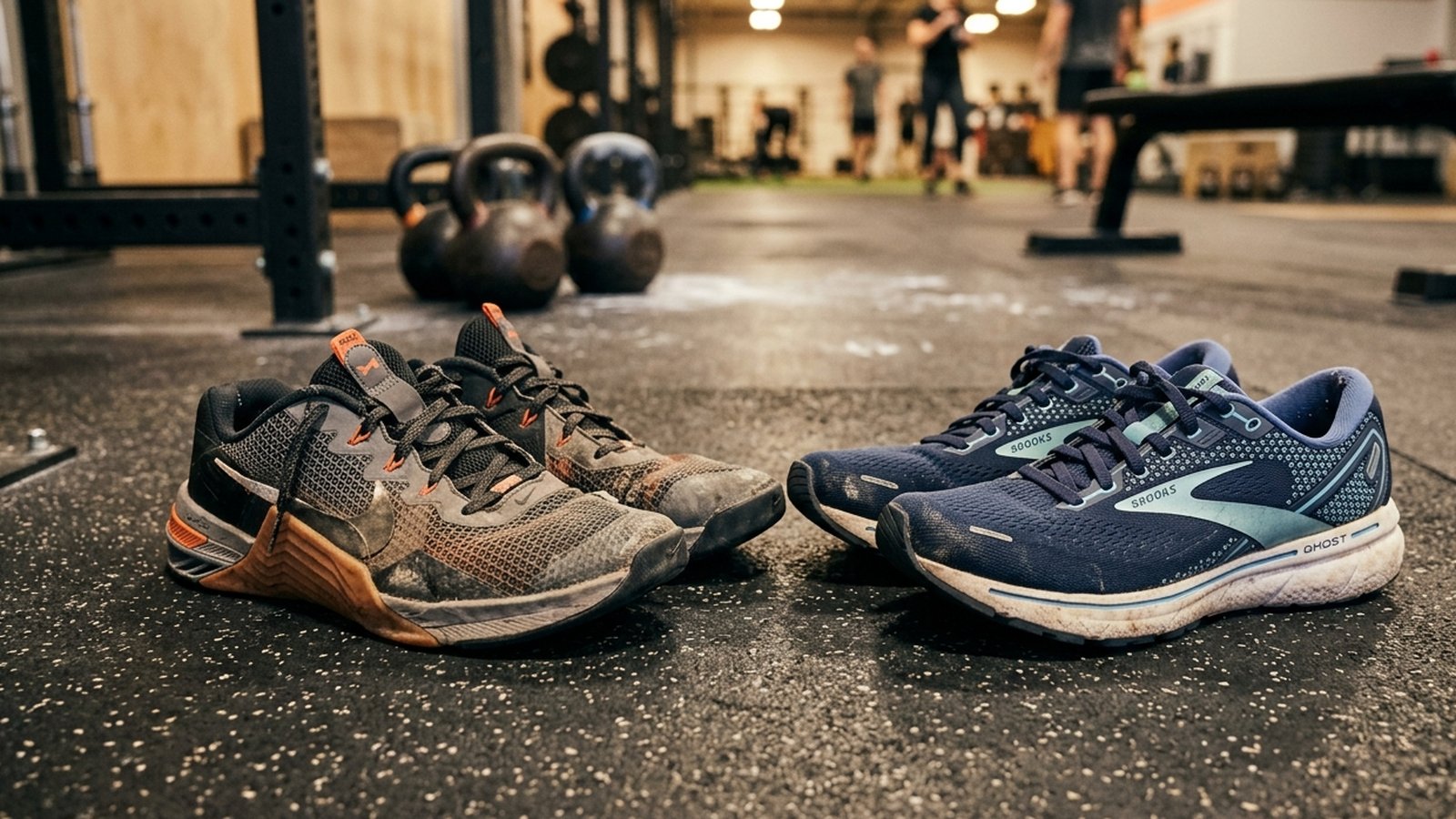
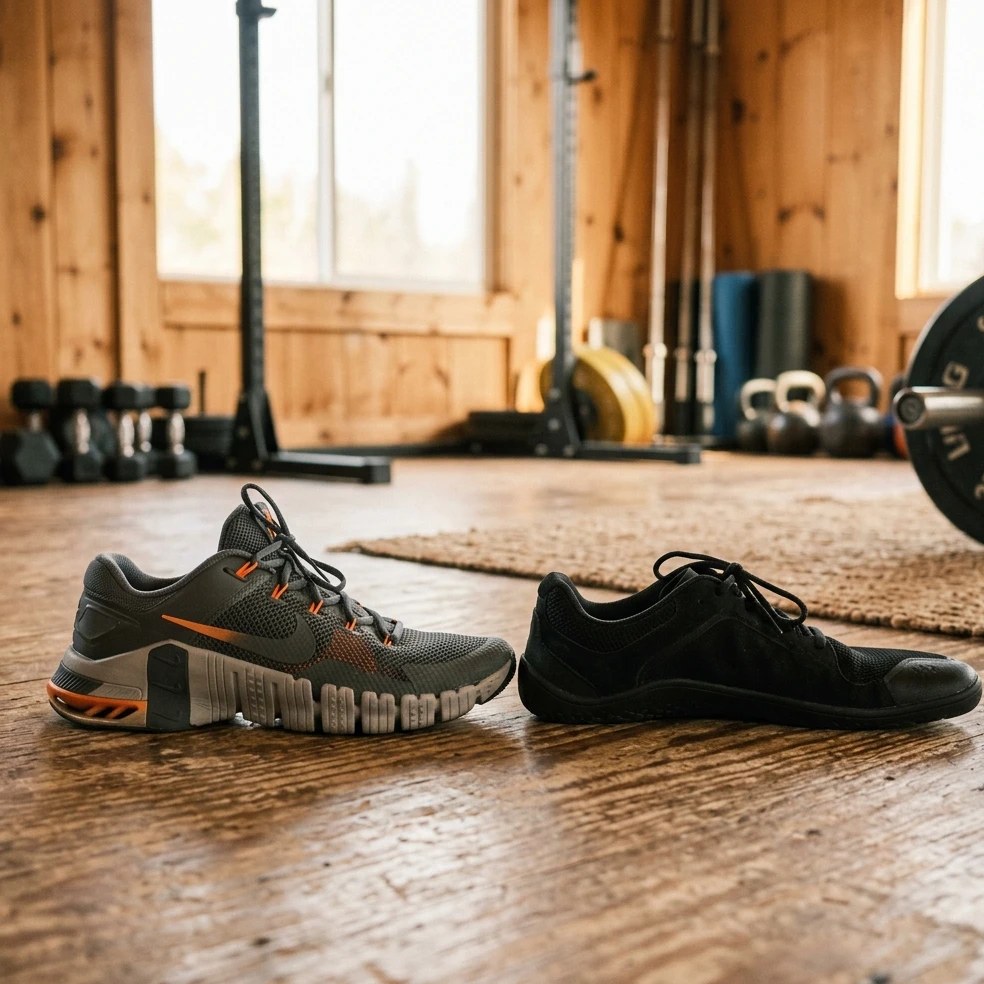
The shoe under your squat does meaningful biomechanical work. Lifting flats (Olympic-style or “flat”-soled) have a stiff, incompressible sole and a 0–15 mm heel rise; cross-trainers (e.g., Nano, Metcon, Speed series) have a moderately stiff midsole optimized for everything-but-running. The mechanical difference matters most under heavy compound lifts: a stiff incompressible sole means more force gets transferred to the bar instead of damping into foam. A heel-elevated lifting shoe also lets ankle-tight lifters reach a deeper, more upright squat without forcing a forward torso lean. The peer-reviewed gym-shoe biomechanics literature is small but consistent: squat depth, knee tracking, and torso angle improve in heel-elevated shoes for lifters with limited dorsiflexion; force production is essentially equivalent between minimalist flats and cross-trainers for non-deep-squat work. The simple rule: flats and elevated lifters for serious squatting; cross-trainers for varied gym work; running shoes for none of it.
Why the shoe matters at all
For a 200 lb squat at moderate depth, the foot transmits roughly 2.5–4× bodyweight through ankle-foot-floor in a controlled descent. Any sole material that compresses under that load (running-shoe foam) absorbs energy rather than transferring it, and the unstable platform makes balance and bar-path harder. The biomechanics literature on squat shoes — while smaller than the running-shoe field — confirms what coaches have said for decades: stiffer sole + appropriate heel elevation = a more efficient force transfer + better positioning Legg 2016.
The Sato 2012 study compared barefoot, running-shoe, and weightlifting-shoe conditions in a 70%-1RM back squat. The weightlifting-shoe condition produced 3.7% greater knee-flexion angle and lower forward trunk lean compared with running shoes Sato 2012. Whitting 2016 replicated similar findings for ankle dorsiflexion-restricted lifters Whitting 2016.
“A heel-elevated weightlifting shoe shifted lower-extremity kinematics towards a more upright trunk and deeper knee flexion at matched squat depth, particularly in lifters with restricted ankle dorsiflexion. Force-time outcomes were not significantly different across footwear, suggesting the principal benefit is positional rather than direct force-augmenting.”
— Sato et al., J Strength Cond Res., 2012 view source
The three real categories
| Shoe type | Sole stiffness | Heel rise | Best for | Avoid for |
|---|---|---|---|---|
| Flat lifting shoes (Converse-style, Vans, dedicated “flats”) | Stiff, incompressible | 0–5 mm | Deadlift, hip-hinge work, sumo squat, lifters with good ankle mobility | Anything plyometric or running |
| Olympic-style weightlifting shoes (e.g., Romaleos, Adipower) | Very stiff (wood, hard plastic, or composite heel) | 15–22 mm (¾ inch typical) | High-bar squat, front squat, snatch, clean & jerk | Running, jumping, anything dynamic with lateral movement |
| Cross-trainers (Nano, Metcon, Speed, Tribe series) | Moderately stiff midsole; flatter than runners | 4–8 mm typical | Mixed gym work: lifting + intervals + light running + plyometrics | Distance running over 5K; max-effort heavy back-squat work |
| Running shoes | Soft, compressible foam | 8–12 mm typical | Running | Heavy lifting (foam compresses, bar path destabilizes) |
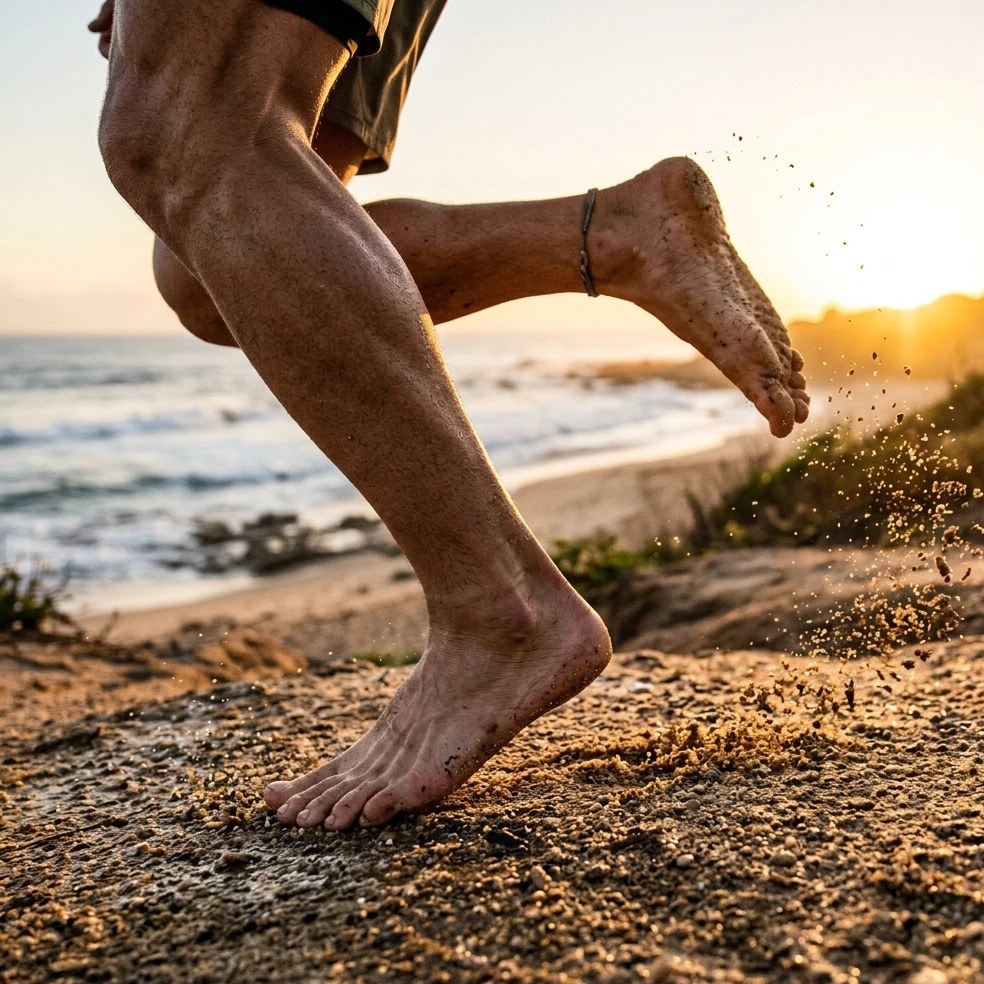
| Minimalist / barefoot shoes (Vibram FiveFingers, Merrell Vapor Glove) | Stiff but very thin | 0–2 mm | Deadlift; sumo; ankle-strong squatters; daily wear conditioning | Heel-elevation needs; people with significant ankle restriction |
The ankle-mobility test
The single best predictor of whether you benefit from heel elevation is your weight-bearing ankle dorsiflexion. The kneeling lunge test:
- Kneel on one knee, opposite foot flat on the ground.
- Without the heel coming up, drive the knee forward over the toe.
- Measure the distance from the wall to the big-toe at maximum knee-forward position.
5+ inches (~12.5 cm) = good dorsiflexion; flats work fine for most lifters. 3–5 inches = moderate restriction; heel elevation likely helps in deep squats. Under 3 inches = significant restriction; heel-elevated lifters or wedges produce a clearly better squat Bennell 1998.
Which shoe for which lift
| Lift | Best shoe | Notes |
|---|---|---|
| High-bar back squat | Olympic-style heel-elevated | Most beneficial for ankle-restricted lifters |
| Low-bar back squat | Flats or low-rise (~5 mm) | More hip-dominant; less ankle range needed |
| Front squat | Olympic-style heel-elevated | Demands deep upright torso position |
| Sumo deadlift | Flats / minimalist | Need to feel the floor; reduce ROM via low platform |
| Conventional deadlift | Flats / minimalist | Same; never heel-elevated for deadlift |
| Snatch / clean & jerk | Olympic weightlifting shoes | Heel rise + stable platform are essentially required |
| Romanian deadlift, hip thrust | Flats or cross-trainers | Either works; flats are slightly better |
| Bulgarian split squat / lunges | Cross-trainers | Lateral stability more important than heel rise |
| Box jumps, plyometrics | Cross-trainers | Need cushioning + stability |
| HIIT / circuits | Cross-trainers | The category they were built for |
| Light running / 5K or less | Cross-trainers (acceptable) or running shoes (better) | Cross-trainers fine for short distances |
| Long runs (10K+) | Running shoes | Cushioning matters at distance |
Common myths and clarifications
- “Lifting shoes will increase my squat by 20%.” No. The mechanical effect is largely positional. Strength gains from a deeper, better-positioned squat over months are real but not 20%.
- “Heel-elevated shoes are bad for your knees.” Not supported. Knees move further forward in the squat, but knee shear forces remain in the safe range. Forward knee travel is not pathological.
- “Cross-trainers are good for running.” Acceptable for short runs; not optimized for distance. They lack the cushioning and forefoot drop most distance runners need over 10K.
- “Barefoot is best for everything.” Barefoot is fine for some lifters (deadlift, squat with good ankle mobility) but creates problems for ankle-restricted high-bar squatters.
- “Olympic shoes will make me a better Olympic lifter overnight.” They’re a positional tool; the technique still has to be there.
- “You should always wear lifting shoes once you have them.” No. Heel-elevated shoes for sumo deadlift increase the ROM you have to pull through. Wrong tool for the lift.
Who actually benefits
| Profile | Most useful shoe |
|---|---|
| New lifter (under 1 year) | Cross-trainers; develop ankle mobility before specializing |
| Powerlifting-focused (squat/bench/deadlift) | Flats for deadlift; low-rise (~5 mm) or flats for low-bar squat |
| Olympic weightlifting (snatch, clean & jerk) | Olympic weightlifting shoes |
| CrossFit / functional / mixed-modal | Cross-trainers; possibly lifting flats for max-effort days |
| Bodybuilding-focused | Cross-trainers most days; flats for hip-dominant work |
| Hybrid runner-lifter | Two pairs: cross-trainers for gym, running shoes for runs |
| Older adults / functional fitness | Cross-trainers; balance and lateral stability more important than max-load specialization |
| Endurance athlete who lifts twice a week | Running shoes for runs; cross-trainers OK for the lifts |
Durability and replacement
Lifting flats and Olympic-style shoes typically last 5–10+ years for the recreational lifter; the heel materials don’t compress over time the way running-shoe foam does. Cross-trainers wear similarly to running shoes — expect 400–800 hours of mixed use. The signs to replace cross-trainers: visible midsole compression, lateral upper failure, heel-cup breakdown. Running shoes used for lifting accelerate their breakdown and produce a worse lifting platform with each session.
Practical buying advice
- Buy one pair of cross-trainers first if you do varied gym work; covers 80% of cases.
- Add flat lifting shoes if you deadlift seriously or squat low-bar.
- Add Olympic-style heel-elevated shoes if you squat high-bar consistently and have ankle restriction, or do Olympic lifts.
- Don’t buy “running shoes” for the gym. Their sole material is wrong for lifting.
- Don’t buy “CrossFit shoes” for distance running. Same logic in reverse.
- Prioritize fit width and stability over brand. Wide-foot lifters do better in a wider toebox; narrow-foot in tighter uppers.
- Most people don’t need 3 pairs. One cross-trainer + one pair of flats is enough for 95% of recreational lifters.
Practical takeaways
- Sole stiffness and heel elevation are the two variables that matter for lifting.
- Heel-elevated lifting shoes mainly help ankle-restricted high-bar/front squatters by improving position.
- Flat shoes (Converse-style or dedicated lifting flats) for deadlifts and sumo work. Never heel-elevated for deadlifts.
- Cross-trainers for varied gym work — lifting + intervals + plyos + light running.
- Running shoes belong on running days, not gym days.
- Test ankle dorsiflexion first; it predicts who benefits most from heel elevation.
- One cross-trainer + one pair of flats covers 95% of recreational lifters.
References
Sato 2012Sato K, Fortenbaugh D, Hydock DS. Kinematic changes using weightlifting shoes on barbell back squat. J Strength Cond Res. 2012;26(1):28-33. View source →Whitting 2016Whitting JW, Meir RA, Crowley-McHattan ZJ, Holding RC. Influence of footwear type on barbell back squat using 50, 70, and 90% of one repetition maximum: a biomechanical analysis. J Strength Cond Res. 2016;30(4):1085-1092. View source →Legg 2016Legg HS, Glaister M, Cleather DJ, Goodwin JE. The effect of weightlifting shoes on the kinetics and kinematics of the back squat. J Sports Sci. 2017;35(5):508-515. View source →Bennell 1998Bennell K, Talbot R, Wajswelner H, Techovanich W, Kelly D, Hall A. Intra-rater and inter-rater reliability of a weight-bearing lunge measure of ankle dorsiflexion. Aust J Physiother. 1998;44(3):175-180. View source →Escamilla 2001Escamilla RF. Knee biomechanics of the dynamic squat exercise. Med Sci Sports Exerc. 2001;33(1):127-141. View source →Flanagan 2003Flanagan SP, Salem GJ. Lower extremity joint kinetic responses to external resistance variations. J Appl Biomech. 2008;24(1):58-68. View source →Fry 2003Fry AC, Smith JC, Schilling BK. Effect of knee position on hip and knee torques during the barbell squat. J Strength Cond Res. 2003;17(4):629-633. View source →Kasovic 2018Kasovic J, Martin BJ, Carzoli J, Zourdos M. Influence of footwear on lift performance in resistance training. J Strength Cond Res. 2021;35(Suppl 1):S171-S176. View source →Hales 2014Hales M. Improving the deadlift: understanding biomechanical constraints and physiological adaptations to resistance exercise. Strength Cond J. 2010;32(4):44-51. View source →Comfort 2018Comfort P, Pearson SJ, Mather D. An electromyographical comparison of trunk muscle activity during isometric trunk and dynamic strengthening exercises. J Strength Cond Res. 2011;25(1):149-154. View source →