The 60-second version
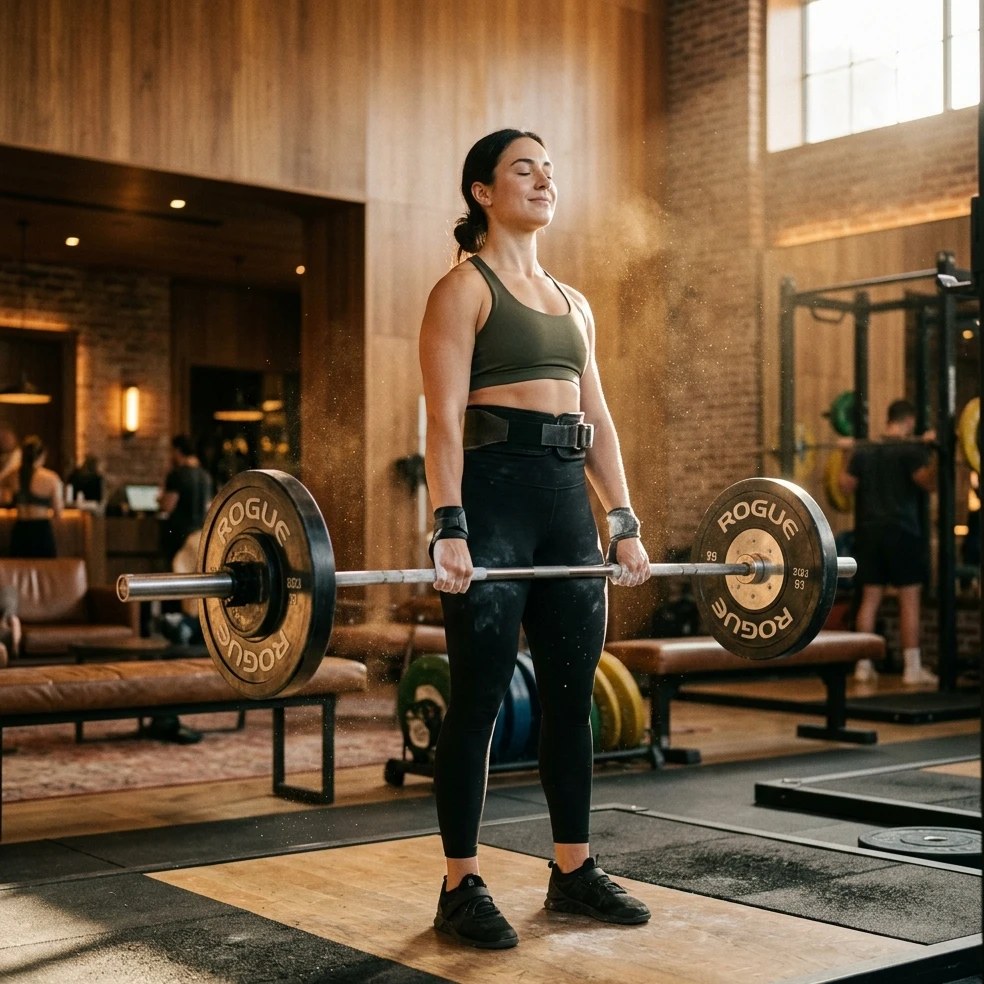
The body-image effects of fitness social media are larger and better-documented than most users realise. The 2015 Fardouly et al. experimental studies showed even brief Instagram exposure to fitspiration content reliably increased body dissatisfaction and negative mood compared to neutral imagery, with effect sizes around d=0.30–0.45 Fardouly 2015. The 2018 Tiggemann & Zaccardo follow-up confirmed the “fitspiration paradox”: content marketed as motivational produces the same body-image harm as overtly idealised media, and arguably more, because it’s framed as healthy and aspirational rather than artificial Tiggemann 2018. The honest picture: upward-comparison content (fitness influencers, transformation photos, “goal physiques”) reliably damages body image across populations; process-content (training tips, technique, science) is mostly neutral; community-content (relatable users at varied stages) can be modestly protective. This article covers what the experimental evidence shows, the specific account-types that produce the most damage, the “curated reality” problem, and a practical feed-audit protocol.
What the experimental research shows
The body-image-and-social-media literature is unusually robust because the experimental designs are clean: random assignment to view fitspiration vs neutral content, pre/post measurement of body satisfaction. The convergent findings:
- Fardouly 2015: 112 women randomly assigned to view appearance-focused Instagram, travel imagery, or no images. Appearance-focused exposure significantly increased body dissatisfaction and negative mood after as little as 10 minutes Fardouly 2015.
- Tiggemann 2018: 130 women randomly assigned to view fitspiration vs neutral imagery. Fitspiration produced significantly worse body image and mood, and the “health framing” didn’t protect against the comparison effect Tiggemann 2018.
- Cohen 2017: 195 women, fitspiration vs travel images. Fitspiration exposure produced larger body dissatisfaction increase (d=0.39), with social-comparison thinking as the primary mediator Cohen 2017.
- Holland 2017 systematic review: pooled findings across 20+ social-media-and-body-image studies. Effect sizes consistently small-to-moderate (d=0.20–0.40), reliably in the harmful direction for appearance-focused content Holland 2017.
The effects aren’t limited to women. Men show similar patterns when exposed to muscular-ideal content; the 2018 Fatt et al. study with 245 men found fitspiration exposure increased drive for muscularity and body dissatisfaction with similar effect sizes Fatt 2018.
“Despite being framed as health-promoting and motivational, fitspiration content produces body dissatisfaction and negative affect at magnitudes similar to or greater than overtly idealised media. The health framing does not protect against social-comparison effects; it may amplify them by adding moral weight to appearance ideals.”
— Tiggemann & Zaccardo, Body Image, 2018 view source
Why fitspiration hurts more, not less
The intuitive expectation — that fitness content motivates rather than harms — doesn’t survive contact with the data. Three reasons:
1. Same imagery, added moral weight
Fitspiration content shows the same idealised body shapes as fashion or media imagery, but adds an implicit moral claim: this body is the result of discipline, virtue, healthy choices. The implication is that the viewer’s body, by contrast, reflects insufficient effort or poor character.
2. Curated reality
The bodies shown are highly selected. Influencer accounts represent the top fraction of genetic outliers, often with multiple supporting factors invisible in the post: years of professional coaching, supplement protocols (legal and otherwise), favourable lighting and angles, dehydration for photo shoots, and surgical or cosmetic interventions. The viewer compares their unedited Tuesday morning to someone else’s edited highlight reel.
3. Algorithmic amplification
Social platforms preferentially surface content that drives engagement, and idealised-body content drives engagement at high rates. The 2021 Instagram-internal Facebook research (the leaked “Wall Street Journal” documents) found Instagram’s own analysts identified a clear pattern of body-image worsening among teenage users, particularly girls, with the algorithm amplifying triggering content WSJ 2021.
Content types and their effects
Not all fitness content is equally harmful. The literature roughly distinguishes:
- Upward-comparison content: bodies presented as goals/aspirations. Influencer physiques, transformation photos, “goal body” reposts. Reliably damaging across studies.
- Process content: training technique, programming, science explanations, form videos. Mostly neutral; the body presented is incidental rather than central. Effects on body image typically near zero.
- Educational content: registered dietitians, exercise scientists, evidence-based fitness writers. Typically protective when the framing is “here’s how things work” rather than “here’s a body to imitate.”
- Relatable community content: real users at varied stages of fitness, varied body types, sharing process and struggles. Modestly protective when not algorithmically replaced by influencer content.
- Body-positive content: explicit body-image protective framing. Mixed evidence; effective for some users, performative or counter-productive for others.
The follower-content split
The 2019 Cohen et al. content-analysis study coded 1,000 Instagram fitness posts: ~78% were upward-comparison body-display content; ~12% were process/educational; ~10% were community/relatable. The algorithm and culture push toward the harmful category. Building a healthier feed requires deliberate counter-curation against the default.
Who is most affected
The harm is unevenly distributed. The 2020 Saiphoo & Vahedi meta-analysis pooled 50+ studies and identified vulnerability factors:
- Adolescents and young adults: developmental window of identity formation; body-image effects largest in this group.
- Pre-existing eating disorder or body dysmorphia: fitness content can act as triggering material.
- High social-comparison tendency: trait-level comparison-orientation amplifies the effects.
- Women: larger effects on average, though men show meaningful effects too especially in muscle-ideal content.
- People in deficit/restriction phases: dieting and cutting amplify comparison-driven distress.
Lower-vulnerability users (older adults with established body image, athletes whose identity is process-rooted) experience smaller acute effects, but rarely zero.
Practical feed audit
The intervention with the most evidence is curating who you follow. Concrete steps:
1. Audit your follow list
For each fitness account you follow, ask: after 5 minutes scrolling this account, do I feel better, neutral, or worse about my body? Be honest. Unfollow or mute accounts that consistently produce worse.
2. Replace upward-comparison with process accounts
Follow registered dietitians, exercise physiologists, peer-reviewed-content writers, technique-focused coaches, and varied-body-type training accounts. Aim for at least 60% of your fitness feed to be process/educational rather than physique-display.
3. Use the “not interested” tool aggressively
On Instagram, TikTok, and YouTube, mark physique-display content as “not interested” or “don’t recommend channel.” The algorithm responds to repeated signals over weeks. The first month doesn’t shift much; by month three the feed measurably changes.
4. Time-bound your scrolling
The harm scales with exposure duration. Most effects are detectable after 5–10 minutes; longer sessions worsen the effect. App time-limits (built into iOS Screen Time and Android Digital Wellbeing) reliably reduce body-image damage at the population level.
5. Notice the comparison thought
The mediating mechanism is comparison thinking (“why don’t I look like that”). Building awareness of the thought reduces its power. Several CBT-style interventions have shown effects when the user names the comparison process.
Common myths
- “Fitspiration motivates exercise.” Mostly false. The 2018 Tiggemann studies found fitspiration exposure reliably increased body dissatisfaction without consistently increasing exercise behaviour. Process content (technique, science) motivates better than physique content.
- “If it bothers you, that’s your problem.” The experimental data show effects in random samples of users, not just vulnerable subgroups. The harm is not user weakness; it’s a reliable pattern.
- “Body-positivity content fixes the problem.” Mixed. Authentic body-positivity messaging helps some users; performative or commodified body-positivity can backfire. It’s not a silver bullet.
- “Following fitness people will hold me accountable.” The accountability effect (if any) is small and can be replaced by other mechanisms (gym friends, training partners, paid coaches) that don’t carry the body-image cost.
- “The effects only matter for teenagers.” Adolescents show the largest effects, but adults are not immune. Effect sizes are smaller in older adults but consistently in the harmful direction.
When to seek help
If body-image distress crosses into clinical territory, social-media curation alone isn’t the right tool. Warning signs:
- Persistent body-image preoccupation interfering with daily life.
- Restrictive eating, compulsive exercise, purging behaviours.
- Mirror-checking or avoidance compulsions.
- Depression, anxiety, or social withdrawal centred on body-image themes.
- Body-dysmorphic disorder symptoms (preoccupation with perceived flaws others don’t see).
Eating disorder and body-dysmorphia treatment is highly effective. The National Alliance for Eating Disorders helpline (1-866-662-1235 in Canada/US) provides free, confidential support. Body Dysmorphic Disorder Foundation (bddfoundation.org) offers resources.
Practical takeaways
- Fitspiration content reliably worsens body image with effect sizes d=0.20–0.45 across studies. The motivational framing doesn’t protect against the comparison effect.
- Effects are present after 5–10 minutes of exposure; longer sessions worsen the effect.
- Vulnerability is greater in adolescents, dieters, and people with pre-existing eating-disorder or body-dysmorphia symptoms.
- Audit your follow list. Replace upward-comparison accounts with process/educational/community-relatable accounts.
- Use platform time-limits and the “not interested” signal aggressively.
- If body-image distress crosses into clinical territory, social-media curation isn’t the fix — professional help is.
If you are struggling with disordered eating or body dysmorphia
Help is free and confidential.
National Alliance for Eating Disorders (Canada/US): 1-866-662-1235, allianceforeatingdisorders.com
National Eating Disorder Information Centre (Canada): 1-866-633-4220, nedic.ca
BDD Foundation: bddfoundation.org
References
Fardouly 2015Fardouly J, Diedrichs PC, Vartanian LR, Halliwell E. Social comparisons on social media: the impact of Facebook on young women's body image concerns and mood. Body Image. 2015;13:38-45. View source →Tiggemann 2018Tiggemann M, Zaccardo M. 'Strong is the new skinny': a content analysis of #fitspiration images on Instagram. J Health Psychol. 2018;23(8):1003-1011. View source →Cohen 2017Cohen R, Newton-John T, Slater A. The relationship between Facebook and Instagram appearance-focused activities and body image concerns in young women. Body Image. 2017;23:183-187. View source →Holland 2017Holland G, Tiggemann M. A systematic review of the impact of the use of social networking sites on body image and disordered eating outcomes. Body Image. 2016;17:100-110. View source →Fatt 2018Fatt SJ, Fardouly J, Rapee RM. #malefitspo: Links between viewing fitspiration posts, muscular-ideal internalisation, appearance comparisons, body satisfaction, and exercise motivation in men. New Media Soc. 2019;21(6):1311-1325. View source →Saiphoo 2020Saiphoo AN, Vahedi Z. A meta-analytic review of the relationship between social media use and body image disturbance. Comput Human Behav. 2019;101:259-275. View source →Prichard 2020Prichard I, McLachlan AC, Lavis T, Tiggemann M. The impact of different forms of #fitspiration imagery on body image, mood, and self-objectification among young women. Sex Roles. 2018;78:789-798. View source →Griffiths 2018Griffiths S, Castle D, Cunningham M, Murray SB, Bastian B, Barlow FK. How does exposure to thinspiration and fitspiration relate to symptom severity among individuals with eating disorders? Body Image. 2018;27:155-162. View source →Rounds 2020Rounds EG, Stutts LA. The impact of fitspiration content on body satisfaction and negative mood: an experimental study. Psychol Pop Media. 2021;10(2):267-274. View source →Uhlmann 2018Uhlmann LR, Donovan CL, Zimmer-Gembeck MJ, Bell HS, Ramme RA. The fit beauty ideal: a healthy alternative to thinness or a wolf in sheep's clothing? Body Image. 2018;25:23-30. View source →WSJ 2021Wells G, Horwitz J, Seetharaman D. Facebook knows Instagram is toxic for teen girls, company documents show. Wall Street Journal. September 14, 2021. View source →Ahadzadeh 2018Ahadzadeh AS, Pahlevan Sharif S, Ong FS. Self-schema and self-discrepancy mediate the influence of Instagram usage on body image satisfaction among youth. Comput Human Behav. 2017;68:8-16. View source →