The 60-second version
For adults over 60, the dominant sun-related health concerns are photoaging (cumulative skin damage that drives the visible aging) and non-melanoma skin cancers — basal-cell carcinoma in particular, which is the most common cancer in older adults Krutmann 2017. Sliney 2005’s exposure-physics work clarifies the dose-response: the chronic daily low-dose exposure (the morning walk, the garden, the afternoon errand) drives most of the photoaging burden; acute high-dose exposure (a beach day) drives most of the sunburn-and-melanoma signal Sliney 2005. Both matter, but the prevention strategies differ. Holick 2008’s vitamin-D work shows that brief incidental sun exposure (10–30 minutes a few times per week) is sufficient for vitamin D synthesis in most older adults; total avoidance is unnecessary and counterproductive Holick 2008.
Photoaging and the cumulative-load model
Krutmann’s 2017 photoaging review is the cleanest synthesis of how skin changes over decades of UV exposure Krutmann 2017. The dominant mechanism is UV-induced damage to dermal collagen and elastin, accumulating over years; the secondary mechanism is induction of matrix metalloproteinases that further break down dermal structure. The visible result is the wrinkles, pigmentation changes, and skin-thickness reduction that distinguish chronically sun-exposed skin from sun-protected skin in matched-age individuals.
The cumulative-load model has practical implications. Most photoaging in adults over 60 is the result of decades of low-dose daily exposure, not the occasional beach day. The face, neck, forearms, and hands — the chronic-exposure zones — show the bulk of the change; the chest, abdomen, and proximal upper arms (typically clothing-covered) show much less. Krutmann 2017’s histological work on this contrast is striking and underused in patient communication Krutmann 2017.
The implication for older adults: daily sun protection on the chronic-exposure zones (face, neck, hands) compounds across years even though the per-day signal is small. This is the harder behaviour change than the “sunscreen on the beach” one because the daily zones don’t feel risky; the cumulative literature shows they are the dominant photoaging contributor.
Basal-cell carcinoma and the non-melanoma skin cancer risk
Robinson’s 2005 work on sun behaviour and skin cancer risk lays out the epidemiology that drives most sun-safety guidance Robinson 2005. Basal-cell carcinoma (BCC) is the most common cancer in older adults, with incidence rising sharply after age 50 and peaking in the 70+ age group. BCC is rarely lethal but is locally destructive and accumulates with cumulative UV exposure on the chronic-exposure zones. Squamous-cell carcinoma (SCC) follows a similar pattern with somewhat higher metastatic risk. Together, non-melanoma skin cancers account for roughly 95% of skin-cancer cases in older adults.
Melanoma, the more lethal skin cancer, has a different epidemiology. The dominant risk factors are intermittent intense UV exposure (the “weekend warrior” sunburn pattern), Fitzpatrick skin types I-II (light skin, blue eyes, freckles), and family history Robinson 2005. The cumulative-low-dose exposure that drives BCC and photoaging is a smaller contributor to melanoma risk, though not zero. The implication: avoiding sunburn matters most for melanoma; daily low-dose protection matters most for BCC and photoaging.
The practical translation for adults 60+: both prevention strategies matter, but the daily-protection one is often the under-emphasized half. Sliney 2005’s exposure-physics work supports this framing: the cumulative dose from incidental daily exposure typically exceeds the cumulative dose from occasional intense exposure for a typical retired adult Sliney 2005.
Daily protection versus acute protection: different tools
The two exposure patterns call for different sun-safety approaches. Daily low-dose protection on chronic-exposure zones is best handled by structural choices: a wide-brimmed hat for the morning walk, lightweight long-sleeved sun shirts for gardening, and a daily moisturizer with SPF 30+ on the face and neck. The cumulative-load mechanism Krutmann 2017 documents responds well to consistent low-effort interventions Krutmann 2017.
Acute high-dose protection — the beach day, the long bike ride, the outdoor sport — calls for different tools. Mineral or chemical sunscreen (SPF 30–50) reapplied every 2 hours, swim shirts for in-water exposure, peak-UV avoidance (10 AM to 4 PM in summer at most Canadian latitudes), and shade-seeking are the practical levers. Robinson 2005’s sunburn-prevention work supports the SPF 30+ threshold; SPF 50+ provides marginal additional protection but compliance often drops with the heavier formulations Robinson 2005.
The honest framing: the two strategies aren’t mutually exclusive, but they are often confused. Adults who do the beach-day routine well but skip daily low-dose protection are addressing one of the two cumulative-burden contributors. Adults who do daily protection but tolerate sunburn on weekends are addressing the other. Both halves matter; the proportional emphasis depends on lifestyle pattern.
The vitamin D balance: not all sun avoidance is good
Holick’s 2008 work on UV exposure and vitamin D synthesis is the load-bearing reference for the “don’t over-correct” framing Holick 2008. The skin synthesizes vitamin D in response to UVB exposure on the order of 10–30 minutes a few times per week (longer for darker skin types and higher latitudes). Total sun avoidance — the “never go out without 50 SPF and a hat” framing — produces measurable vitamin D insufficiency in older adults, which carries its own bone-health and cardiovascular implications.
The Canadian-latitude application is more nuanced than the global Holick 2008 work. From October through March in most of Canada, UVB intensity is too low for meaningful skin vitamin D synthesis regardless of exposure. Older adults in those months should rely on dietary intake and supplementation (the typical recommendation is 800–2000 IU/day for adults 60+, per Osteoporosis Canada guidance) rather than sun exposure for vitamin D adequacy Holick 2008.
From April through September, brief incidental sun exposure on the chronic-exposure zones (face, hands, forearms) without sunscreen, for 10–30 minutes a few times per week, supports vitamin D synthesis without contributing materially to photoaging or BCC risk per the Sliney 2005 dose-response work Sliney 2005. The honest framing: brief incidental exposure is fine and useful; sunburn is not.
A practical sun-safety routine for adults 60+
The routine that lines up with Krutmann 2017, Robinson 2005, Sliney 2005, and Holick 2008 looks like this. Daily (year-round): a wide-brimmed hat for any outdoor activity exceeding 15 minutes, lightweight sun-protective clothing for the chronic-exposure zones, and a daily SPF 30+ moisturizer on face and neck applied as part of the morning routine. The compounding effect across years matters more than the per-day protection level Krutmann 2017.
Acute exposure (beach days, long outdoor sessions): SPF 30–50 sunscreen on all exposed skin, reapplied every 2 hours and after swimming or heavy sweating. Peak-UV avoidance (10 AM to 4 PM in summer) where practical. Swim shirts and rash-guards for in-water sessions. Polarized sunglasses with UV400 protection for eye health, which the photoaging literature increasingly treats as the under-protected zone in older adults.
Vitamin D management: 10–30 minutes of incidental sun exposure on face and hands a few times per week from April through September; oral supplementation (800–2000 IU/day) from October through March, or year-round if mobility limits sun exposure. The Holick 2008 framing is to treat sun and supplementation as substitutable inputs to the same vitamin D adequacy goal, not as competing strategies Holick 2008.
When to see a dermatologist (and what to bring up)
Annual skin checks for adults 60+ are the standard recommendation in most jurisdictions, and the threshold for seeking earlier evaluation is lower than many older adults realize. New or changing skin lesions (the ABCDE checklist: asymmetry, border irregularity, colour variation, diameter > 6 mm, evolution over time) warrant evaluation regardless of timing Robinson 2005.
BCC presents most often as a slow-growing pearly or waxy bump, sometimes with visible blood vessels, on chronically sun-exposed skin (face, ears, neck, scalp). SCC presents as a firm red nodule or a flat scaly lesion that may bleed or crust. Both are usually treatable when caught early; both progress if ignored. The honest framing: a skin lesion that’s been there for “a few months” and is changing is worth a dermatology visit Krutmann 2017.
For adults on immunosuppressive medications (transplant recipients, those on chronic steroids, some autoimmune-disease treatments) the threshold drops further: skin-cancer rates in this population are 5–20 times higher than the general population, and the prevention-and-screening framing is correspondingly more aggressive. The pharmacist or family-medicine team can help calibrate whether dermatology referral is currently scheduled appropriately.
Medications, immunosuppression, and skin-cancer risk
Several common medication classes increase skin-cancer risk in older adults, and the magnitude is substantial enough to warrant naming. Long-term use of hydrochlorothiazide (a common blood-pressure medication) increases non-melanoma skin cancer risk by roughly 30–60% in long-duration users. Voriconazole (an antifungal sometimes used in transplant recipients) carries a substantially higher SCC risk. Some older psoriasis treatments (PUVA) have similar elevated risks Krutmann 2017.
The implication is not to stop these medications — the underlying conditions usually warrant continued treatment — but to acknowledge that the daily-protection threshold should be calibrated correspondingly. A 70-year-old on chronic hydrochlorothiazide has a higher per-hour-of-sun-exposure risk than the same person without it, and the structural-protection lever (hat, sleeves, daily SPF) responds to that adjustment Robinson 2005.
Immunosuppression from any cause — transplant recipients, those on chronic systemic steroids, some autoimmune-disease treatments — warrants the most aggressive prevention-and-screening approach. Skin-cancer rates in this population are 5–20 times higher than the general older-adult population. Annual or twice-yearly dermatology visits are standard, and the threshold for evaluating new skin lesions is correspondingly lower.
Eye protection and the cataract-and-macular-degeneration link
Sliney 2005’s eye-exposure work flags the eye as one of the most underprotected zones in older-adult sun safety Sliney 2005. Cumulative UV exposure is a significant contributor to cataract development (the leading cause of treatable vision loss globally) and to age-related macular degeneration. The protection mechanism is straightforward: UV400 sunglasses worn for any meaningful outdoor time reduce the cumulative dose substantially.
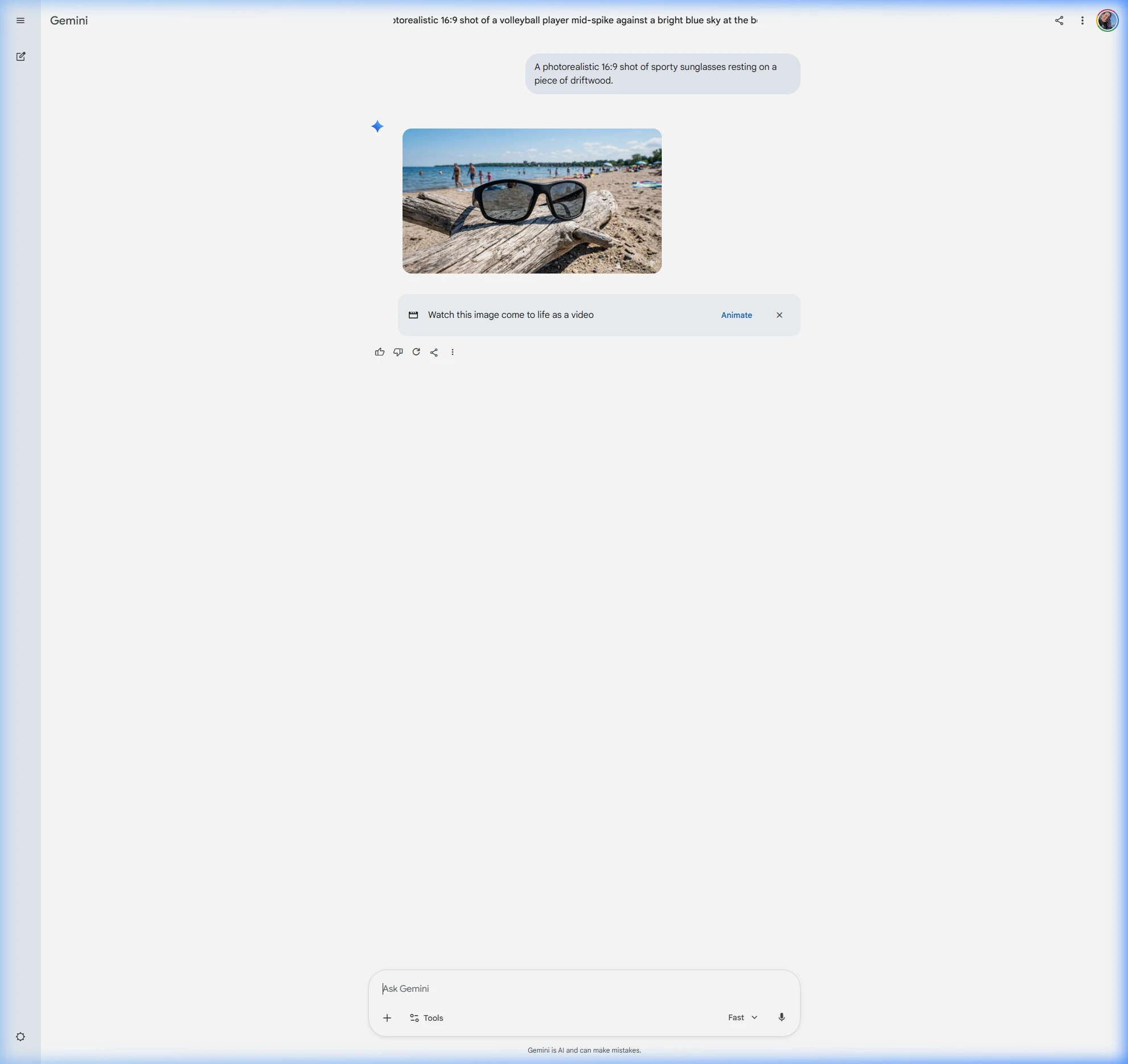
Frame coverage matters more than most older adults realize. Flat-front lenses leave a substantial peripheral-UV gap; wraparound or curved frames close it. For the high-reflection environments older adults often visit on summer outings — beach, lake, golf course, boating — the peripheral-coverage frame is the right pick. Polarized lenses additionally reduce glare-related eyestrain across long sessions, which supports the longer outdoor time some readers want.
Hat brim contributes meaningfully too. A wide-brimmed hat (4-inch brim or larger) blocks roughly 50% of incident UV to the eye region; a narrower “sun cap” brim provides much less protection. The practical translation: combine the wide-brim hat and the wraparound UV400 sunglasses for the high-exposure outings, and accept the sunglasses-alone setup for the daily walks. Cumulative load matters more than acute load Holick 2008.
Practical takeaways
- Photoaging in adults 60+ is mostly cumulative low-dose exposure on chronic-exposure zones, not acute high-dose exposure (Krutmann 2017).
- Basal-cell carcinoma is the most common cancer in older adults; cumulative UV exposure is the dominant risk factor (Robinson 2005).
- Melanoma risk is driven more by intermittent intense exposure (sunburn pattern) than by daily low-dose exposure.
- Daily structural protection (hat, long sleeves, SPF moisturizer) matters more than most adults realize; acute-exposure tools (SPF 30+, reapplication) matter for beach days specifically.
- Brief incidental sun exposure (10–30 min few times per week, April-September) supports vitamin D without contributing materially to risk (Holick 2008).
- Total sun avoidance year-round produces measurable vitamin D insufficiency; the ‘never any sun’ framing is overcorrection.
References
Krutmann 2017Krutmann J, Bouloc A, Sore G, Bernard BA, Passeron T. The skin aging exposome. Journal of Dermatological Science. 2017;85(3):152-161. View source →Robinson 2005Robinson JK. Sun exposure, sun protection, and vitamin D. JAMA. 2005;294(12):1541-1543. View source →Sliney 2005Sliney DH. Exposure geometry and spectral environment determine photobiological effects on the human eye. Photochemistry and Photobiology. 2005;81(3):483-489. View source →Holick 2008Holick MF. Sunlight, UV radiation, vitamin D and skin cancer: how much sunlight do we need? Advances in Experimental Medicine and Biology. 2008;624:1-15. View source →