The 60-second version
UPF-rated rash guards (Ultraviolet Protection Factor 50+) reliably block 98% or more of UVA and UVB at the tested wavelengths under the AS/NZS 4399 standard Hatch 2014. That is a real and substantial sun-protection benefit, especially for the hours-of-shoreline-exposure pattern most beach users actually experience Sliney 2005. The tradeoff is heat retention: synthetic upper-body coverage in hot, humid, low-wind conditions raises core temperature faster than a bare-torso baseline, and the heat-illness literature is clear that this can shift a low-risk session into a meaningful-risk one for higher-output activities Casa 2015, Brade 2014. The honest framing: rash guards are a high-value tool for passive shoreline exposure and for kids; they are a more conditional choice for high-effort surf, paddleboard, or open-water swim in heat.
What the peer-reviewed evidence actually shows
The UPF-fabric literature is well-established and largely uncontroversial within the dermatology and textile-science communities. Hatch 2014 in Clinical and Experimental Dermatology reviewed the AS/NZS 4399:2017 standard and the underlying physics of UV transmission through tightly-woven synthetic fabrics, confirming that UPF 50+ rated garments block 98% or more of UVA and UVB at the tested wavelengths under standard conditions Hatch 2014. The mechanism is straightforward: tightly-woven synthetics with low fiber-to-fiber gap distance physically prevent UV photons from passing through the fabric to the skin. No chemical UV filter is required; the protection is geometric.
The complication, well-documented in the same literature, is that real-world UPF performance differs from lab-test UPF performance. Wet fabric blocks measurably less UV than dry fabric of the same construction (the moisture changes the optical properties at the fabric surface). Stretched fabric blocks less than unstretched (the inter-fiber gaps widen). Aged and faded fabric blocks less than new (UV exposure degrades the synthetic polymers themselves). The real-world UPF after 20 swim sessions of a UPF 50+ garment may be closer to UPF 30, which is still substantial but materially different from the label claim.
Sliney 2005 and the broader photobiology literature establish the upstream context: cumulative UV exposure is the strongest single environmental risk factor for skin cancer and photoaging, and the dose-response is well-characterized Sliney 2005. The shoreline-exposure pattern most beach users experience — multiple hours of midday UV, often with reflection from sand and water amplifying the dose — sits at the higher end of typical environmental UV exposure. The clinical case for reliable photoprotection in this setting is robust.
The heat-retention tradeoff: where it matters
The complicating side of the rash-guard discussion is that adding synthetic upper-body coverage changes the body’s thermoregulation calculus. The body sheds heat through four routes: radiation, conduction, convection, and evaporation. In hot, humid, low-wind conditions, evaporation is the dominant route, and evaporation requires both sweating and the surface area to evaporate from. Covering the upper torso with synthetic fabric reduces the effective evaporative surface area and slows heat loss Casa 2015. The same fabric properties that make UPF synthetics good UV blockers (tight weave, low porosity) make them less efficient at allowing sweat to evaporate.
For low-output activity in moderate temperatures (passive shoreline reading, casual swimming, beach walking in the morning or evening), the heat-retention penalty is small enough that it does not move the safety calculation. The body can dissipate the modest heat load via the uncovered legs, head, and neck, and evaporation through the fabric — while reduced — is sufficient. The sun-protection benefit dominates the tradeoff cleanly.
For high-output activity (surf, paddleboard sprints, open-water competitive swim, shoreline running) in hot conditions, the calculation tips toward more conditional. Casa 2015 and Brade 2014 both document the dose-response relationship between heat-illness risk and combinations of ambient heat, humidity, exercise intensity, and clothing coverage Brade 2014. Adding a synthetic upper-body layer in 30C+ ambient temperatures with high humidity meaningfully raises the early-warning threshold for heat exhaustion and, in the worst case, heat stroke. The honest framing is that for these activities the rash guard is a conditional choice that should be weighed against zinc-based sunscreen on the arms and a wide-brim sun hat.
How to choose for the actual conditions
The practical decision framework has four inputs: ambient temperature and humidity, exercise intensity, exposure duration, and individual heat tolerance. For passive shoreline exposure (the dominant use case for most beach visitors), the answer is almost always “wear the rash guard.” The sun-protection benefit dominates and the heat-retention cost is small. This is especially true for children, whose surface-area-to-mass ratio means UV exposure accumulates faster relative to sunscreen reapplication discipline.
For moderate-output activity in temperate conditions (summer paddleboard touring in 22–25C water with 25C air), the rash guard remains net-positive but a short-sleeve cut over a long-sleeve gives back some of the evaporative surface area at the cost of some forearm coverage that can be addressed with sunscreen. This is the most flexible use case and is where individual preference and skin-cancer-risk profile properly drive the choice.
For high-output activity in hot conditions (surf in 28C+ air with 90%+ humidity, shoreline running, open-water competitive swim) the calculation gets more conservative. Casa 2015’s heat-illness framework would treat this combination as elevated baseline risk, and adding a synthetic upper-body layer on top further reduces the safety margin Casa 2015. The conservative choices are short-sleeve UPF rather than long-sleeve, lighter-weight ventilated UPF fabrics rather than heavyweight versions, and a willingness to remove the garment during particularly intense efforts and reapply zinc-based sunscreen instead.
The kids question: this is where rash guards really shine
The pediatric photoprotection literature provides the cleanest case for rash guards. Children have a higher surface-area-to-mass ratio than adults, are typically more active in the water, are less reliable about sunscreen reapplication, and have skin-cancer-risk profiles that are particularly sensitive to cumulative early-life UV exposure. The combination makes fabric-based photoprotection more reliable than reapplied sunscreen in this population, and the heat-retention tradeoff is generally small at typical pediatric play intensities Sliney 2005.
The reasonable middle-ground for parents is a long-sleeve UPF 50+ rash guard for children for any planned beach session of 30+ minutes during peak UV hours (10am–4pm in summer Wasaga conditions). The garment can come off in the water if the child is overheating, but the default coverage is the photoprotective state. Sunscreen application is layered on top for exposed skin (face, hands, lower legs), with reapplication discipline that doesn’t need to cover the rash-guarded torso.
For infants under 6 months, dermatology guidance generally recommends sun avoidance (shade, time-of-day, hat, light fabric coverage) over sunscreen, and rash guards become a primary photoprotection tool rather than an adjunct. The fabric-based approach avoids the chemical-sunscreen-on-infant-skin question entirely.
When rash guards are the wrong choice
The conditions where the heat-retention tradeoff actively flips the safety calculation are specific but worth flagging clearly. First, sustained hot-weather competitive swim in calm-water conditions where ambient heat is high and convective wind cooling is absent. The published heat-illness case literature includes incidents where synthetic upper-body coverage contributed to faster-than-expected core temperature rise in this exact setting Brade 2014. Second, prolonged surf sessions in hot, humid, low-wind conditions where the wetsuit / rash-guard layer combines with high muscular work to push the heat-balance calculation into deficit territory.
Third, the specific case of indoor or pool training in hot environments where the natural cooling effects of open water and shoreline wind are absent. A long-sleeve UPF rash guard worn during indoor lap swimming in a warm pool offers no UV-protection benefit and adds heat-retention cost; the choice becomes purely irrational. The garment is designed for outdoor sun-exposure conditions and should be reserved for those.
Fourth, conditions where signs of heat stress are already present (early-warning fatigue, slowed performance, elevated heart rate at fixed pace). Casa 2015’s heat-illness framework treats removing thermal-load layers as a first-line intervention when these signs appear; continuing to wear UPF coverage in this state is the wrong direction Casa 2015. The sun-protection cost of removing the garment for the rest of the session is far smaller than the heat-illness risk of continuing.
The broader photoprotection portfolio
The most defensible synthesis is that rash guards are one tool in a photoprotection portfolio that also includes time-of-day choices (avoiding peak UV hours when possible), shade structures (umbrellas, beach canopies), wide-brim hats, sunglasses, and zinc-based or chemical sunscreen on uncovered skin. None of these tools is universally optimal; the right combination depends on activity, conditions, and individual skin-cancer-risk profile.
For Wasaga and Georgian Bay readers specifically, the practical implication is that the long beach days many residents and visitors enjoy — multi-hour shoreline exposure during summer afternoons — sit at the high end of typical environmental UV exposure for Ontario. The case for fabric-based photoprotection is correspondingly strong for these conditions. The balance shifts toward more selective rash-guard use for the higher-output watersports the Wasaga community supports (windsurf, kitesurf, paddleboard racing) where the heat-retention tradeoff matters more.
The honest editorial position is that rash guards solve a real problem (reliable UV protection for shoreline exposure) and create a smaller real problem (heat retention in specific high-load conditions), and good consumer choice involves matching the tool to the conditions rather than treating rash guards as either a universal upgrade or a vanity choice.
Materials and construction: what to actually look for
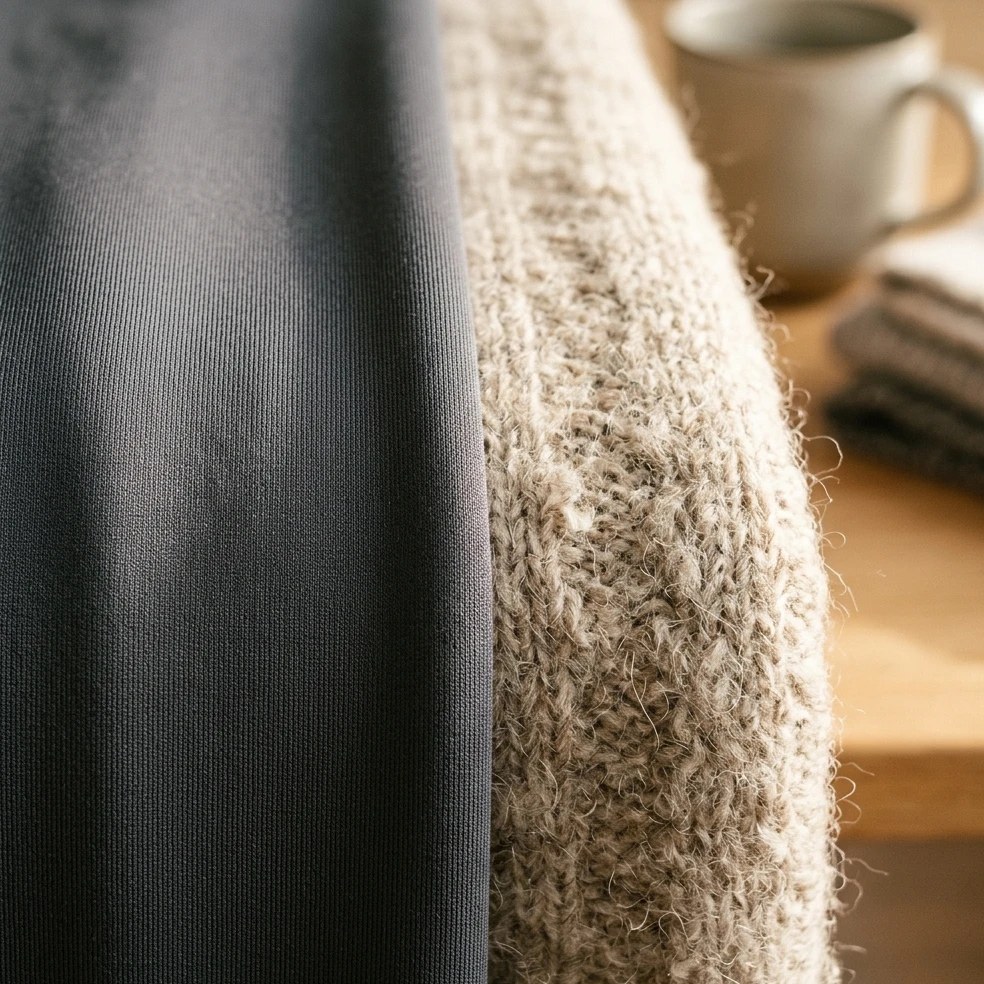
The performance differences between mid-tier and premium UPF rash guards come down to a few specific construction features. Fibre composition matters: tightly woven polyester (often labeled “polyester elastane” or “polyester spandex”) is the standard high-UPF base. Nylon blends offer slightly better hand-feel at modestly lower UPF efficiency. The labelled UPF rating already accounts for the construction; the practical question is whether the manufacturer tested the fabric under the AS/NZS 4399 standard rather than self-reporting Hatch 2014.
Stitching geometry is the second variable that meaningfully affects in-water performance. Flatlock seams reduce the chafing risk during repetitive paddle or stroke motions; raised seams cause the most common rash-guard-related skin issue, which is the friction abrasion the garment is supposed to prevent in the first place. The historical name “rash guard” comes from the surf-community use of the garment to prevent surfboard-wax abrasion across the chest and ribs; a modern UPF-rated garment with poor seam construction can cause the very rash it is named for.
Coverage cut also matters. The high-collar, dropped-hem styles add coverage at the neck (a particularly UV-vulnerable area in shoreline-walking and paddleboard postures) and lower back (often missed by short-sleeve T-shirts during forward-leaning activity). For readers prioritizing photoprotection, these cuts capture meaningful additional skin area at little to no heat-retention cost. For readers prioritizing thermoregulation, looser cuts with side-vent panels improve airflow at modest UPF cost.
Practical takeaways
- UPF 50+ blocks 98% or more of UVA/UVB in the lab. Real-world performance is somewhat lower (wet, stretched, aged fabric) but still substantial.
- For passive shoreline exposure, wear the rash guard. Sun-protection benefit dominates; heat-retention cost is small.
- For high-output watersports in hot, humid, low-wind conditions, use a short-sleeve cut or skip and rely on zinc. Heat illness becomes the dominant risk.
- For kids, long-sleeve UPF 50+ is the default. Sunscreen reliability is lower at typical kid intensities; cumulative UV risk is higher.
- Replace rash guards every 2–3 seasons of regular use. Polymer degradation reduces the effective UPF over time.
- If signs of heat stress appear, remove the layer. Heat-illness risk from continuing dominates the marginal sun-protection benefit.
References
Hatch 2014Hatch KL, Osterwalder U. Garments as solar ultraviolet radiation screening materials. Clinical and Experimental Dermatology. 2014;39(2):174-178. View source →Sliney 2005Sliney DH. Exposure geometry and spectral environment determine photobiological effects on the human eye. Photochemistry and Photobiology. 2005;81(3):483-489. View source →Casa 2015Casa DJ, DeMartini JK, Bergeron MF, et al. National Athletic Trainers' Association position statement: exertional heat illnesses. Journal of Athletic Training. 2015;50(9):986-1000. View source →Brade 2014Brade C, Dawson B, Wallman K. Effect of pre-cooling on 40-km cycling time trial performance in hot and humid conditions. British Journal of Sports Medicine. 2014;48(7):624-630. View source →