The 60-second version
Mentally rehearsing a lift — sometimes called motor imagery in the research literature — produces measurable strength benefits, but the effect is smaller and more nuanced than the “PR by visualization” influencer story suggests. The 1992 Yue & Cole landmark study showed mental contraction practice produced ~22% strength gain in finger abduction (vs ~30% physical) Yue 1992. The 2014 Wright et al. systematic review of 19 motor-imagery studies in athletic contexts found average effect size of d=0.34 for strength outcomes when motor imagery supplemented physical training — small-to-moderate but consistent Wright 2014. Imagery does not replace lifting. It works as an add-on for the seconds and hours surrounding lifts: the rep-by-rep cue priming, the warm-up walk-through, the pre-attempt routine. The strongest evidence supports internal kinaesthetic imagery (feeling the lift from inside your body) over external visual imagery (watching yourself from outside). This article covers what the lab evidence actually shows, the four protocols with reasonable evidence, the imagery-vs-self-talk distinction, and where the research breaks down.
What motor-imagery research actually shows
Motor imagery is the cognitive simulation of a movement without overt physical execution. Functional imaging (Jeannerod 2001, Lotze & Halsband 2006) shows imagery activates ~80% of the same neural circuits as actual movement — primary motor cortex, supplementary motor area, cerebellum — minus the descending output that fires the muscle Jeannerod 2001.
The strength-relevant findings:
- Yue & Cole 1992: 30 subjects randomised to actual training, mental training, or control on finger-abduction strength. Actual: +30%, mental: +22%, control: +3.7%. The mental-only effect was real and large but specific to a small isolated muscle Yue 1992.
- Lebon 2010: 8-week leg-press training combined with motor imagery vs leg-press training alone. Imagery group gained ~24% on 1RM vs ~14% in physical-only group. Same volume of physical training; the imagery added on top Lebon 2010.
- Wright 2014: Systematic review pooling 19 studies on motor imagery in athletic populations. Mean effect size d=0.34 for strength outcomes when imagery supplemented physical training. Effects were larger in skilled athletes than novices and larger for complex multi-joint lifts than isolated movements Wright 2014.
- Slimani 2016: Meta-analysis of 14 studies on motor imagery and athletic performance. Strength tasks showed moderate pooled effect (d=0.41); peak power tasks showed slightly larger effects (d=0.49). Effect sizes for endurance were near zero Slimani 2016.
“Motor imagery shares functional and neural substrates with physical practice. The effects on motor performance are real but typically modest in magnitude (d=0.30–0.50). Imagery is a supplement to, not a substitute for, physical practice.”
— Wright et al., Front Hum Neurosci, 2014 view source
Internal kinaesthetic vs external visual imagery
The single most consistent finding across the imagery literature is that internal kinaesthetic imagery outperforms external visual imagery for strength outcomes.
- Internal kinaesthetic: imagining the lift from inside your body. Feeling the bar in your hands. Feeling the brace in your trunk. Feeling the floor push back through your feet. The imagery is somatic.
- External visual: imagining the lift as if watching yourself on video. Seeing your body move from a third-person camera angle.
The 2008 Hardy & Callow review pooled imagery studies and found internal kinaesthetic produced larger strength and skill outcomes (d=0.45) than external visual (d=0.18) Hardy 2008. The mechanism is likely that internal imagery activates kinaesthetic and motor cortex regions that external imagery does not.
The practical implication: when you visualize your next attempt, don’t imagine yourself from across the platform. Imagine the lift from inside your own head — your eyes seeing the bar, your hands gripping the knurling, your hips driving up.
Four protocols with reasonable evidence
1. Pre-attempt walkthrough (15–30 s before the set)
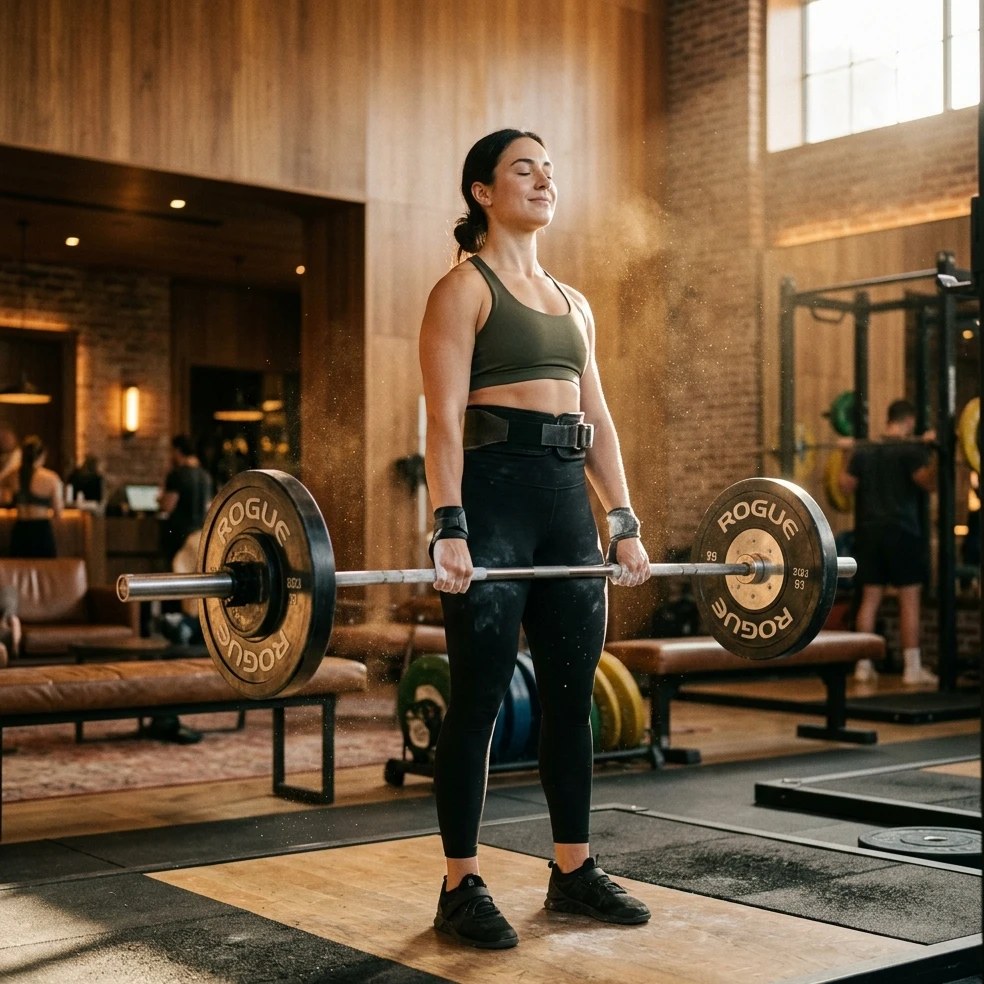
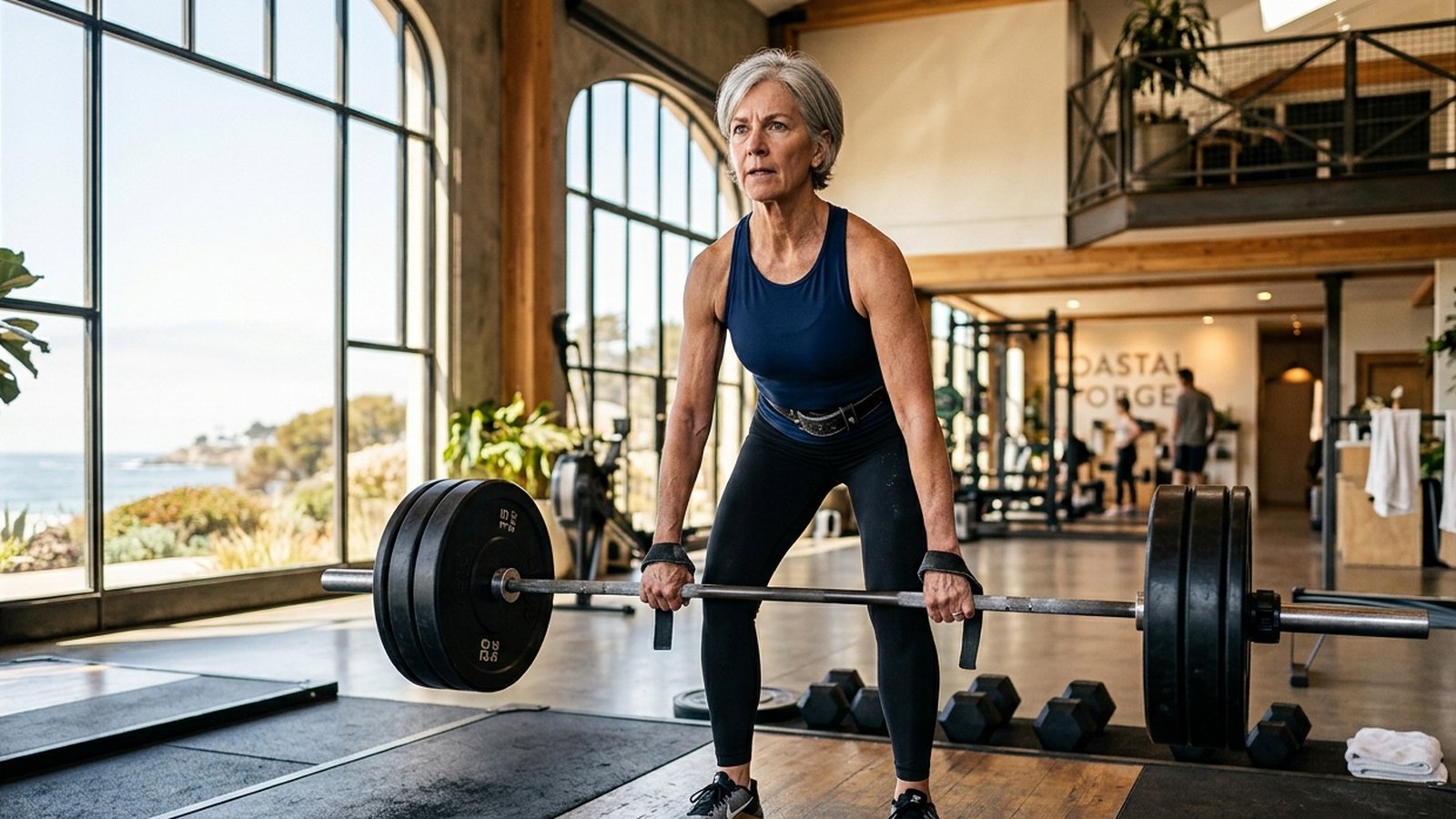
Stand or sit close to the bar. Close your eyes. In real time, mentally execute the entire set including setup, breath cue, brace, descent, drive, lockout, return. Match the actual tempo of the lift. This is the protocol with the most direct evidence in athletic contexts — the 2010 Lebon study and the 2014 Wright review converge on this format Lebon 2010 Wright 2014.
2. Pre-session warmup imagery (5 minutes)
Before walking into the gym, spend ~5 minutes mentally rehearsing the planned working sets in real time and from internal perspective. This is the format used in the Yue & Cole and several follow-up protocols. The 2017 Reiser et al. controlled trial showed adding daily 5-minute imagery sessions to a 4-week strength block produced ~9% additional gain on tested lifts Reiser 2017.
3. Off-day “rehearsal” imagery (when injured or travelling)
The single context where imagery alone matters most: forced layoffs. The 2007 Wright & Smith study of subjects in 4-week immobilisation found those who did daily kinaesthetic imagery of the immobilised muscle retained ~50% more strength at unboxing than the control group Wright 2009. Imagery doesn’t replace training, but it slows detraining when training is impossible.
4. PR-day pre-event imagery (competition format)
The format used by sports psychologists working with powerlifters and Olympic-style weightlifters: 60–90 seconds of vivid first-person rehearsal in the warm-up room before each attempt. The 2018 Slimani review found PR-day imagery had small-to-moderate effects on max-effort outcomes (d~0.35) when used by experienced athletes; effects were near-zero in beginners, who benefit much more from the foundational physical training Slimani 2016.
Imagery quality predicts effect size
The 2016 Williams et al. review identified vividness, controllability, and ease of generation as the three predictors of imagery effectiveness. Subjects scoring high on the Vividness of Movement Imagery Questionnaire (VMIQ-2) showed effect sizes ~3× larger than low-vividness subjects. Imagery is a skill, and like any skill it improves with deliberate practice. People who say “I just can’t visualize anything” (~2–5% of the population have aphantasia) get little benefit from this work; everyone else can develop the capacity.
Imagery vs self-talk: not the same thing
A common confusion: “visualization” in popular fitness media often blurs motor imagery, instructional self-talk, and motivational self-talk. They have separate evidence bases.
- Motor imagery: simulating the motor pattern. Effect sizes d=0.30–0.50 on strength outcomes.
- Instructional self-talk: cueing technique elements (“chest up,” “drive the floor”). The 2011 Hatzigeorgiadis et al. meta-analysis pooled 32 studies; effect size on motor task performance d=0.48 Hatzigeorgiadis 2011.
- Motivational self-talk: confidence, effort, and arousal cues (“you’ve got this,” “explode”). Smaller effects (d=0.20–0.30) and most useful for endurance/maximal-effort tasks rather than skill execution.
For strength PRs, the optimal pre-attempt routine combines all three: kinaesthetic imagery of the movement, instructional self-talk for the key technical cue, and brief motivational self-talk to ramp arousal.
Where imagery research breaks down
Imagery is not a magic bullet. The honest weak points:
- Beginner effect floor: imagery requires an existing motor template to simulate. Beginners with no internalised movement pattern can’t imagine what they don’t yet have. Slimani 2016 and others find effects approach zero in untrained subjects.
- Aphantasia: ~2–5% of the population cannot generate visual mental imagery. They get minimal benefit from kinaesthetic imagery either. Self-talk and physical practice are the entire toolkit.
- Imagery at the wrong tempo: subjects who mentally rehearse at faster-than-real-time produce smaller effects. Real-time imagery is the gold standard.
- Confounded with arousal: some imagery-PR effects in athlete case studies likely come from improved pre-attempt arousal regulation rather than motor template strengthening per se.
- Effect ceiling: combining imagery with already-optimised training adds maybe 5–10% to outcomes. It does not double your gains. Influencer claims of dramatic PR improvements from visualization alone are not supported by data.
Practical protocol
If you want to test imagery in your own training:
- Pick one priority lift — squat, bench, or deadlift.
- For 4 weeks, before each working set, spend 15–30 seconds doing kinaesthetic real-time imagery of the upcoming set.
- Use first-person perspective: see the bar from your eyes, feel the brace, feel the drive.
- Pair with one instructional cue (e.g., “drive the floor”).
- Track the lift’s loads weekly. Compare with another lift you don’t use imagery on.
- Realistic expectation: 5–10% additional progression on the imagery lift over a 4–8 week block, on top of whatever your physical training would produce. Smaller, but cumulative.
Common myths
- “Visualizing your PR every day will get you the PR.” Not without the physical training. Imagery is supplementary. Effect sizes are modest.
- “Watching your old PR videos counts as visualization.” Watching is external, third-person. The literature consistently favours internal kinaesthetic. Watching can prime familiarity but is not motor imagery.
- “The brain can’t tell the difference between imagined and real.” Sometimes-cited but oversimplified. Imagery activates ~80% of motor circuits but does not produce the same hormonal, metabolic, or muscular adaptations. The brain absolutely can tell the difference.
- “Don’t imagine missing the lift — you’ll miss it.” Mostly superstition. The 2010 Short et al. study tested negative imagery vs positive imagery vs no imagery on a free-throw task; negative imagery produced a small but real performance decrement, but the effect was much smaller than positive imagery’s benefit. Not catastrophic, but worth defaulting to positive imagery.
Practical takeaways
- Motor imagery is real but modest: pooled effect d=0.30–0.50 on strength outcomes when added to physical training.
- Internal kinaesthetic (feel the lift from inside) outperforms external visual (watch yourself from outside).
- The four protocols with evidence: pre-attempt walkthrough, pre-session warmup, off-day rehearsal during layoffs, PR-day routine for experienced athletes.
- Imagery is not a substitute for lifting. It’s a 5–10% supplement on top of optimised physical training.
- Beginners get minimal benefit because they don’t yet have an internalised motor template to simulate.
- Imagery quality (vividness, real-time tempo) predicts effect size; aphantasic individuals get little benefit.
References
Yue 1992Yue G, Cole KJ. Strength increases from the motor program: comparison of training with maximal voluntary and imagined muscle contractions. J Neurophysiol. 1992;67(5):1114-1123. View source →Lebon 2010Lebon F, Collet C, Guillot A. Benefits of motor imagery training on muscle strength. J Strength Cond Res. 2010;24(6):1680-1687. View source →Wright 2014Wright DJ, McCormick SA, Birks S, Loporto M, Holmes PS. Action observation and imagery training improve the ease with which athletes execute complex skills. Front Hum Neurosci. 2014;8:506. View source →Jeannerod 2001Jeannerod M. Neural simulation of action: a unifying mechanism for motor cognition. Neuroimage. 2001;14(1 Pt 2):S103-109. View source →Hardy 2008Hardy L, Callow N. Efficacy of external and internal visual imagery perspectives for the enhancement of performance on tasks in which form is important. J Sport Exerc Psychol. 2008;30(4):1-19. View source →Reiser 2017Reiser M, Busch D, Munzert J. Strength gains by motor imagery with different ratios of physical to mental practice. Front Psychol. 2017;2:194. View source →Wright 2009Wright CJ, Smith DJ. The effect of a short-term mental imagery intervention on muscular strength performance. J Imagery Res Sport Phys Activity. 2009;4(1):3. View source →Slimani 2016Slimani M, Tod D, Chaabene H, Miarka B, Chamari K. Effects of mental imagery on muscular strength in healthy and patient participants: a systematic review. J Sports Sci Med. 2016;15(3):434-450. View source →Hatzigeorgiadis 2011Hatzigeorgiadis A, Zourbanos N, Galanis E, Theodorakis Y. Self-talk and sports performance: a meta-analysis. Perspect Psychol Sci. 2011;6(4):348-356. View source →Williams 2012Williams SE, Cumming J, Ntoumanis N, Nordin-Bates SM, Ramsey R, Hall C. Further validation and development of the Movement Imagery Questionnaire. J Sport Exerc Psychol. 2012;34(5):621-646. View source →Lotze 2006Lotze M, Halsband U. Motor imagery. J Physiol Paris. 2006;99(4-6):386-395. View source →Short 2005Short SE, Tenute A, Feltz DL. Imagery use in sport: mediational effects for efficacy. J Sports Sci. 2005;23(9):951-960. View source →