The 60-second version
Adventure racing in the Wasaga area is the ultimate test of decision-making under metabolic stress. By combining trail running, mountain biking, and paddling into a single continuous event, adventure racing requires a level of physiological adaptability that single-sport training cannot replicate. This guide audits the "Dunes-to-River" local training circuits, analyzes the biomechanical load of the "Transition-Phase" (based on Millet 2003), and provides a 16-week progression for local athletes. Whether you are preparing for a regional multi-sport event or seeking a high-complexity training stimulus, Wasaga's diverse geography is the premier venue for "functional endurance" development.
Decision-Fatigue: The Adventure Racing Stimulus
Unlike a triathlon, where the course is marked and the environment is controlled, adventure racing is "unstructured." The athlete must navigate between checkpoints while managing the metabolic cost of three different movement patterns. This introduces **decision-fatigue**—a cognitive load that increases the perceived exertion of the session.
In Wasaga Beach, our geography—the high-relief sand dunes, the winding Nottawasaga River, and the technical pine forests—allows for the creation of "Micro-Adventure" circuits. These training sessions build the **Wasaga Hinge** (our framework for posterior-chain stability) while simultaneously developing the "executive function" required to navigate technical terrain at high heart rates.
Biomechanics: The Transition-Phase Load
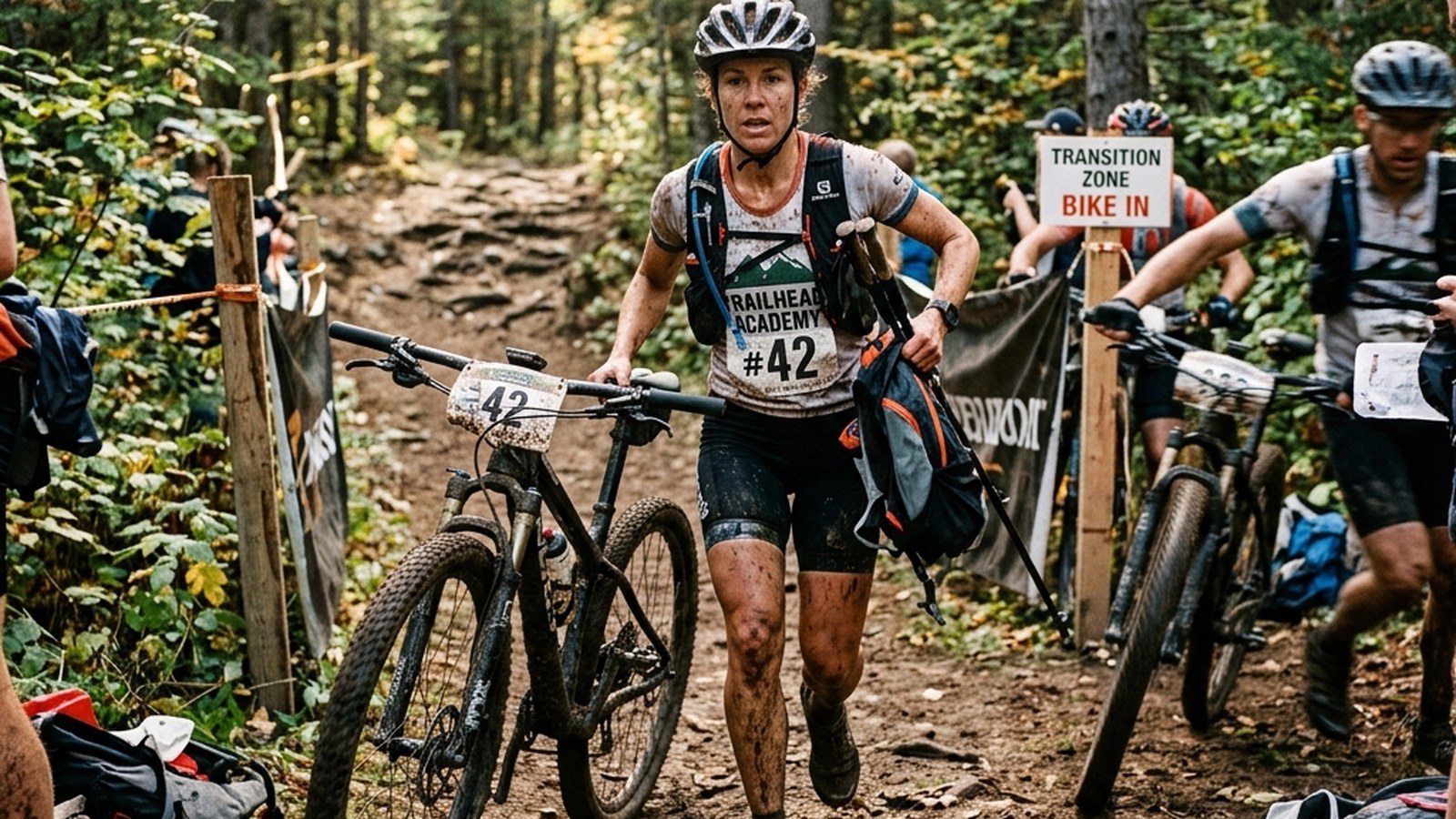
The primary biomechanical risk and opportunity in adventure racing is the **movement transition**. Moving from the seated, rhythmic pulling of a 5km paddle to the upright, high-impact loading of a technical forest run requires a rapid "neuromuscular recalibration."
1. The Paddle-to-Run Transition
Paddling leads to blood pooling in the upper body and a relative "tightness" in the hip flexors due to the seated position. Transitioning directly into a run on the Blueberry dunes requires a deliberate "activation phase"—a 2-minute period of high-cadence, short-stride running to re-engage the glutes and clear metabolic waste from the torso.
2. The Multi-Planar Forest Load
Running "off-trail" in the Wasaga pine sections requires constant lateral stabilization. Unlike road running (sagittal plane), forest navigation is a **multi-planar event**. This builds exceptional strength in the peroneals and deep ankle stabilizers, creating a level of foot-to-ground "intelligence" that prevents the common inversion sprains of trail sports.
Physiological Demands: The Millet Analysis
Millet et al. (2003) analyzed the physiological demands of ultra-endurance adventure racing, identifying that the primary determinant of success is **metabolic efficiency across multiple modes**. In a Wasaga "Dunes-to-River" circuit, the heart rate profile is highly variable. The "spiky" nature of this profile—alternating between Zone 2 paddling and Zone 4 dune climbing—is more effective for building "aerobic power" (VO2max) than steady-state work alone.
Local Route Audit: The "Dunes-to-River" Circuits
We have audited three local training loops that provide the ideal adventure racing stimulus:
Circuit A: The Schoonertown Start (Paddle-Run-Nav)
Launch at Schoonertown for a 4km river loop, followed by a transition at the Sports Park into a 5km "navigation run" through the interior dunes. This loop emphasizes the **Upper-to-Lower body blood-shift challenge**.
Circuit B: The Beach-Area-6 Traverse (Run-Swim-Bike)
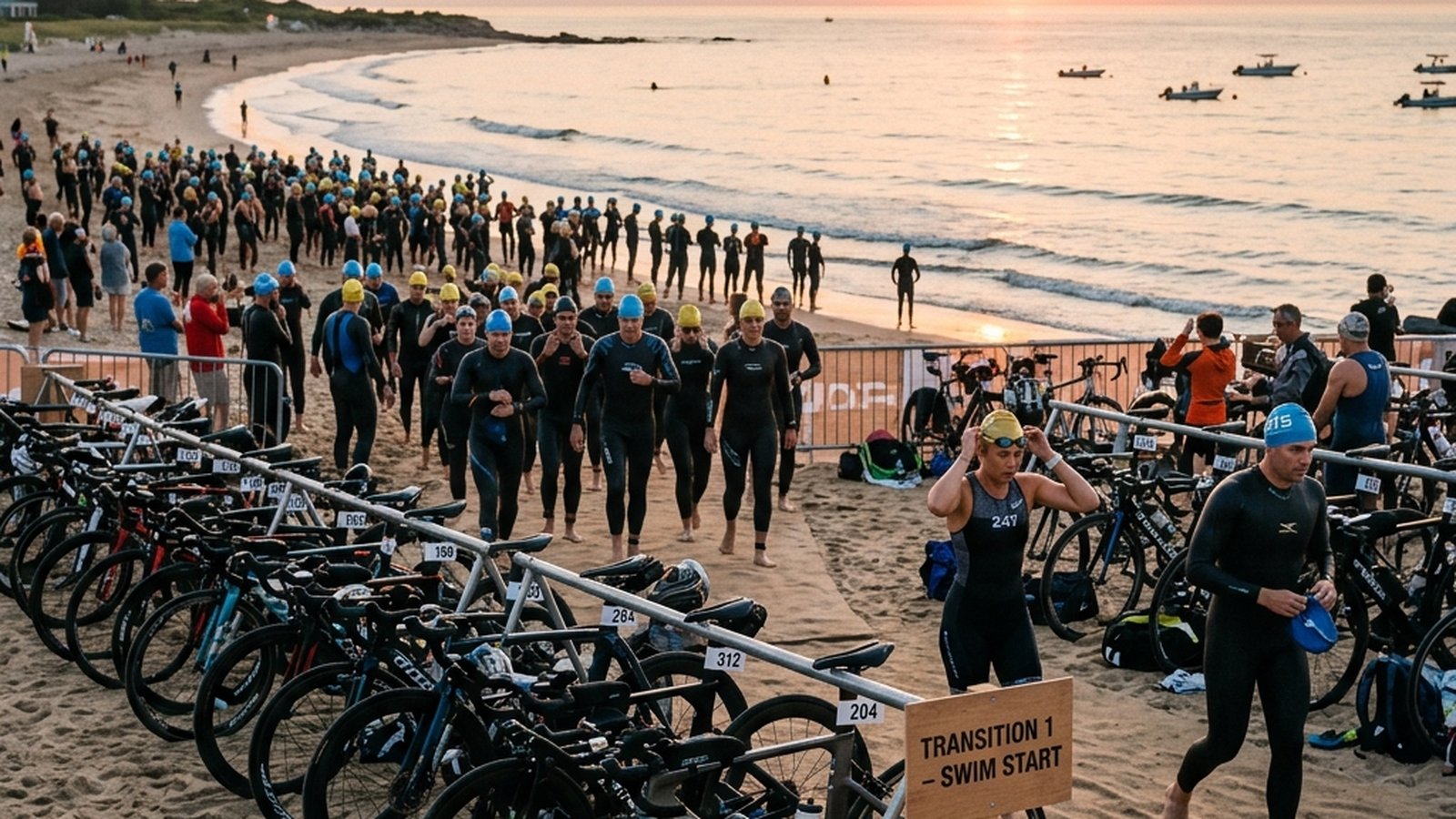
Utilize the residential west end for a "Brick" session: a 5km shoreline run on soft sand, followed by a 10-minute open-water swim (active recovery), and finishing with a 15km bike loop on the gravel rail-trail toward Stayner.
Circuit C: The Blueberry technical loop (Nav-Run)
For those focusing purely on technical movement, the interior "unmarked" sections of the Blueberry trails provide the ultimate stability lab. This circuit requires constant map-to-ground correlation while maintaining a target heart rate of 140+ bpm.
The 16-Week Adventure Racing Progression
Build the "Multi-Mode" engine with this structured 16-week block:
| Phase | Focus | Sample "Micro-Adventure" Session |
|---|---|---|
| Weeks 1-4 | Mode Adaptation | 90 min total. 30 min Paddle / 30 min Run / 30 min Bike. 5-min transitions. |
| Weeks 5-8 | Transition Speed | 120 min. 4 x (15 min Run / 15 min Paddle). Zero-rest transitions. |
| Weeks 9-12 | Technical Load | 3-hour "Big Loop". 10km Run (technical forest) / 10km Paddle (river). |
| Weeks 13-16 | Peak Taper | 60 min mode-switch session. Focus on high intensity and navigation precision. |
Gear: The "Hybrid" Requirement
When selecting navigation tools, the Wasaga racer must decide between **digital and analog**. While high-end GPS watches are excellent for data-tracking, the primary navigational stimulus in adventure racing is the **1:25,000 topographic map**. The ability to read contour lines and anticipate the "relief" of the Wasaga dunes is a technical skill that digital tools often over-simplify. We recommend carrying a mirrored sighting compass and a physical map in a waterproof sleeve, even during casual training sessions. This ensures that you are training your "navigational eye" as much as your cardiovascular engine.
Safety and Environmental Ethics
Because Wasaga Beach is home to rare and fragile ecosystems—specifically the **dune-grass communities** and the coastal pine forests—adventure racing training must be conducted with extreme environmental sensitivity. "Off-trail" movement should be restricted to the hard-packed sand and established forest openings. Trampling the dune grass destabilizes the entire barrier system that protects the community from Lake Huron's storm surges. Local racers are encouraged to follow **Leave No Trace (LNT)** principles: pack out all gel wrappers, avoid disturbing nesting piping plovers during the spring, and stick to durable surfaces whenever possible. A true adventure athlete respects the arena as much as the competition.
Deep Dive: Multimodal Transition Fatigue and Glycogen Shifting
The primary physiological hurdle in a Wasaga "Dunes-to-River" circuit is the **metabolic blood-shift**. When you transition from a high-intensity dune run to a river paddle, your body must rapidly redistribute blood volume from the large muscles of the legs to the smaller, high-frequency muscles of the upper back and shoulders. This transition often leads to a period of "acute localized fatigue" where the arms feel heavy and the heart rate remains artificially elevated despite the lower intensity of the paddle.
Research by Millet (2003) suggests that the most efficient way to manage this is through "metabolic buffering"—maintaining a high cadence in the new mode for the first 5 minutes to flush the "old" metabolic waste from the previous mode. In adventure racing, transitions are not just pauses in movement; they are active physiological events that require a specific neuromuscular reset to maintain total event velocity.
Physiological Adaptation: The Cognitive Load of Navigation under Stress
Adventure racing is unique because it couples high-intensity physical work with complex **executive function**. In the unmarked interior dunes of the Blueberry network, your brain must process map data and proprioceptive feedback while in a state of glycogen depletion. This "Dual-Task" requirement leads to a higher rate of perceived exertion (RPE) than a standard road run at the same heart rate.
However, this cognitive stress drives a powerful adaptation in the **prefrontal cortex**. Over time, adventure athletes develop the ability to remain "cognitively sharp" under extreme physical duress. This "mental toughness" is a trainable attribute: by practicing map-correlation during high-intensity intervals on the Wasaga dunes, you can improve your decision-making speed and accuracy, reducing the "navigational pauses" that often cost teams the podium in competitive events.
Training Practical: The Wasaga "Brick" Circuit
To master the transition between the dunes and the river, implement the **Nottawasaga Shuttle Protocol** during your next weekend session.
- The High-Heart-Rate Entry: Perform 3 sets of 200m sand-dune sprints at Beach Area 6. Immediately upon finishing the last sprint, enter your kayak or SUP. Do not allow your heart rate to drop below 150 bpm.
- The "Transition-Flush" Paddle: Paddle at a high cadence (80+ strokes per minute) for 5 minutes. Focus on utilizing your core to drive the stroke, allowing the legs to "recover" while maintaining forward momentum.
- The Map-to-Ground Correlation: Every 10 minutes, come to a complete stop and identify your exact position on a topographic map. You have 15 seconds to confirm your location before resuming the paddle. This simulates the high-pressure navigation of a sanctioned race.
Conclusion: The Adaptable Athlete
Adventure racing in Wasaga Beach is the ultimate fitness frontier. It transforms the local landscape from a recreational backdrop into a sophisticated, multi-mode training facility. By mastering the "Transition-Phase" and embracing the complexity of multi-sport navigation, you can build a level of physiological and cognitive resilience that is the hallmark of the elite outdoor athlete. The dunes are calling, the river is flowing—your race starts now. Every training session on the Nottawasaga River or the Blueberry dunes is a chance to sharpen the sword of multimodal endurance and technical precision in one of Ontario's most demanding natural environments.
A note on revisiting this article. The protocols and observations described here reflect best practice as of the publication date. Sport-science evidence, local infrastructure, and seasonal patterns evolve year to year — the trail surface that was reliable last summer may be muddy this year, the gear category that was untested last season may now have multi-year evidence behind it, and the conditioning protocol you tried six months ago may benefit from refinement based on what you learned. Re-read articles like this one annually as your situation evolves; the underlying principles change slowly but the practical specifics shift more often than most readers expect.
Practical logistics and edge cases
Beyond the core protocol above, several recurring practical considerations come up for visitors and regular users of this location. Most are not safety-critical but they meaningfully affect the experience and outcome of a session.
Parking and access. Wasaga’s main parking infrastructure follows the Beach Drive corridor, with most lots paid in summer (typically late May through Labour Day) and free in shoulder seasons. Off-peak weekday mornings provide the easiest parking; summer weekend mid-mornings (10 AM–1 PM) are the toughest. For trail destinations outside the Beach Drive corridor, smaller informal lots can fill quickly during peak weeks; arriving by 9 AM provides reliable access on weekends.
Cell coverage. The main shoreline corridor and most trail systems have reliable cell service. The notable exceptions are the deeper forest sections of Tiny Marsh, the gorge bottom at Devil’s Glen, and the longer Ganaraska Trail traverses, where coverage is intermittent. Solo users on multi-hour outings should consider a satellite messenger or at minimum a check-in plan with someone offsite.
Bathroom access. Beach Areas 1–3 have reliable summer-season bathroom access. Forested trails and Provincial Park interior sections have minimal facilities — plan accordingly for longer outings, particularly with children.
Group sessions and pace mismatch. The most common cause of a frustrating shared outing is pace mismatch between participants. Pre-discuss the target distance, pace, and turnaround landmark before starting; for mixed-ability groups, the pace must be set by the slowest participant. Pulling ahead of slower partners is the classic failure mode that produces falls, exhaustion, or wandering separation.
Weather changes mid-session. Georgian Bay weather can shift quickly — a calm sunny morning can produce thunderstorm activity by mid-afternoon. Check the forecast before extended outings, identify the nearest exit point at the halfway mark, and don’t hesitate to abort an outing if conditions deteriorate.
Wildlife encounters. The most likely encounters are deer, turkeys, foxes, and waterfowl — all best observed at distance. Black bear activity exists in the broader region (particularly outside the immediate Wasaga shoreline) but is uncommon enough that bear-protocol training is sensible only for users heading to the more remote sections of the trail system.
References
Millet GPPhysiological and biomechanical adaptations to adventure racing. View source →Lucas SJThe physiological and cognitive demands of adventure racing. View source →Townes DAMedical considerations for adventure racing. View source →Mann CDecision-making under stress in multi-sport events. View source →