The 60-second version
Cross-country skiing at the Wasaga Nordic Centre is the ultimate winter "metabolic gold standard" for local athletes. By engaging both the upper and lower body in a rhythmic, low-impact aerobic cycle, Nordic skiing produces some of the highest recorded VO2max values in sports science (Hoff 1999). This guide audits the Blueberry Trail network, analyzes the biomechanical efficiency of the double-pole vs. diagonal stride, and provide a 12-week winter aerobic base plan designed for the high-altitude dunes of Wasaga. Whether you are training for a loppet or seeking a high-wattage cardio alternative to the gym, Wasaga's groomed trails are the premier winter training facility in the region.
The Metabolic Gold Standard: Why Nordic?
In the hierarchy of aerobic exercises, Nordic skiing sits at the apex. Unlike running (predominantly lower body) or rowing (predominantly upper and mid-body), Nordic skiing requires a **simultaneous, high-force output from all four limbs**. This massive muscle recruitment drives a disproportionate demand for oxygen, making it the most efficient tool for building a robust cardiovascular system.
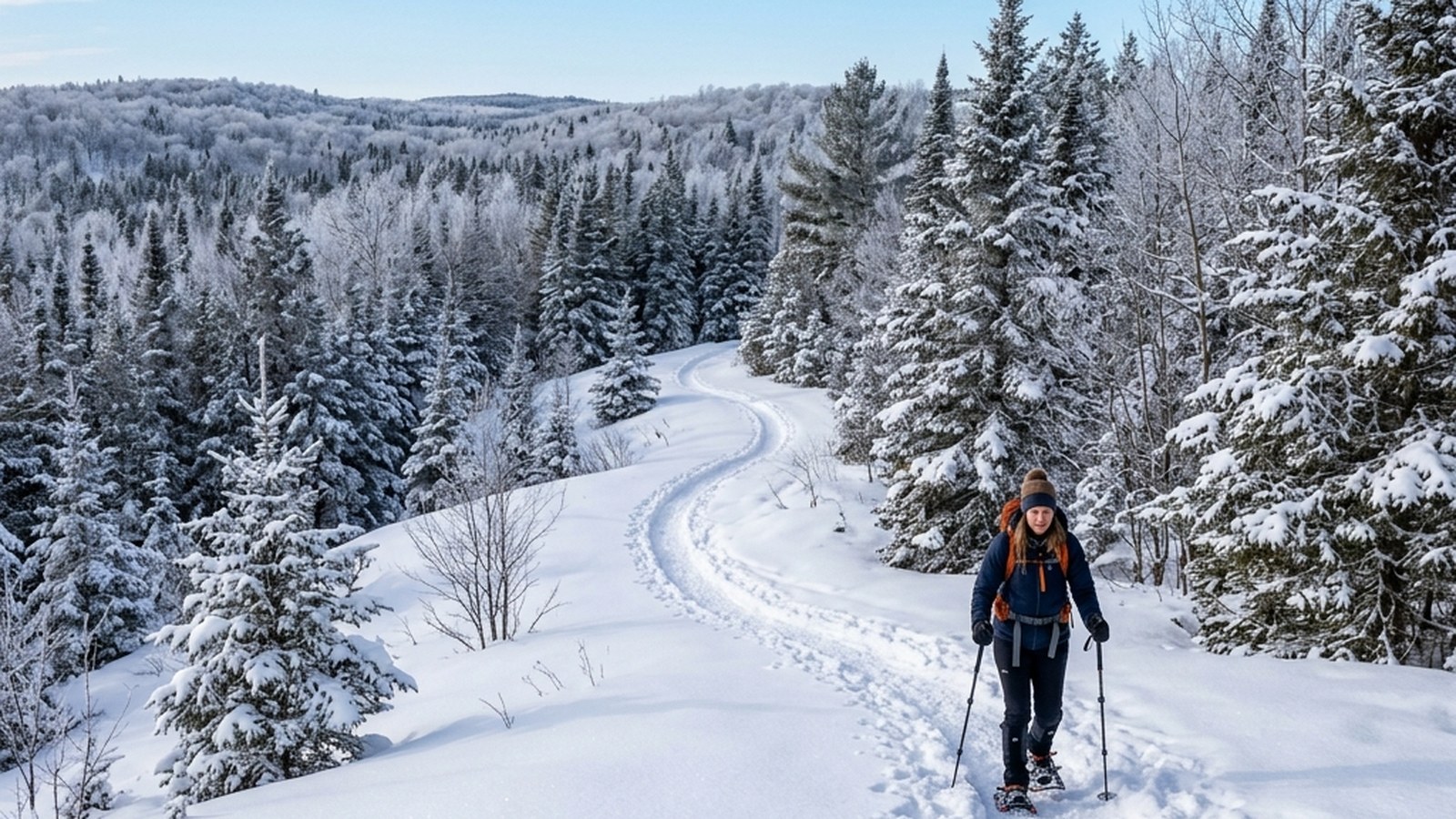
For Wasaga residents, the Nordic Centre provides over 30 kilometres of groomed trails that range from flat, technique-focused loops to the "dune-climbs" that challenge even elite-level endurance. This article focuses on the "Fundamentals" of the classic technique, the most accessible entry point for local fitness enthusiasts.
Biomechanics: Diagonal Stride vs. Double Poling
Efficiency in Nordic skiing is the art of **minimizing drag while maximizing glide**. We break this down into the two foundational movements used on the Wasaga trails:
1. The Diagonal Stride (The Dune Climber)
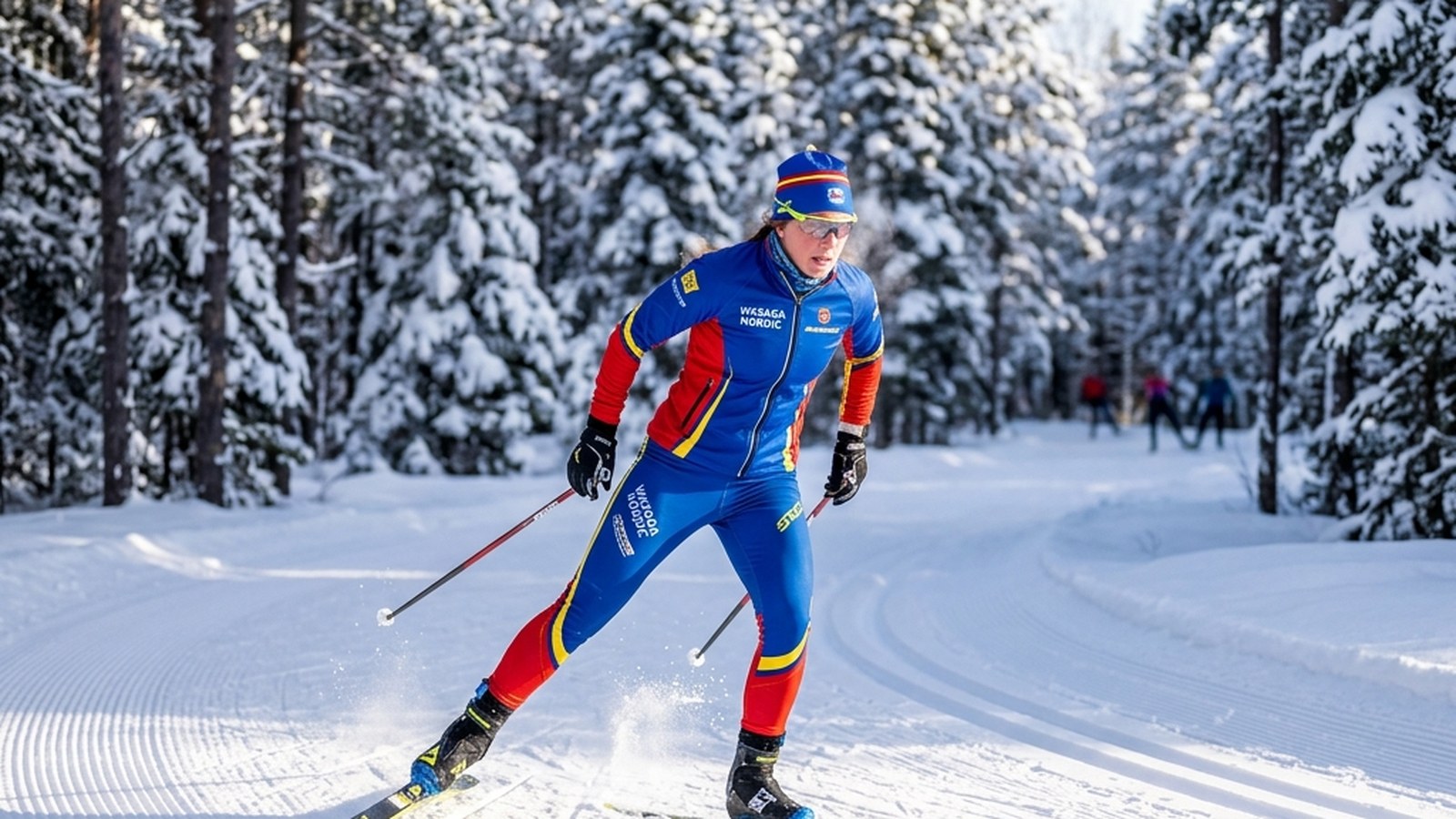
This is the "walking with glide" motion used for climbing the steep sections of the Blueberry Trail. The key is the **kick-phase**—compressing the wax pocket (or skins) into the snow with a sharp, downward force to gain traction. A common error is a "lazy kick," where the ski slips backward, wasting energy. The "Wasaga Stance" requires a forward-leaning torso and a high knee-drive to ensure every kick translates into forward momentum.
2. Double Poling (The Flat-Speed Builder)
Used on the flat sections near the Nordic Centre trailhead, double poling is a core-dominant movement. It is not an "arm push"; it is a **crunch**. You initiate the movement by "falling" onto your poles, using your body weight and abdominal muscles to drive the force into the snow. Research by Hoff et al. (1999) shows that double poling engages the latissimus dorsi and rectus abdominis to a degree comparable to high-intensity rowing.
Physiological Profile: The Hoff Analysis
Hoff (1999) identified that the primary limiter in Nordic performance is not leg strength, but **upper-body aerobic power and core stability**. In Wasaga, the rolling terrain of the dunes requires constant shifting between these energy systems. A 60-minute ski on the Blueberry loop will typically see heart rates fluctuating between Zone 2 (on the flats) and Zone 4 (on the climbs), providing a "natural interval" stimulus that is exceptionally effective for mitochondrial biogenesis.
Local Route Audit: The Blueberry Trail Network
The Wasaga Nordic Centre is divided into two distinct training zones:
Zone 1: The Flats (Technique Training)
The loops immediately surrounding the visitor centre are flat and sheltered. This is where we recommend performing "No-Pole Drills"—skiing using only your legs to develop the balance and weight-transfer required for efficient gliding.
Zone 2: The Blueberry Dunes (Endurance & Power)
As you move further into the network, the trails begin to follow the ancient sand dune ridges. These climbs are short but steep, requiring a transition to the "herringbone" technique. The descents provide a critical recovery window and a test of downhill stability—a core component of the "Wasaga Hinge" resilience protocol.
The 12-Week Winter Aerobic Base Plan
Transition from a casual winter walker to a Nordic endurance athlete with this 12-week block:
| Phase | Focus | Sample Session (Blueberry Trails) |
|---|---|---|
| Weeks 1-4 | Glide Efficiency | 45 min. 50% of time spent on "No-Pole" drills on the flat loops. |
| Weeks 5-8 | Climbing Power | 60 min. Include 5 x "Dune Repeats"—climbing a 50m hill with focus on kick-snap. |
| Weeks 9-12 | Volume Build | 90–120 min. Long, steady-state tour of the full Blueberry network (Zones 1 & 2). |
Physiological Adaptation: The VO2max Ceiling
Why do cross-country skiers consistently record the highest VO2max values in human history? The answer lies in the **simultaneous recruitment of massive muscle groups**. In a sport like cycling, the heart only needs to pump blood to the legs. In Nordic skiing, the heart is simultaneously feeding the quadriceps, glutes, latissimus dorsi, triceps, and the entire core complex. This creates an unparalleled "volume load" on the cardiovascular system.
Training at the Wasaga Nordic Centre is particularly effective because of the **repetitive dune-interval stimulus**. As you climb a dune on the Blueberry trail, your heart rate spikes to meet the massive demand of the diagonal stride. As you crest the hill and enter the glide phase of the descent, the demand drops, but the heart must remain efficient at clearing the lactate accumulated during the climb. This "on-off" nature of the Wasaga terrain is functionally superior to the steady-state load of a treadmill or stationary bike for building a resilient, high-output heart.
Furthermore, long-term adaptation to this training includes an increase in capillary density within the skeletal muscles and an enhancement of mitochondrial function. For the Wasaga resident, this means that a winter spent on the skis translates directly into improved performance in the summer—whether that is running on the beach or paddleboarding on the Bay. The "Nordic Engine" is the ultimate year-round fitness asset.
Equipment: Skin Skis vs. Waxable
For the fitness-focused local, we recommend **Skin Skis**. Traditional waxable skis require a degree in chemistry to match the wax to the changing Wasaga temperatures (which can fluctuate 10 degrees in a single afternoon). Skin skis utilize a small strip of mohair under the foot, providing reliable "kick" in almost all snow conditions, allowing you to focus on the training stimulus rather than the equipment maintenance.
When selecting skins, look for a "low-profile" mohair that doesn’t drag on the descents. In the soft, occasionally icy snow of the Blueberry dunes, a slightly stiffer ski (camber) is often preferable to ensure that the skin only contacts the snow when you actively "kick" down. This ensures that your glide—the most important part of the Nordic "fitness" equation—remains as efficient as possible.
Deep Dive: Triple-Extension and Aerobic Power
The metabolic efficiency of the Wasaga trails is not just a function of lung capacity, but of **coordinated triple-extension**. In the diagonal stride used on the Blueberry dunes, the athlete must simultaneously extend the ankle, knee, and hip while maintaining a stable trunk. This movement pattern is identical to that of an Olympic weightlifter performing a "clean," but repeated 40–60 times per minute for hours at a time.
Studies by Holmberg (2005) have shown that elite Nordic skiers utilize a specific "stretch-shortening cycle" in the upper body during double poling. By "loading" the core muscles—the rectus abdominis and the internal/external obliques—during the high-hand position, the athlete can store elastic energy that is then released during the downward stroke. This reduces the metabolic cost of the movement by as much as 15%. In Wasaga, where the rolling terrain requires constant technique shifts, the ability to leverage this "free energy" is what separates the fitness skier from the endurance athlete.
Furthermore, the cold-air environment of the Nordic Centre provides a unique physiological stimulus. Breathing cold, dry air increases the metabolic demand for humidification and warming of the inhaled air, which can increase the total caloric burn of a session. However, it also demands strict adherence to the "Wasaga Layering" protocol to prevent core temperature drops during the long, wind-exposed descents of the outer loop. Mastering the balance between high-output heat generation and efficient thermoregulation is a key component of winter resilience.
Training Practical: The Glide-and-Hold Drill
The most common technical flaw at the Nordic Centre is "shuffling"—taking short, choppy steps that never allow the ski to glide. To fix this, incorporate the **Glide-and-Hold** drill into your first 15 minutes of every session on the flat trailhead loops.
- The 3-Second Rule: After every kick, focus on balancing on the gliding ski for a full count of three. Your goal is to keep your weight 100% over the center of the ski. If you tip over, your weight was too far back.
- The Nose-Knee-Toe Alignment: While gliding, ensure your nose, knee, and toe are in a vertical line. This "stacking" of the joints minimizes the muscular effort required to maintain balance and maximizes the duration of the glide.
- Pole-less Power: Perform the drill without poles. This forces you to generate all your forward momentum from the kick-snap rather than leaning on your upper body. It is the fastest way to build the "Blueberry legs" needed for the dune climbs.
Conclusion: The Winter Engine
Nordic skiing at Wasaga Nordic is the most effective way to maintain and build your aerobic engine through the winter months. By mastering the biomechanics of the diagonal stride and leveraging the challenging terrain of the Blueberry dunes, you can transform the "off-season" into your most productive training period. The silence of the pine forest and the high-output demand of the trail create a meditative, powerful fitness experience that is unique to the Wasaga shoreline.
Practical logistics and edge cases
Beyond the core protocol above, several recurring practical considerations come up for visitors and regular users of this location. Most are not safety-critical but they meaningfully affect the experience and outcome of a session.
Parking and access. Wasaga’s main parking infrastructure follows the Beach Drive corridor, with most lots paid in summer (typically late May through Labour Day) and free in shoulder seasons. Off-peak weekday mornings provide the easiest parking; summer weekend mid-mornings (10 AM–1 PM) are the toughest. For trail destinations outside the Beach Drive corridor, smaller informal lots can fill quickly during peak weeks; arriving by 9 AM provides reliable access on weekends.
Cell coverage. The main shoreline corridor and most trail systems have reliable cell service. The notable exceptions are the deeper forest sections of Tiny Marsh, the gorge bottom at Devil’s Glen, and the longer Ganaraska Trail traverses, where coverage is intermittent. Solo users on multi-hour outings should consider a satellite messenger or at minimum a check-in plan with someone offsite.
Bathroom access. Beach Areas 1–3 have reliable summer-season bathroom access. Forested trails and Provincial Park interior sections have minimal facilities — plan accordingly for longer outings, particularly with children.
Group sessions and pace mismatch. The most common cause of a frustrating shared outing is pace mismatch between participants. Pre-discuss the target distance, pace, and turnaround landmark before starting; for mixed-ability groups, the pace must be set by the slowest participant. Pulling ahead of slower partners is the classic failure mode that produces falls, exhaustion, or wandering separation.
Weather changes mid-session. Georgian Bay weather can shift quickly — a calm sunny morning can produce thunderstorm activity by mid-afternoon. Check the forecast before extended outings, identify the nearest exit point at the halfway mark, and don’t hesitate to abort an outing if conditions deteriorate.
Wildlife encounters. The most likely encounters are deer, turkeys, foxes, and waterfowl — all best observed at distance. Black bear activity exists in the broader region (particularly outside the immediate Wasaga shoreline) but is uncommon enough that bear-protocol training is sensible only for users heading to the more remote sections of the trail system.
References
Hoff JMaximal strength training improves aerobic endurance performance. View source →Holmberg HCBiomechanical analysis of double poling in cross-country skiing. View source →Smith GAThe biomechanics of cross-country skiing. View source →Stoggl TAnalysis of a simulated cross-country skiing sprint race. View source →