The 60-second version
The Wasaga Beach Nordic Centre is a 30 km network of groomed cross-country ski trails accessed off Sunnidale Road, but most locals don’t know it’s a serious year-round trail-running and hiking venue once the snow melts. The same trails that get groomed for skate-skiing in winter are wide, well-drained, and largely flat enough for fast running in the dry months — making the Nordic Centre the closest local approximation of cinder-trail or rail-trail running. Summer access is free; winter access requires a $14/day trail pass or a season membership ($120-200 depending on tier). Cell coverage is solid throughout. The hidden value: the Nordic Centre’s easier loops connect to the Ganaraska Wasaga section, which means you can stitch a 25 km mixed-surface day from a single parking lot.
The trail network and what each loop is for
The Nordic Centre sits on roughly 250 hectares between Sunnidale Road and the Highway 26 corridor. The trail system is built around five named loops that the cross-country ski community uses for different ability levels:
- Beginner Loop (3.2 km) — flat, wide, double-tracked. Best for fast running tempo work in the dry months. The same trail used by skate skiers learning the technique in winter.
- Birch Loop (5.4 km) — rolling, mostly flat, mature birch and pine canopy. The most-used loop year-round. Solid intermediate trail running.
- Hemlock Loop (7.8 km) — rolling with two notable climbs. Pairs well with the Ganaraska Wasaga section connector trail at the southern end.
- Cedar Ridge Loop (9.6 km) — the longest signed loop, with sustained ridge sections that approximate Escarpment-style training without the drive south.
- Backcountry Loop (12 km, ungroomed in winter) — the wildest section, less maintained, occasional fallen-tree obstacles. Good for trail runners who want a more adventurous Wasaga option.
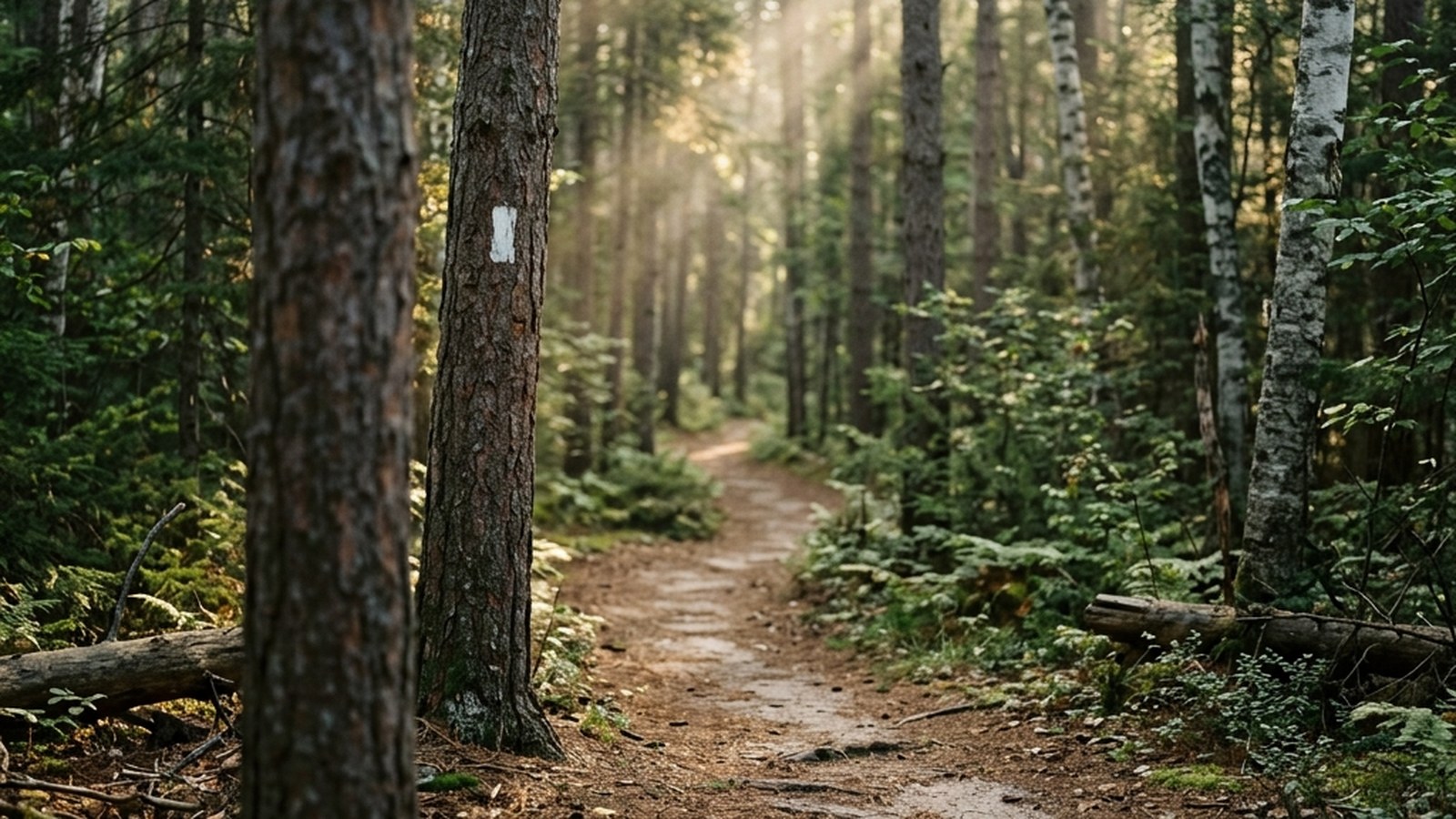
All loops are signed at junctions with colour-coded markers matching the printed trailhead map. Free printed maps are available at the Nordic Centre kiosk year-round, even when the warming hut is closed.
Winter use — the original purpose
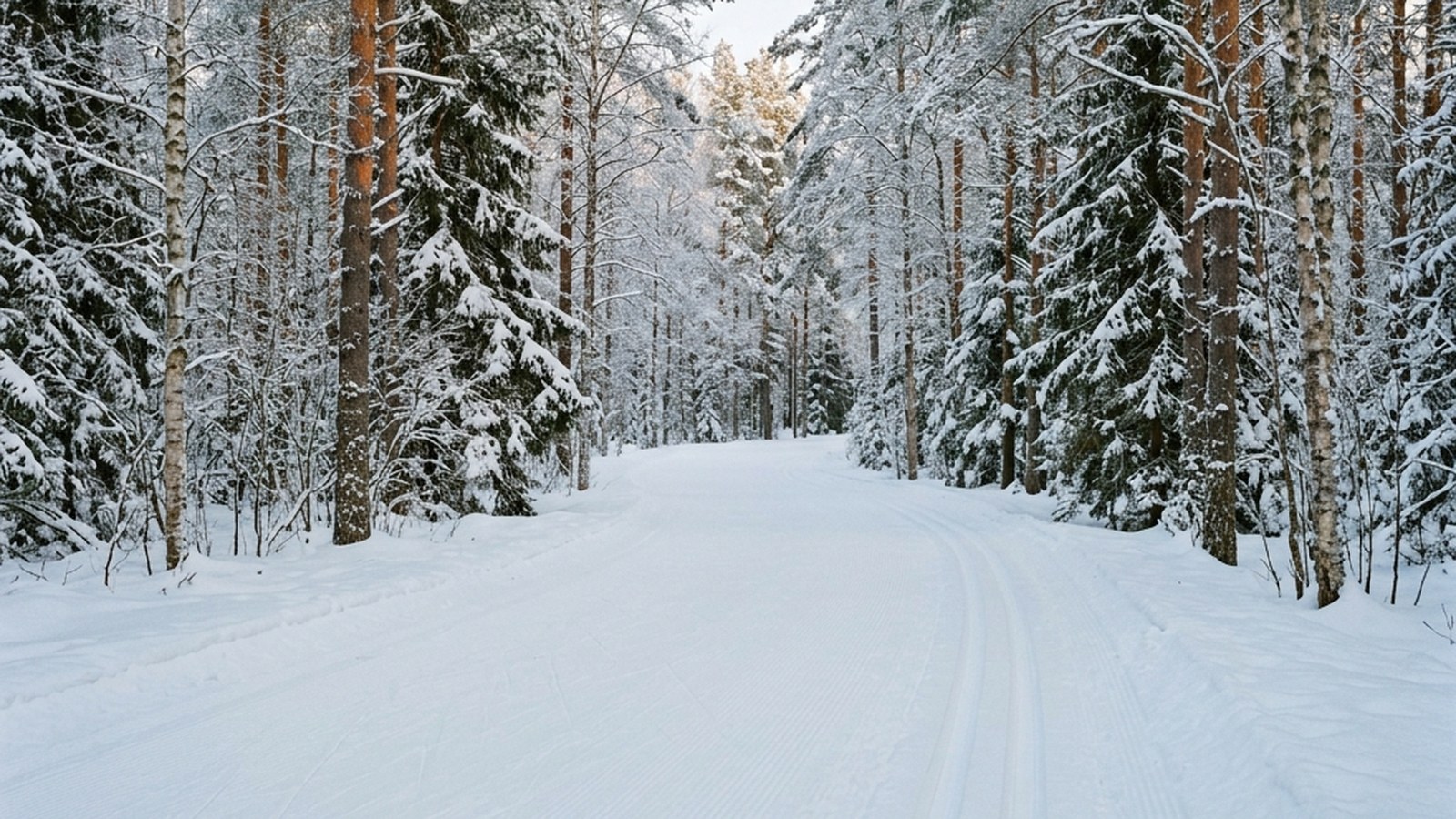
The trails are groomed by the Wasaga Nordic Club from late December through mid-March, weather depending. The grooming pattern includes a classic-ski parallel track on the right side of each trail and a wide skate-skiing lane on the left. Warming hut, equipment rentals, and a small pro shop operate from the central lodge.
Day-pass pricing in 2026: $14 adult, $10 student/senior, $8 child. Annual memberships range from $120 (basic ski-only access) to $200 (includes equipment locker rental). Snowshoe passes are typically $8/day; snowshoers must use the designated snowshoe corridor and stay off the groomed ski lanes.
The grooming quality is comparable to what you’d find at Hardwood Hills or Highlands Nordic. Wasaga’s lake-effect snow gives the Nordic Centre a more consistent winter season than venues further east; it’s typically skiable when more inland venues are bare.
Summer use — the secret most locals miss
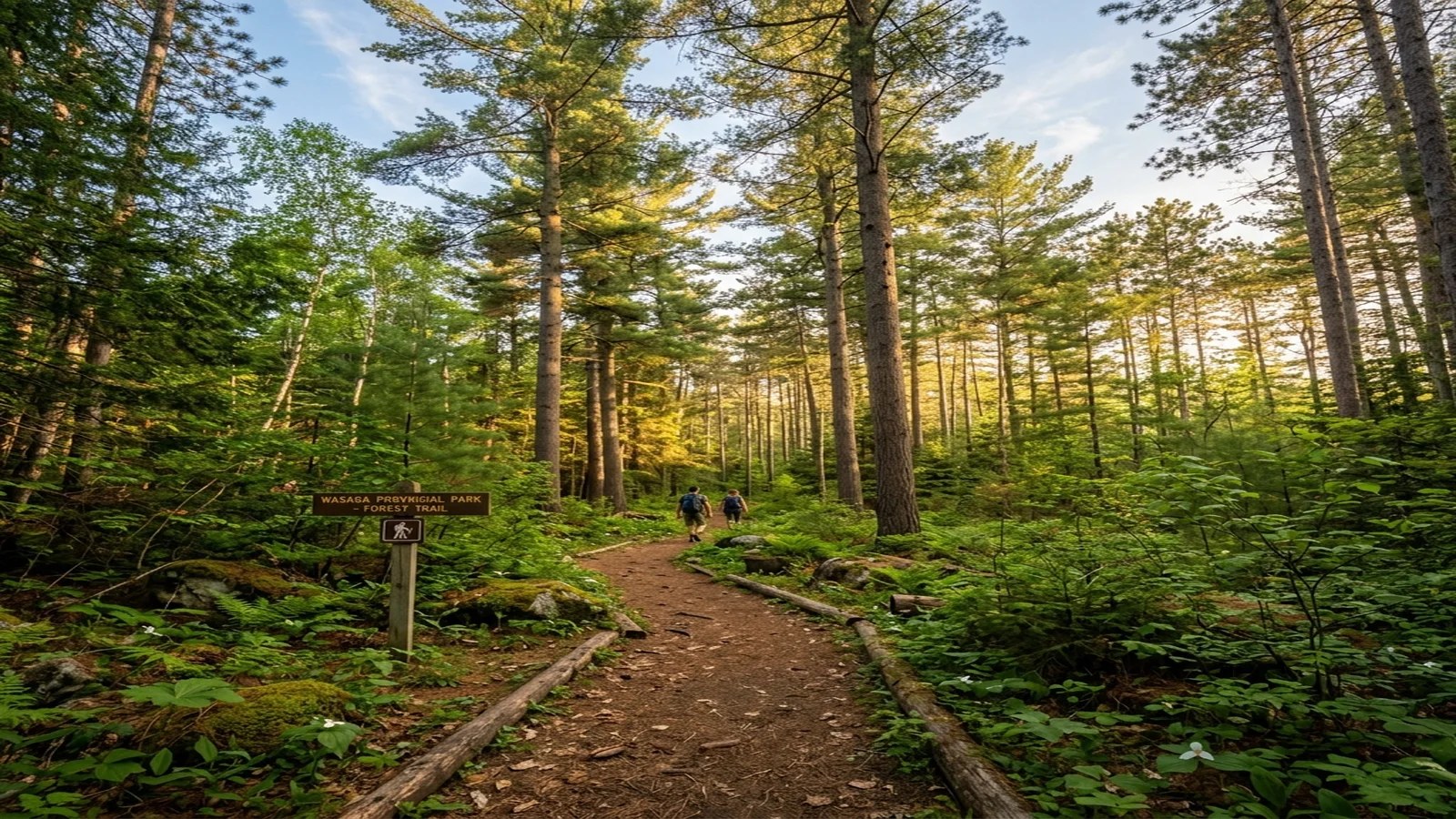
April through November the trails are open free to anyone for hiking, trail running, or mountain biking (where the surface permits). The shoulder months (April-May and October-November) are the best running conditions: cool, dry, low bug pressure, and the wide groomed-trail surface is firm enough for tempo work.
Summer (June-August) is mosquito-heavy in the deeper-forest sections (Hemlock and Cedar Ridge especially); the Beginner and Birch loops near the open warming-hut area get more breeze and less bug pressure. Early morning runs (before 8 am) before the heat compounds the bug problem are the local standard.
The trail surface in summer is a packed-dirt-and-pine-needle mix with occasional gravel sections where the spring melt has eroded the underlying soil. Trail-running shoes work; road shoes will be uncomfortable on the small loose-gravel patches.
The connection to the Ganaraska Wasaga section
The Hemlock Loop’s southern end connects to the Ganaraska Hiking Trail’s Wasaga section via a 600-metre connector trail (signed but easy to miss). This means a single car parked at the Nordic Centre lot can access roughly 25 km of stitched mixed-surface trail in a single morning.
A common local serious-runner long day: park at the Nordic Centre, run the Beginner-Birch combo (8.6 km) as a warm-up, take the Hemlock connector down to the Ganaraska, run 6 km south on the Ganaraska to the Pine Bush ridge, climb it, descend back to the connector, return via the Hemlock and Birch loops to the Nordic Centre. Total: 26 km of mixed-surface trail with one parking spot, no shuttle required.
Practicalities
- Parking: Nordic Centre lot off Sunnidale Road. Free in summer (April-November), $14/day in winter. Car-pool friendly if you split a winter day-pass.
- Cell coverage: reliable Bell and Rogers throughout the network.
- Washrooms: at the warming hut (open winter season). Summer: porta-potty at the trailhead.
- Water: warming hut tap in winter only. Carry your own in summer.
- Bears: active in spring and fall on the Backcountry Loop. Less concern on the groomed loops because of higher human traffic.
- Dogs: not permitted on the groomed ski trails December through March (a Nordic-Club rule, strictly enforced). Permitted on-leash April-November.
Pace expectations on each loop
For runners who can run a flat road 10 km in 50 minutes, expected times on the Nordic Centre loops in dry summer conditions:
- Beginner Loop (3.2 km): 16-18 minutes. Wide and flat enough for a full-effort tempo or interval session.
- Birch Loop (5.4 km): 28-32 minutes. The standard medium-effort midweek run.
- Hemlock Loop (7.8 km): 42-50 minutes including the climbs.
- Cedar Ridge Loop (9.6 km): 55-65 minutes.
- Backcountry Loop (12 km): 70-85 minutes; surface adds 10-15% to expected pace.
Where it fits among local options
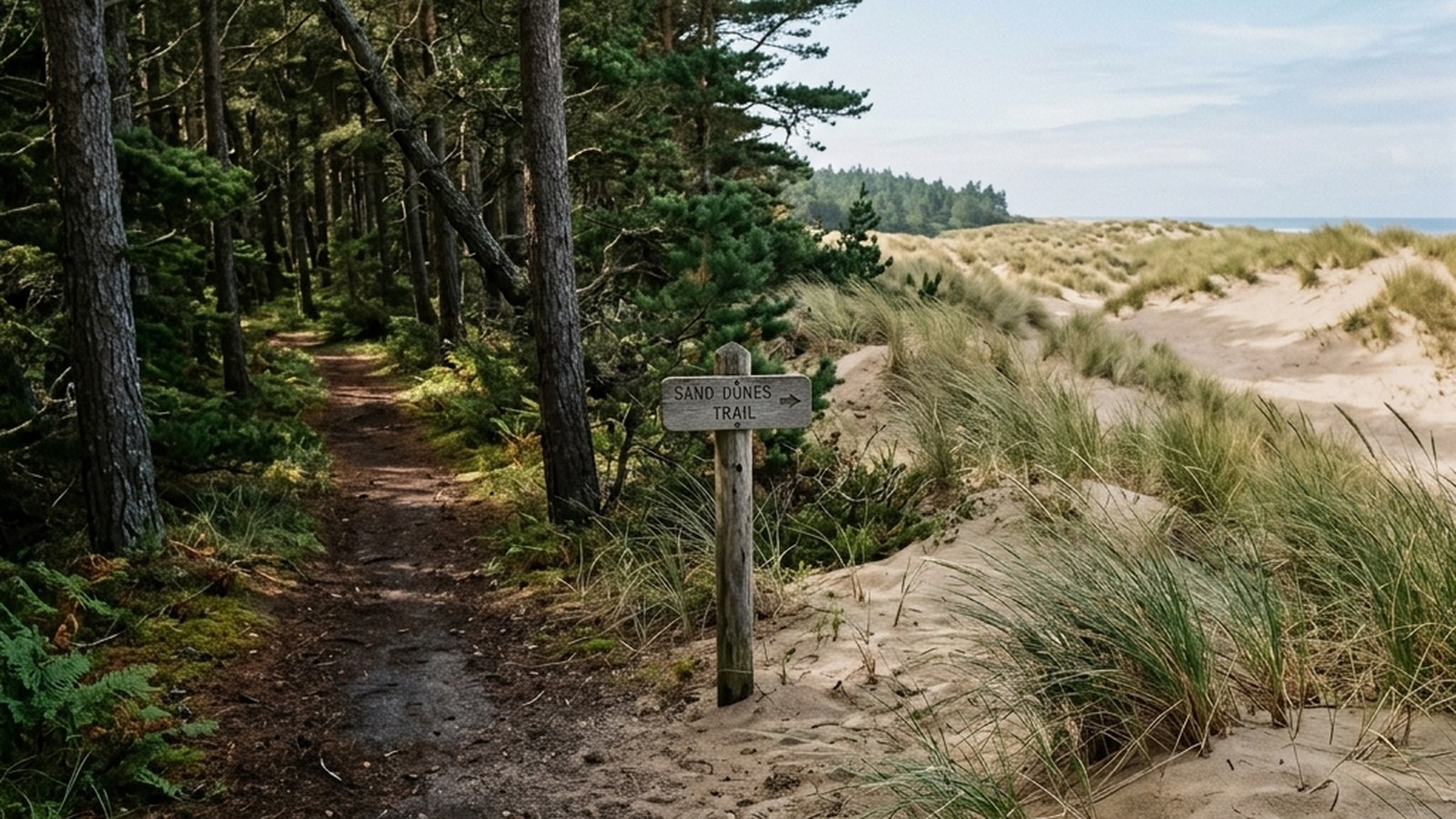
Compared to the Ganaraska Wasaga section, the Nordic Centre is faster (groomed-wide trail), simpler navigation, and works as a winter venue. Compared to the Blueberry Trail, it’s longer and the surface mix is different (no dune component). Compared to the Provincial Park beach corridor, it’s shaded, weather-protected, and runnable in winter.
The pragmatic local answer: the Nordic Centre is the everyday trail-running venue. Ganaraska is the special-occasion long-day venue. Blueberry is the surface-variety midweek venue. Provincial Park is the soft-sand stimulus venue. A serious local runner uses all four in rotation; a casual runner can sustain a year-round practice on the Nordic Centre alone.
A short history of the trail network
The Wasaga Nordic Centre was established in 1987 by a coalition of local cross-country skiers who saw the lake-effect snow corridor as undervalued for nordic sport. The original 8 km of trails ran through what is now the Beginner and Birch loops; the network expanded to its current 30 km between 1995 and 2010 through volunteer trail-cutting and Ministry of Natural Resources land-use agreements. The Wasaga Nordic Club still operates the venue as a not-for-profit, with grooming labour donated by club members and equipment funded through trail-pass sales.
The summer trail-running access was an unintended benefit of the winter trail design. Wide trails for skate-skiing translate directly to runnable surface in the dry months. The Nordic Club explicitly welcomes summer use as a community amenity, with the only firm rule being that summer users stay off any newly groomed sections in late-fall preparation for the winter season (typically marked with rope barriers from late November onward).
Why volunteer grooming matters for the summer experience
The summer trail surface quality is a direct downstream effect of the winter grooming. The packed cross-country ski track compresses the underlying soil, which reduces summer mud and creates the consistent runnable surface that makes the Nordic Centre comfortable for fast tempo work. A trail venue that’s NOT winter-groomed accumulates winter freeze-thaw damage that takes weeks of summer use to settle out. The 30 km Nordic Centre network is summer-ready in mid-April because the winter season packed it; that’s why a Wasaga Nordic Club membership ($120-200) is a practical investment even for runners who don’t ski.
Practical takeaways
- 30 km of groomed-wide trail accessible year-round, free in summer, $14/day in winter.
- Five signed loops from 3.2 km to 12 km, colour-coded, free maps at the kiosk.
- April-May and October-November are optimal running months. Summer is mosquito-heavy in deep forest; winter is for skiers and snowshoers.
- Hemlock Loop connects to the Ganaraska section — stitches 25+ km of mixed-surface trail from one parking spot.
- This is the everyday trail-running venue. Most under-used local resource for sustained running practice in South Georgian Bay.
References
Cross Country CanadaCross Country Canada. Trail standards and grooming guidelines for member Nordic centres. View source →McGregor 2018McGregor RA, et al. Trail running biomechanics: surface variability and lower-limb loading. Journal of Sports Sciences. 2018;36(4):420-428. View source →Wasaga Nordic ClubWasaga Nordic Club. Trail map, membership, and seasonal operations information. View source →