The 60-second version
The Wasaga Beach river-mouth pier is a pedestrian infrastructure piece most local residents underestimate as a fitness anchor. The combined boardwalk-and-pier circuit between Beach Area 1 and the river mouth pier (and back) covers roughly 1.4–1.6 km depending on access route, with a paved or boardwalk surface, scenic open-water views, and minimal grade variation — making it one of the highest-quality steady-state walking surfaces in Ontario. For seniors building cardiovascular fitness, postnatal parents establishing the walk-running base, recovery walks for runners, and tourist visitors looking for a structured walk, the pier circuit is the simple-to-execute fitness anchor that becomes a daily habit. The published research on steady-state walking (Manson 2002; Ekelund 2019) consistently shows substantial cardiovascular and mortality-reduction benefits from 30–60 minutes of daily walking; the pier circuit fits this profile naturally and pleasantly.
What the pier circuit actually is
The Wasaga Beach river mouth is where the Nottawasaga River empties into Georgian Bay. The pier infrastructure consists of:
- The Beach Drive boardwalk running along the bay-side shoreline of Beach Area 1, leading toward the pier.
- The river-mouth pier itself: an extended pedestrian pier projecting into the bay, typically 60–120 metres long depending on year and storm-damage repair status.
- The river-side path: a paved or boardwalk path along the south bank of the Nottawasaga River from the river mouth back toward the inner town area.
- Beach Area 1 parking and access: multiple entry points to the circuit.
The full circuit options:
- Short loop (1.0–1.2 km): Beach Area 1 parking lot → boardwalk → pier → back via the same route.
- Standard loop (1.4–1.6 km): Beach Area 1 parking → boardwalk → pier → river-side path back to inner Beach Area 1 → return.
- Extended loop (2.5–3.0 km): include longer Beach Drive boardwalk extension toward Beach Area 2 plus the pier circuit.
- Multi-circuit session (5+ km): 3–5 repetitions of the standard loop, with timing variations or pace work between repetitions.
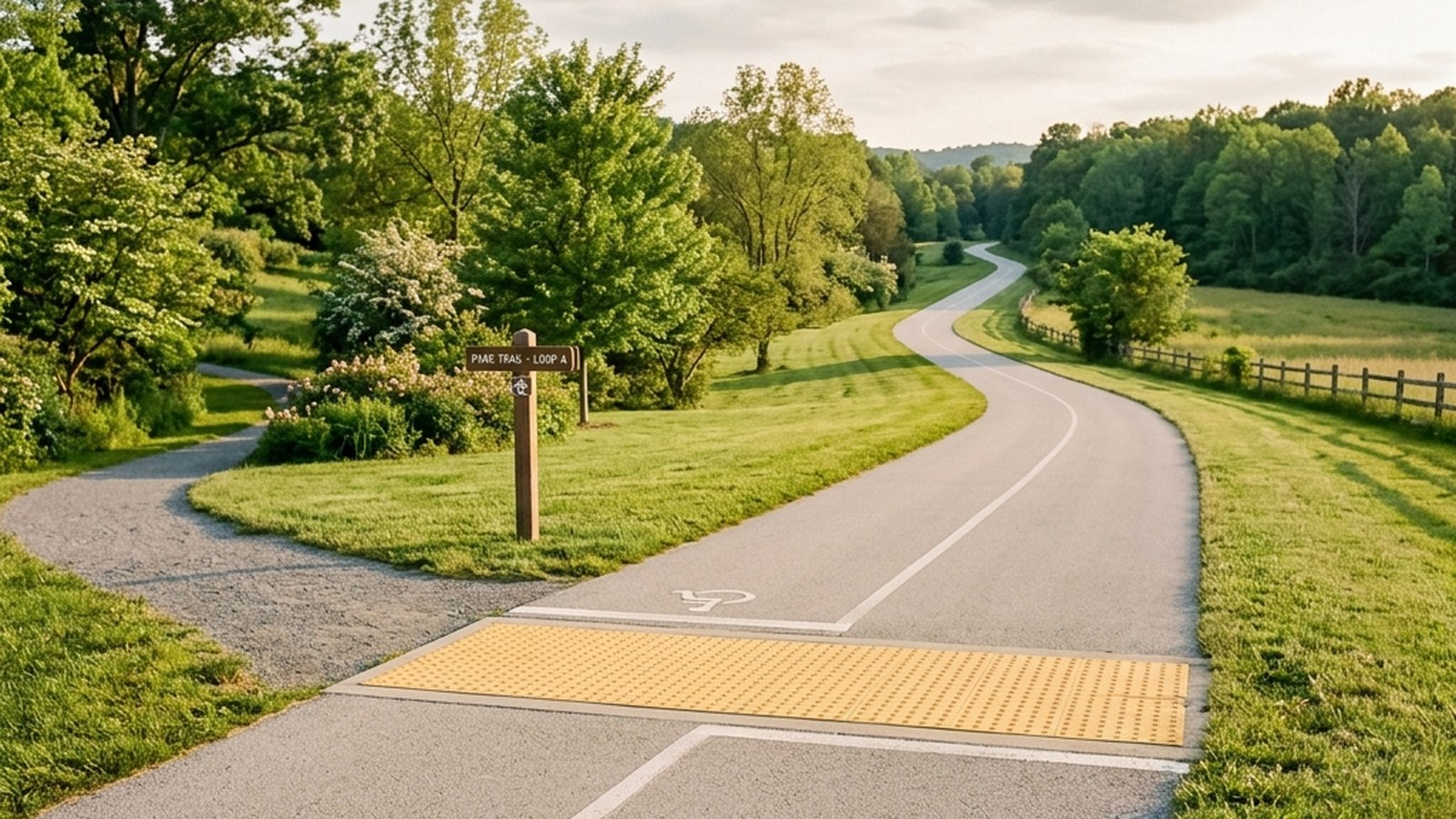
The surface is paved or boardwalk throughout; grade variation is essentially flat. Multiple bench rest stops along the route allow rest without losing momentum.
Why it works as a daily fitness anchor
The pier circuit succeeds as a habit-forming fitness location for several reasons:
- Visual reward: open Bay views, sunrise/sunset photogenic conditions, the visual variation of beachfront, river, and open lake.
- Reliable surface: paved and boardwalk throughout, accessible in nearly all weather conditions including winter (with appropriate ice management).
- Predictable distance: trainees know exactly how far they’ve gone without GPS or measurement.
- Multiple access points: parking, walking-from-home, and bicycle-shuttle approaches all work.
- Bench rest stops: rest is built into the circuit; particularly valuable for seniors and recovery walkers.
- Bathroom and water access: facilities at Beach Area 1 support longer-duration sessions.
- Year-round availability: the surface remains usable through winter with snow clearing; some weather days are limited but most remain accessible.
- Social context: regular walkers create informal community; many local pier walkers know each other by sight after months of use.
- Length flexibility: the same location supports a 15-minute quick loop or a 60-minute extended session.
The cardiovascular case for steady-state walking
The research on walking as cardiovascular intervention is large and consistent:
- Manson et al. 2002 (Nurses’ Health Study): walking 30+ minutes daily produces 30–40% reductions in cardiovascular event rates over multi-decade follow-up.
- Ekelund et al. 2019 (international cohort): the dose-response curve shows benefits beginning at modest activity levels (20–30 minutes daily) and continuing up to 60–90 minutes daily.
- Lee et al. 2014 (Korean cohort): walking-based moderate physical activity associated with reduced all-cause mortality across age groups.
- Step count studies (Saint-Maurice 2020; Paluch 2022): 7,000–10,000 daily steps associated with substantial mortality benefits; effects plateau above 10,000.
The pier circuit represents 1.4–1.6 km per loop, roughly 1,800–2,200 steps. A daily single loop provides meaningful step-count contribution; a daily extended session of 30–45 minutes (typically 4,000–5,500 steps) covers the bulk of the daily target for a sedentary baseline.
For seniors specifically, the published evidence on walking volume and longevity is unusually strong. The Whitehall II cohort (Hupin et al. 2015) found that even modest walking activity in older adults produces meaningful mortality reductions; the effects scale with both intensity and total duration.
Protocols for different user types
The senior walker (60+, building cardiovascular base)
- Daily target: 30 minutes of moderate-pace walking, 5–7 days per week.
- Pier circuit version: 1 standard loop daily; build to 2 loops over 6–8 weeks.
- Pace: brisk enough to elevate breathing but able to hold conversation.
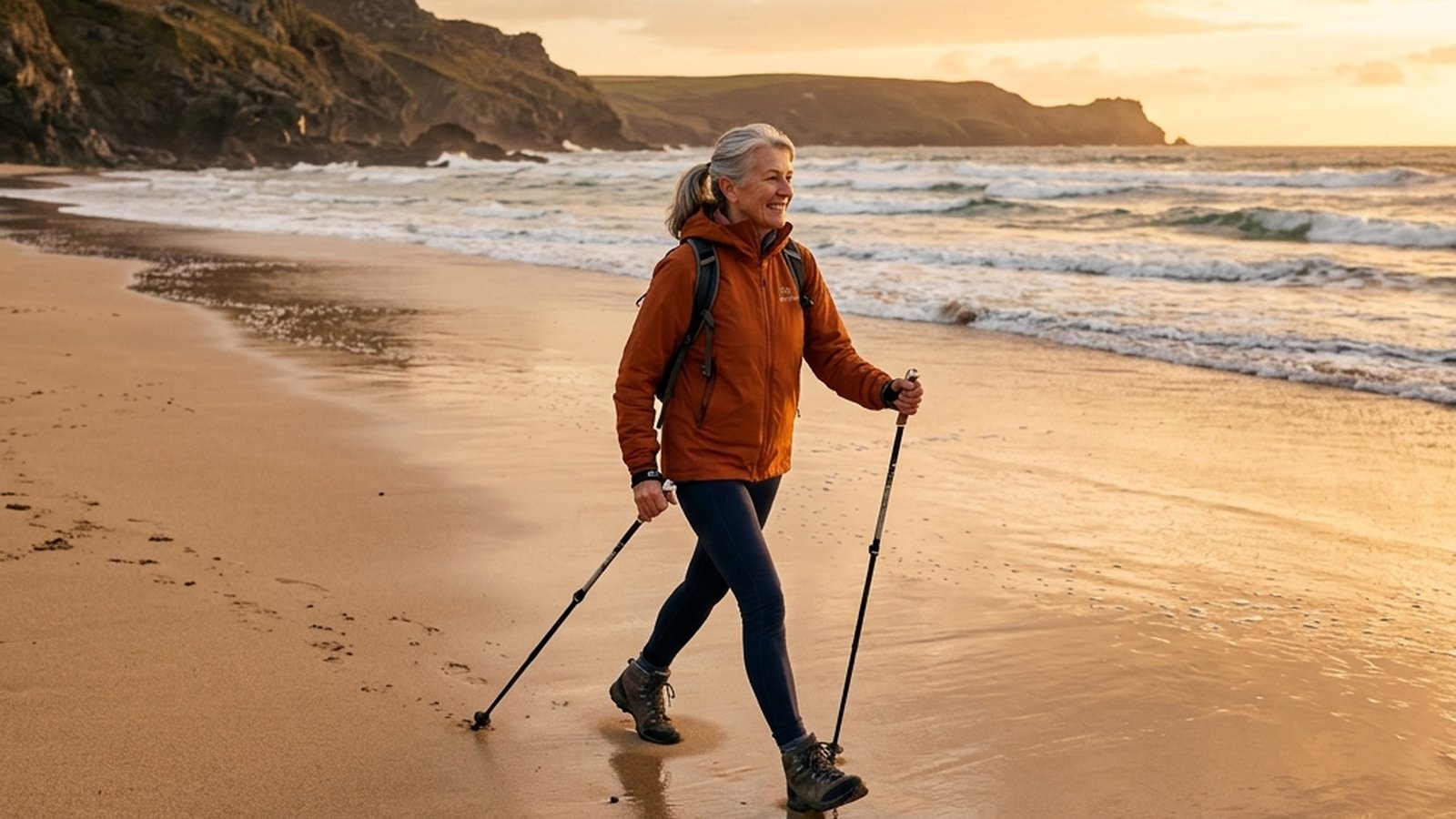
- Progression: add Nordic walking poles after week 4 for the full upper-body engagement; review the local Nordic walking guide for technique.
The postnatal parent
- Daily target: graduated walking back to running schedule, leveraging the boardwalk surface.
- Pier circuit version: stroller-friendly access; the standard loop fits naturally as a 30-minute outing with a baby in the stroller.
- Pace: progressing from walk-only at week 1 toward walk-run intervals by week 4 (review the local stroller running guide for the full protocol).
The recovery walker (post-injury or post-illness)
- Daily target: pain-free walking volume, gradually progressing.
- Pier circuit version: short loop (1.0 km) initially; build to standard loop (1.4 km) over 2–4 weeks.
- Pace: subjective comfort. Stop at the first sign of pain or significant fatigue.
- Use the bench rest stops: divide the loop into segments with planned rest, particularly in early recovery weeks.
The runner’s recovery day
- Day-after pattern: easy 30–45 minute walk on the pier circuit absorbs hard-running fatigue and supports recovery without adding training stress.
- Pace: deliberately slow. Cardiovascular load minimal; the value is the active recovery.
- Often combined with light mobility: walking with deliberate ankle and hip mobility on rest stops.
The tourist visitor
- Single-session: an hour-long pier circuit with stops for photographs and view absorption.
- Multi-day: morning loop on each day of a 3–5 day visit; the routine becomes part of the trip experience.
- Companion-friendly: groups, families, mixed-fitness parties can all walk the same circuit at different paces; meet at fixed points.
Time-of-day considerations
The pier circuit has distinct character at different times:
- Sunrise (5–7 AM): photogenic, quiet, peaceful. Best for solo walks and contemplative use. Year-round accessible with appropriate clothing.
- Mid-morning (8–11 AM): increasing activity, particularly in summer. Local walkers, joggers, and tourists are all present.
- Midday (11 AM–2 PM): peak summer crowds; off-season this remains pleasant.
- Afternoon (2–5 PM): active beach use in summer; quiet other seasons.
- Sunset (6–9 PM in summer; earlier in winter): scenic, popular, social. The walking community is strongest at this time.
- Evening (after 9 PM summer; after 6 PM winter): quiet, sometimes crowded with walkers, requires safety lighting in winter.
For consistency-focused users, picking a fixed time-of-day (e.g., always 7 AM) and committing to it produces stronger habit formation than trying to fit walks around the day’s schedule.
Year-round accessibility
The pier circuit’s year-round usability is one of its defining features:
- Spring (April-May): surface drying out; bug pressure low. Excellent walking conditions.
- Summer (June-August): peak crowds during midday; early-morning and late-evening windows remain pleasant. UV management important.
- Autumn (September-October): post-tourist quiet; comfortable temperatures; spectacular sunset views as days shorten.
- Late autumn (November): variable weather; bare-canopy landscape provides different scenery. Cold-rain days favour indoor alternatives.
- Winter (December-March): surface is usually cleared by Town maintenance; ice cleats useful on icy mornings. Far quieter than summer; bundled walkers know each other by sight. The boardwalk in deep winter has its own atmospheric beauty.
The Town of Wasaga Beach maintains the boardwalk surface through winter; check current conditions if temperatures have produced freeze-thaw cycles. In rare cases, severe ice accumulation can render sections temporarily impassable.
Safety considerations
- Visibility: bright clothing or reflective elements on dim-light walks (early morning, late evening, winter).
- Slip hazards: ice in winter, occasional algae or bird droppings on boardwalk. Pay attention to footing.
- Wind: the pier itself is exposed; strong onshore winds can produce dangerous wave action over the pier surface in storms.
- Cold-weather exposure: appropriate layers for winter walks; gloves and hat below 5°C.
- Sun exposure: open exposure means no shade; sun protection on summer afternoons.
- Companions and emergency: solo walkers should carry a phone; falls on the boardwalk are uncommon but possible.
- Bicycle traffic: cyclists use the boardwalk in some sections; share the path and stay alert.
Combining the pier circuit with other activities
The pier circuit pairs well with several other activities for a comprehensive fitness routine:
- Open-water swimming: swim sessions at Beach Area 1 followed by walking the pier circuit as cool-down.
- Resistance training: gym session followed by an easy pier walk for active recovery.
- Yoga and stretching: pier walk as warm-up before a yoga class held nearby.
- Photography: many local photographers use the circuit as their daily walk for seasonal documentation.
- Bird-watching: spring and fall migration produce bird-watching opportunities along the river-side path.
- Mindfulness practice: walking meditation works particularly well on a familiar predictable route.
For visitors
- Parking: Beach Area 1 parking is free in shoulder seasons (October-April), paid in summer.
- Time: a single standard loop takes 18–25 minutes at conversational pace; allow 30–45 minutes for the full experience with stops.
- Best photography: sunrise, sunset, and the moment when low afternoon sun lights the beach grass and water surface together.
- Year-round: a pier walk is a feasible and enjoyable activity in any season for visitors with appropriate clothing.
- Combine with: a coffee shop visit at the inner Beach Area 1 area, a meal at one of the local restaurants, or beach-time on the same day.
- Family-friendly: stroller-accessible, kid-engaging, dog-friendly (on leash).
Practical takeaways
- The Wasaga pier circuit (1.4–1.6 km standard loop) is one of Ontario’s highest-quality steady-state walking surfaces.
- Year-round accessible: paved/boardwalk surface, multiple access points, bench rest stops, year-round Town maintenance.
- Multiple user-type protocols: senior walker, postnatal parent, recovery walker, runner’s recovery day, tourist visitor.
- Consistent daily walking has strong cardiovascular and longevity benefits per the Manson 2002, Ekelund 2019, and step-count literature.
- Pick a fixed time of day for the strongest habit formation effect.
- Pair with other activities: swim, resistance training, yoga, mindfulness practice, photography for a comprehensive routine.
References
Manson et al. 2002Manson JE, Greenland P, LaCroix AZ, et al. Walking compared with vigorous exercise for the prevention of cardiovascular events in women. N Engl J Med. 2002;347(10):716-725. View source →Ekelund et al. 2019Ekelund U, Tarp J, Steene-Johannessen J, et al. Dose-response associations between accelerometry measured physical activity and sedentary time and all cause mortality. BMJ. 2019;366:l4570. View source →Saint-Maurice et al. 2020Saint-Maurice PF, Troiano RP, Bassett DR Jr, et al. Association of daily step count and step intensity with mortality among US adults. JAMA. 2020;323(12):1151-1160. View source →Paluch et al. 2022Paluch AE, Bajpai S, Bassett DR, et al. Daily steps and all-cause mortality: a meta-analysis of 15 international cohorts. Lancet Public Health. 2022;7(3):e219-e228. View source →Hupin et al. 2015Hupin D, Roche F, Gremeaux V, et al. Even a low-dose of moderate-to-vigorous physical activity reduces mortality by 22% in adults aged >= 60 years. Br J Sports Med. 2015;49(19):1262-1267. View source →