The 60-second version
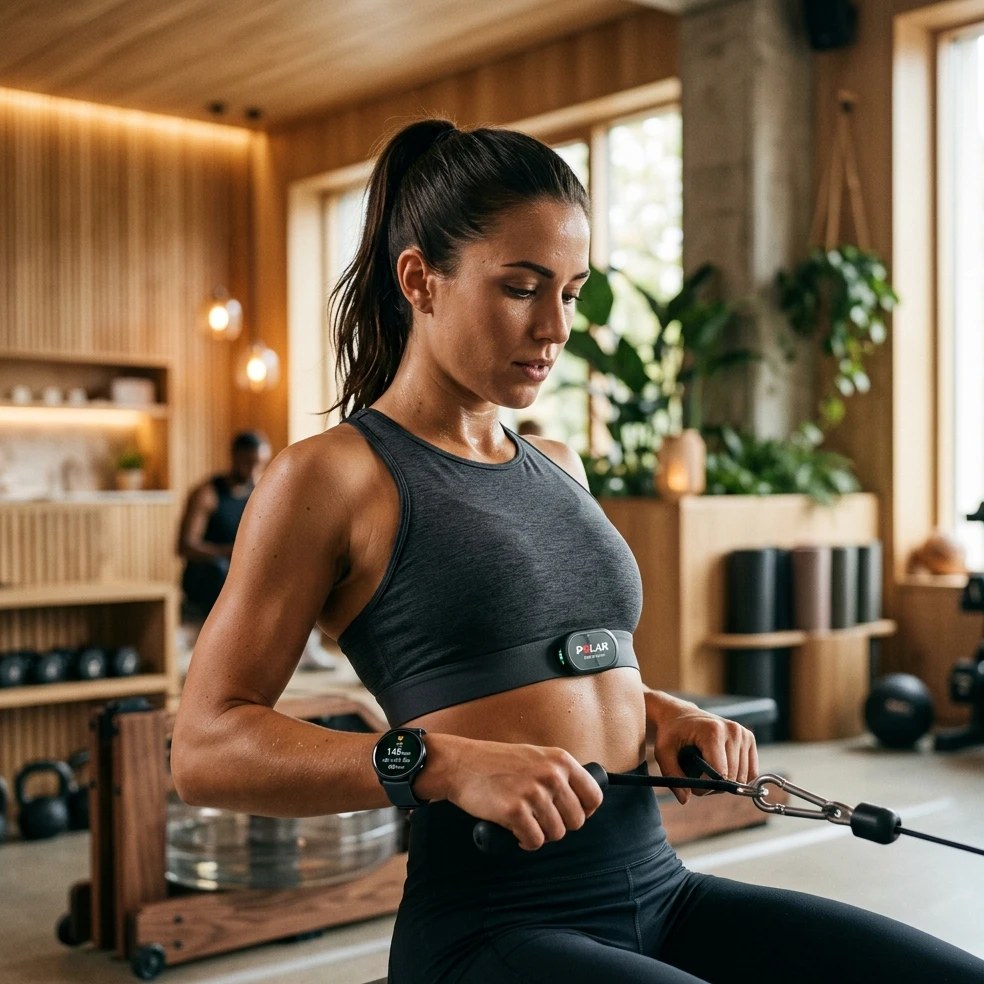
Waterproof fitness trackers are governed by two rating systems — IP (Ingress Protection) and ATM (atmospheres) — that mean meaningfully different things. ATM ratings, despite the “5 ATM = 50m” marketing, refer to static water pressure tolerated in lab conditions, not survivable swim depth. The optical heart-rate accuracy gap also matters: Pasadyn 2019 documented wrist-worn optical HR errors of 5–15 bpm during exercise, with chest-strap accuracy at 1–3 bpm Pasadyn 2019. Those errors widen underwater, where water motion artifacts disrupt the photoplethysmography signal. Düking’s 2018 wearable-accuracy review documented underwater HR errors of 10–25 bpm in chlorinated pool conditions Düking 2016. The honest framing for swimmers: a 5 ATM tracker survives lap-pool use; a chest strap (or chest-strap-equivalent fabric band) is the only way to get accurate HR during the swim itself.
IP vs ATM ratings: what the numbers actually mean
The IP (Ingress Protection) rating is a two-digit code defined by IEC 60529 that describes solid-particle and liquid resistance under standardised lab tests. IP68 — the rating most fitness trackers carry — means dust-tight (the “6”) and submersion in 1m of fresh water for 30 minutes (the “8”). The IP rating is not a swim-depth rating; it is a static-immersion test under laboratory conditions, not a dynamic-pressure test under swimming conditions.
The ATM rating is a separate water-resistance scale measured in atmospheres of static pressure. 1 ATM equals approximately 10 metres of static water depth in lab conditions; 5 ATM is 50m static. The crucial misunderstanding: an “5 ATM” rating does not mean the device survives a 50m dive. Active swimming generates dynamic pressures — sudden water motion, jet streams from strokes, contact with pool walls — that exceed the static-pressure equivalent the lab test measured. A 5 ATM device is rated for shallow-water immersion and surface swimming, not for diving.
The practical translation matters. For lap-pool swimming at 2–3m depth, a 5 ATM rating is appropriate. For open-water swimming, snorkelling at 1–3m, or kayaking, a 5 ATM rating is typically adequate. For scuba diving or any depth beyond 10m, dedicated dive computers with depth ratings of 100m+ (10 ATM+) are required — consumer fitness trackers are not appropriate for diving regardless of their headline ATM rating.
Chlorine and salt-water failure modes
The lab tests behind IP and ATM ratings use fresh water at neutral pH. Real-world pool and ocean exposure is more aggressive on the seal materials, gaskets, and exposed metal contacts that determine long-term water resistance. Three failure modes recur in the consumer-product literature.
First, chlorinated pool water degrades silicone gaskets and adhesive seals over months of exposure. The cumulative effect is a gradual loss of water resistance — a tracker that was IP68-rated at purchase may begin admitting moisture after 12–24 months of regular pool use. Manufacturers’ warranties typically exclude pool damage explicitly, recognising this degradation pattern.
Second, salt-water corrosion attacks exposed metal contacts — charging pins, pulse-oximetry sensor windows, side buttons. Salt crystals deposited after evaporation create galvanic corrosion sites that progressively compromise both the contact functionality and the surrounding seal. Rinsing with fresh water after every salt-water exposure substantially extends device life; this is the single most important maintenance step for ocean swimmers.
Third, hot water (above ~40°C) is the “invisible” failure mode — hot tubs, hot showers, and saunas exceed the temperature range at which the silicone seals maintain their water resistance. Manufacturers explicitly exclude these from warranty coverage. The IP and ATM ratings assume room-temperature water; high-temperature exposure can produce immediate seal failure even in nominally “waterproof” devices.
The wrist-vs-strap accuracy gap underwater
The optical heart-rate sensors used in wrist-worn fitness trackers rely on photoplethysmography (PPG) — LEDs shine green light into the skin, and a photodetector measures the reflected light variations as blood volume in capillaries changes with each pulse. Above water, this technology produces accurate HR in stationary conditions and increasing errors during high-motion activities. Pasadyn’s 2019 cardiology validation study documented wrist-PPG errors of 5–15 bpm during cycling and treadmill exercise, with chest-strap ECG monitors at 1–3 bpm Pasadyn 2019.
Underwater, the PPG errors widen substantially. Düking’s 2018 wearable-accuracy review pooled multiple studies of swim-condition HR monitoring and documented errors of 10–25 bpm for wrist-worn optical sensors during pool swimming Düking 2016. The mechanisms are well-understood: water motion at the sensor-skin interface produces optical artifacts, the wrist-flex pattern of swim strokes shifts sensor position relative to the underlying capillary bed, and the cooling effect of pool water can constrict superficial capillaries enough to weaken the PPG signal.
The Bunn 2018 wearable-validation systematic review reached similar conclusions across multiple device families Bunn 2018. The honest framing: wrist-worn optical HR is approximately useless for swim-specific HR data. If accurate HR matters during the swim — for zone training, lactate-threshold work, or cardiac-rehabilitation purposes — a chest-strap or ECG-fabric swim-suit-mounted sensor is the only validated solution.
The Wahl 2017 wrist-HR study added an important nuance: post-exercise wrist HR (during recovery, when motion artifacts subside) becomes substantially more accurate than during-exercise readings Wahl 2017. For swimmers using wrist trackers as a daily-step counter and post-swim recovery monitor, the device is fine. For real-time swim HR, the wrist platform is the wrong tool.
What to look for if you actually swim
For lap-pool and open-water swimming, the practical specification is at minimum 5 ATM (lap pool) or 10 ATM (open water). The IP rating alone is not sufficient — an IP68 device without an ATM rating may not survive sustained swim conditions despite the headline waterproof claim. Manufacturer documentation typically lists both ratings; if the ATM rating is absent or below 5, the device is not appropriate for sustained swimming.
For HR accuracy during the swim, plan to pair the wrist tracker with a chest-strap HR monitor. Some swim-focused chest straps store HR data internally and sync to the watch after the session ends, producing accurate session-level HR data despite the wrist sensor being unable to track during the swim. Polar, Garmin, and other vendors offer this configuration; the budget tier (~$100–$130 chest strap, paired with a $300–$500 multi-sport watch) produces meaningfully more accurate swim data than a wrist-only setup at any price.
For stroke-mechanic and lap-counting features, the wrist accelerometer-based metrics work reasonably well in pool conditions where the lap distance is fixed and the wall-touch is detectable. Open-water lap counting is harder — GPS reception is limited at the wrist when submerged, and stroke-counting algorithms haven’t been validated as carefully in choppy or current-affected open-water conditions. The marketed open-water-swim features should be treated as approximate rather than precise.
For day-to-day non-swim use, the same waterproof tracker is generally fine for showering, hand-washing, sweating, and rain exposure. The cumulative degradation pattern matters mostly for swimmers logging hundreds of pool sessions over years; for occasional pool use plus showering, even a 3 ATM device typically performs adequately for the device’s expected lifespan.
Failure warning signs and replacement timing
The early signs of compromised water resistance are subtle and often missed. Three to watch. First, condensation visible inside the screen after swimming or showering — even a single occurrence indicates the seal is no longer fully effective and the device should be removed from water exposure pending manufacturer service. Second, a charging-port warning that the device cannot charge due to moisture — this means moisture has reached the contacts and the device is no longer safe for continued water exposure even if it dries out. Third, a sudden onset of inaccurate HR readings or skin sensor errors — salt or pool-chemical corrosion of the sensor window can produce these failures.
The practical replacement curve depends on use intensity. For daily swimmers logging 200+ pool sessions per year, expect 18–30 months of full water-resistance lifespan even with a 5 ATM device. For weekly swimmers, 36–60 months is realistic. For occasional pool use plus showering, the device’s electronic lifespan (battery degradation, software-update support) typically becomes the limiting factor before water resistance does.
Manufacturer service for compromised water resistance is generally not cost-effective — the replacement seal cost plus labour often approaches the price of a new mid-tier device. The honest framing is that a swim-purposed fitness tracker is a 2–3 year consumable for active swimmers, not a long-term investment. Budget planning should reflect that lifespan rather than treating the device as durable equipment.
Bottom line: matching the tracker to the actual use
For dedicated lap swimmers, the practical configuration is a 5+ ATM-rated wrist tracker for stroke-mechanic and lap-counting features, paired with a chest-strap HR monitor for accurate cardiovascular data. The wrist HR data during the swim itself should be treated as approximate; post-swim recovery readings are usable.
For multi-sport athletes who swim occasionally, a single 5 ATM wrist tracker handles the swim sessions adequately for casual purposes — lap counts, distance estimates, session-level perceived effort. The accuracy compromises are real but acceptable for non-targeted training. The chest-strap upgrade is worthwhile if zone-based training matters; otherwise the single-device setup is sufficient.
For non-swimmers using a tracker for general fitness purposes, the “waterproof” rating mostly buys peace of mind for showering, sweating, and rain exposure. A 3 ATM rating is adequate; the IP68 dust+water rating that most premium devices carry exceeds what daily wear actually requires. The marketing premium for higher water-resistance ratings is mostly relevant for swimmers; for non-swimmers it is a nice-to-have, not a must-have.
Practical takeaways
- 5 ATM is the practical minimum for swim use. Below that, the device is rated for splashes and rain, not sustained submersion in motion.
- ATM is static-pressure rating, not dive-depth. A 5 ATM device is fine for lap pools; it is not a dive computer.
- Chlorine and salt water are aggressive on seals and contacts. Rinse with fresh water after every exposure, especially salt water.
- Wrist optical HR is unreliable underwater. Pasadyn 2019 wrist errors of 5–15 bpm widen to 10–25 bpm in Düking 2018 swim conditions.
- Pair with a chest strap if HR matters during the swim. Otherwise treat the wrist data as approximate.
- Expect 18–30 months of full water-resistance for daily swimmers. Plan replacement accordingly.
- Hot tubs, hot showers, and saunas defeat the seals. Even nominally waterproof devices are not rated for high-temperature water.
References
Pasadyn 2019Pasadyn SR, Soudan M, Gillinov M, et al. Accuracy of commercially available heart rate monitors in athletes: a prospective study. Cardiovasc Diagn Ther. 2019;9(4):379-385. View source →Düking 2016Düking P, Hotho A, Holmberg HC, Fuss FK, Sperlich B. Comparison of non-invasive individual monitoring of the training and health of athletes with commercially available wearable technologies. Front Physiol. 2016;7:71. View source →Bunn 2018Bunn JA, Navalta JW, Fountaine CJ, Reece JD. Current state of commercial wearable technology in physical activity monitoring 2015-2017. Int J Exerc Sci. 2018;11(7):503-515. View source →Wahl 2017Wahl Y, Drüke P, Hanna J, Manunzio C, Manunzio U. Criterion-validity of commercially available physical activity tracker to estimate step count, covered distance and energy expenditure during sports conditions. Front Physiol. 2017;8:725. View source →