The 60-second version
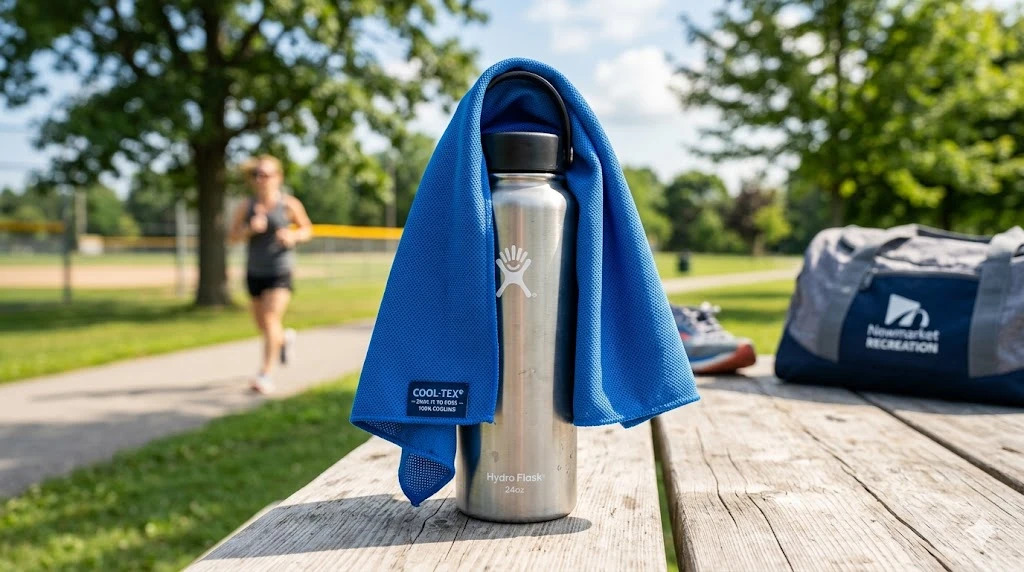
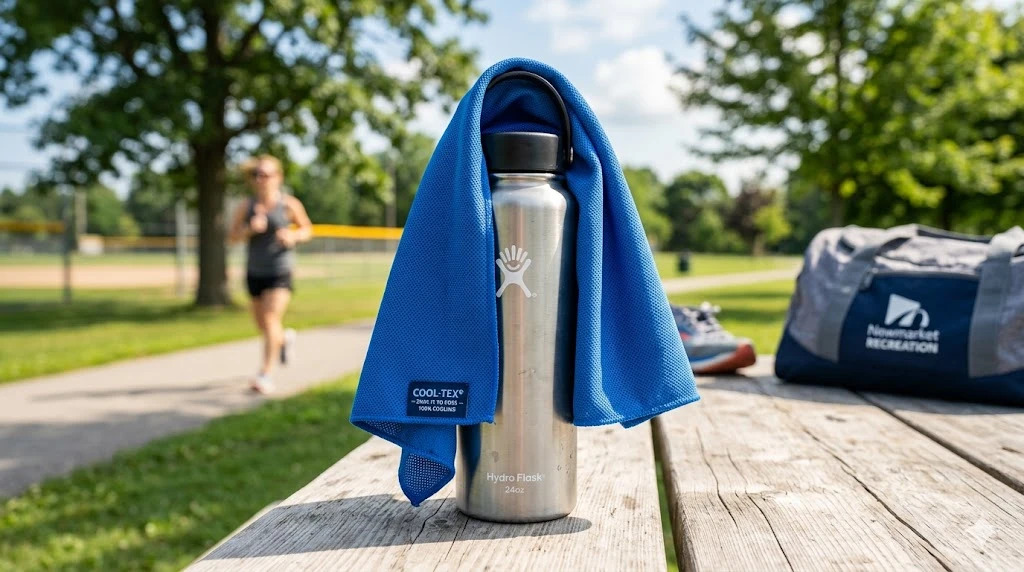
Cooling towels reduce skin temperature through evaporative cooling: water on the towel surface absorbs heat from the skin as it evaporates into the surrounding air Tyler 2010. The physics works and the skin-temperature reduction is measurable. The performance question is whether the skin-temperature drop translates into a meaningful core-temperature reduction or athletic-performance benefit, and the answer depends on the conditions and the duration of use. Bongers 2017's meta-analysis of pre-cooling interventions found a modest performance benefit for sustained heat exposure (effect size approximately 0.3–0.4 standard deviations), with the largest effects for endurance-distance events in hot conditions Bongers 2017. Cooling towels work best as part of a per-cooling and inter-set cooling strategy in genuinely hot conditions; they do not meaningfully change performance in temperate conditions or for short sessions Ross 2013. The Casa 2015 heat-illness framework treats them as legitimate adjunct tools rather than as primary cooling interventions for heat-stroke management Casa 2015.
The evaporative-cooling physics: why cooling towels work
The physics of evaporative cooling is well-understood and operates the same way for a cooling towel as it does for sweat-based body thermoregulation. Water held on the towel surface absorbs energy as it transitions from liquid to vapour phase — the latent heat of vaporization, approximately 2,260 kilojoules per litre of water at body temperature. That energy comes from the heat reservoir the towel is in contact with: the skin surface for a worn cooling towel, the surrounding air for an unworn wet towel.
The skin-cooling effect is real and measurable. Tyler 2010's research on cooling-vest applications during exercise documented skin-temperature reductions of 2–4°C at the contact points and 0.5–1.5°C across uncovered skin via the systemic cardiovascular response Tyler 2010. The cooling-towel design represents a simpler form of the same intervention: a high-surface-area absorbent fabric that holds water and releases it via evaporation while in contact with the skin.
The performance of any evaporative cooling intervention depends on three environmental variables. First, ambient humidity: low humidity allows fast evaporation and high cooling rates; high humidity slows evaporation and reduces the cooling effect. A cooling towel in 30°C / 30% humidity conditions performs substantially better than the same towel in 30°C / 90% humidity conditions. Second, air movement: convective airflow over the wet surface accelerates evaporation; still air slows it. Third, water temperature: very cold water (4–10°C) provides initial conductive cooling on top of the subsequent evaporative cooling; room-temperature water relies on evaporation alone.
The performance evidence: what cooling towels actually do
The athletic-performance literature on cooling interventions is dominated by pre-cooling research — cooling the body before exercise to extend the time before performance-impairing core temperature elevation occurs. Bongers 2017's systematic review and meta-analysis of pre-cooling interventions pooled data from over 40 controlled studies and found a modest but consistent performance benefit, with effect sizes around 0.3–0.4 standard deviations for endurance-distance events in hot conditions Bongers 2017.
The effect sizes vary substantially across cooling methods, with cold-water immersion showing the largest effects (often 1–3% time improvements in 40 km cycling time trials and similar protocols), cooling vests and ice slurries showing intermediate effects, and external cooling methods like cooling towels showing the smallest but still measurable effects. The honest synthesis is that cooling towels deliver real but smaller performance benefits than the more intensive pre-cooling interventions, in exchange for substantially better practicality and convenience.
Ross 2013's review of cooling strategies in sport identified the performance benefit of cooling interventions as concentrated in three specific contexts: endurance events in genuinely hot conditions (above approximately 28–30°C), team-sport sessions with rest intervals long enough for cooling to take effect, and high-output recovery between heat-acclimatization training sessions Ross 2013. Outside these contexts, the performance benefit is small enough to fall within typical measurement noise.
When cooling towels actually help (and when they don't)
Cooling towels make a measurable performance difference in conditions where heat stress is the limiting factor on the session. Specifically: outdoor endurance training above approximately 28°C ambient with moderate humidity; team-sport sessions with rest intervals where towel application during breaks reduces skin temperature meaningfully; tennis, cricket, and other sport contexts with formal between-game cooling intervals; and post-session recovery cooling for athletes doing multiple sessions per day in heat-acclimatization mesocycles.
The conditions where cooling towels do not meaningfully change performance include: temperate-conditions training where heat stress is not the limiting factor; short sessions (under approximately 60 minutes) where heat accumulation is too small for cooling intervention to matter; high-humidity environments (above approximately 70% relative humidity) where the evaporative-cooling physics is too slow to deliver useful cooling rates; and any context where the marketing positions the towel as a primary tool for heat-illness management rather than an adjunct.
The honest editorial framing is that cooling towels solve a real but bounded problem. They are useful tools for the specific conditions where heat stress limits performance and where the evaporative-cooling physics works efficiently. They are not magic, and the marketing copy that positions them as transformational performance enhancement substantially overstates what the underlying physiology supports.
How to use cooling towels effectively
The practical application protocol that aligns with the evidence base has several specific elements. First, use cold water rather than room-temperature water where possible. The initial conductive cooling effect from very cold water (4–10°C, achievable with a small cooler containing the wetted towel) adds meaningfully to the subsequent evaporative cooling. The combination produces noticeably stronger cooling than evaporation alone.
Second, target the cooling application to high-blood-flow surface areas: the back of the neck, the face and forehead, the inner wrists, and the top of the head. These areas have superficial blood vessels that allow systemic cardiovascular response to the local skin cooling, magnifying the systemic effect beyond the skin-contact area. A cooling towel draped around the neck performs better than the same towel applied to a low-blood-flow area like the calf.
Third, use cooling towels during rest intervals and post-session, not during continuous high-output exercise. The cooling effect requires time to develop (typically 2–5 minutes of contact before peak skin-temperature reduction) and during continuous high-output exercise the body's own sweat-driven cooling is already providing substantial evaporative cooling that the towel adds little to. The strongest use case is the inter-set or between-game application where 5–10 minutes of dedicated cooling time is available.
Fourth, re-wet the towel as evaporation depletes the water content. A towel that has dried out provides no further cooling and is essentially functionally inert. The protocol of rotating between two towels — one in use, one re-wetting in cold water — is a defensible practice for sustained-exposure use.
Cooling towels versus other cooling interventions
The cooling-intervention landscape includes several alternatives to cooling towels, each with different effect sizes and practicality profiles. Cold-water immersion produces the largest cooling rates and the strongest performance benefits but requires significant equipment (cooling tank or pool) and is impractical for in-session use. The role for cold-water immersion is pre-event cooling and post-session recovery, not in-session intervention.
Cooling vests deliver intermediate cooling rates with better in-session practicality than immersion. The effect sizes for cooling vests in the Tyler 2010 research are larger than typical cooling-towel effects, but the equipment cost and the heat-retention burden when the cooling capacity is exhausted make them more specialized than cooling towels for general athletic use Tyler 2010. Cooling vests have a defined role in elite sport (soccer, football, military athletic settings) where the equipment burden is acceptable.
Ice slurries (cold liquid carbohydrate-electrolyte mix consumed pre-exercise) deliver internal cooling that complements external cooling effects. The performance benefits in the meta-analytic literature are roughly comparable to cooling-vest effects, with the practical advantage of also providing carbohydrate and electrolyte content. The combination of an ice slurry pre-event and a cooling towel during rest intervals is a defensible composite strategy for endurance athletes in heat.
Hand-cooling devices (specialized cold-water immersion of the palms) exploit the heat-exchange physics of the high-blood-flow palm surface. The published research supports a real but smaller cooling effect than cooling vests or immersion, with the practicality advantage of palm-only intervention rather than whole-body. The application is more relevant for elite-sport contexts than typical recreational use.
Cooling towels and heat-illness management: an important distinction
An important boundary in the cooling-towel literature is between performance-enhancement use (modest but real benefit in hot-conditions endurance) and heat-illness treatment use (where cooling towels are emphatically not the appropriate intervention). The Casa 2015 exertional heat-illness framework treats cooling towels as legitimate adjunct tools for heat-strain prevention and recovery but as inadequate for actual heat-stroke treatment Casa 2015.
The cooling rates achievable with a cooling towel are appropriate for the prevention application (modestly reducing skin temperature during high-heat exposure) but are too slow to reverse the elevated core temperature that defines heat stroke. The gold-standard cooling intervention for heat stroke is cold-water immersion, which produces cooling rates roughly an order of magnitude faster than cooling-towel application. Marketing copy that positions cooling towels as heat-stroke management tools materially overstates what the products can do, and could contribute to delayed appropriate treatment in the worst case.
The defensible framing for consumer education is that cooling towels are useful for staying ahead of heat strain (modest performance benefit, real comfort improvement, safer multi-hour exposure to hot conditions) and not appropriate as the primary intervention for any athlete with suspected heat exhaustion or heat stroke. For heat-illness signs in the field, the response is cessation of activity, removal to shade, cold-water immersion if available, and emergency medical contact — not application of a cooling towel and continuation of effort.
Practical takeaways
- Cooling towels reduce skin temperature through evaporative cooling. The physics works; the effect is real but modest.
- Performance benefit is concentrated in hot-condition endurance and rest-interval team sport. Effect size approximately 0.3–0.4 SD; largest in 28°C+ conditions.
- Use cold water, target high-blood-flow areas, apply during rest intervals. Re-wet before evaporation depletes the water content.
- Cooling towels are adjuncts, not primary interventions, for heat-illness management. Cold-water immersion remains the gold standard for heat stroke.
- The marketing overstates the benefit in temperate conditions. Outside hot, dry, sustained-exposure scenarios, the performance effect is small.
- Pair with ice slurries pre-event and shade discipline post-event. The portfolio approach delivers more reliable benefit than any single tool.
References
Tyler 2010Tyler CJ, Sunderland C. Cooling the neck region during exercise in the heat. European Journal of Applied Physiology. 2010;110(5):1063-1074. View source →Bongers 2017Bongers CCWG, Hopman MTE, Eijsvogels TMH. Cooling interventions for athletes: an overview of effectiveness, physiological mechanisms, and practical considerations. British Journal of Sports Medicine. 2017;51(20):1474-1483. View source →Ross 2013Ross M, Abbiss C, Laursen P, Martin D, Burke L. Precooling methods and their effects on athletic performance: a systematic review and practical applications. Sports Medicine. 2013;43(3):207-225. View source →Casa 2015Casa DJ, DeMartini JK, Bergeron MF, et al. National Athletic Trainers' Association position statement: exertional heat illnesses. Journal of Athletic Training. 2015;50(9):986-1000. View source →