The 60-second version
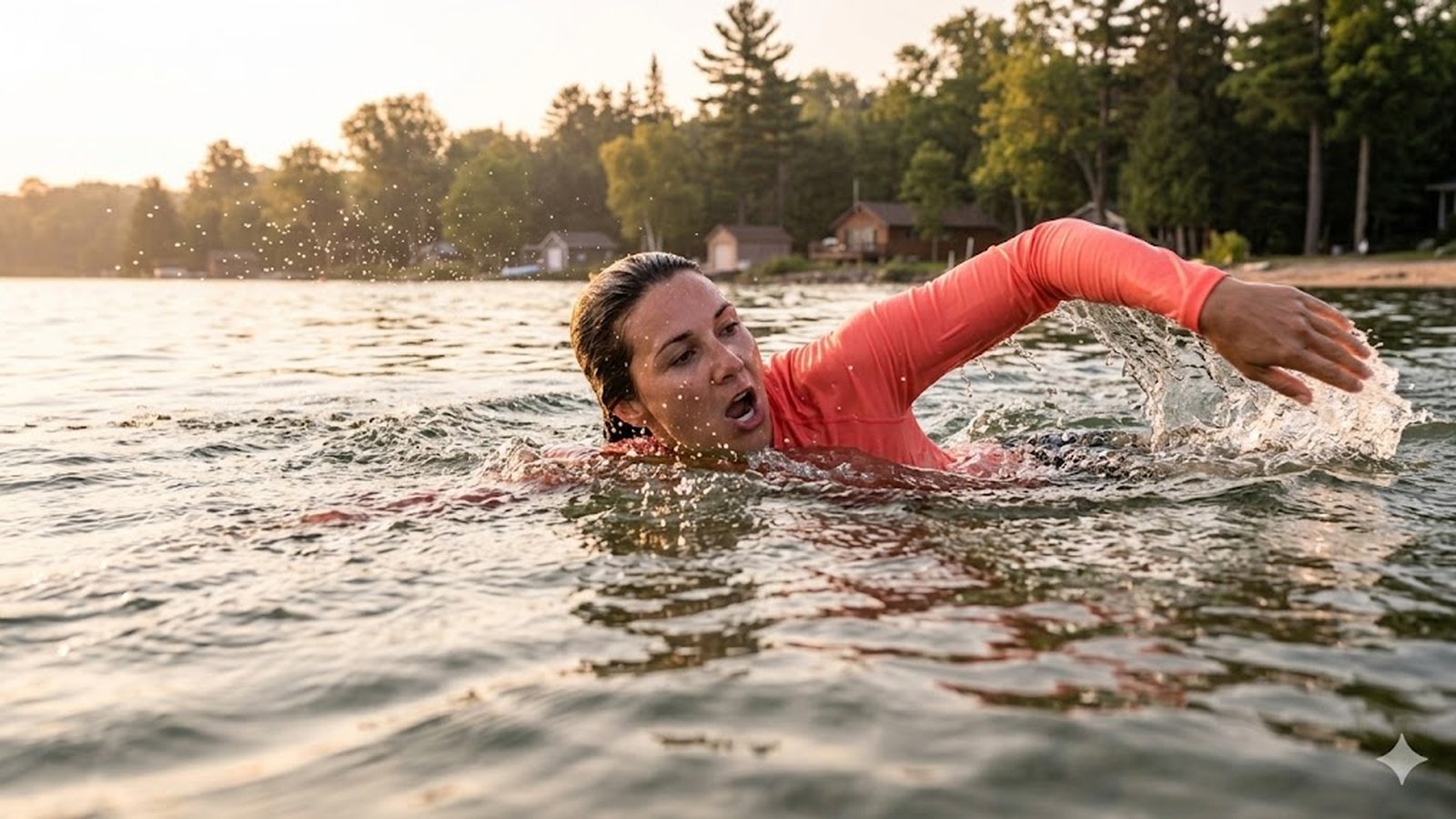
Georgian Bay is open Lake Huron water with weather, water temperature, and current behaviour that differ from a swimming pool or a calm inland lake. The biggest causes of swimming fatalities on Georgian Bay are cold-water shock, rip currents (and longshore currents in the wave zone), and exhaustion in unexpectedly long swims back to shore. The Lifesaving Society’s Ontario drowning statistics consistently identify cold-water shock and inability to swim long distances back to shore as the dominant fatality mechanisms in Great Lakes deaths. The protocol that meaningfully reduces risk for recreational swimmers is: check water temperature before entering (cold shock peaks below 15°C), enter gradually (the cold-shock response is reduced by 10–15 minutes of acclimation), swim parallel to shore not against a rip current, watch for the offshore wind that quickly extends the distance back, and exit at the first sign of fatigue, hypothermia, or being pushed seaward. The visible Wasaga Beach lifeguarded zone (Beach Area 1, Provincial Park summer staffing) is the safest swimming surface; outside lifeguarded hours and zones, the risk multiplies.
Why Georgian Bay is not a swimming pool
Lake Huron, including the Georgian Bay arm where Wasaga Beach sits, is the second-largest of the Great Lakes by surface area and is functionally an inland sea. The water characteristics that matter for swimmer safety differ from inland lakes and from swimming pools in ways that produce the consistent fatality patterns documented in the Lifesaving Society’s Ontario drowning reports.
Water temperature variability. The shallow eastern Georgian Bay shore at Wasaga warms faster than offshore water, but a strong onshore breeze can replace warm surface water with deeper cold water within hours. A swimmer who entered comfortable 22°C water at noon can be surprised to find 14°C water at the same beach at 3 PM after a wind shift.
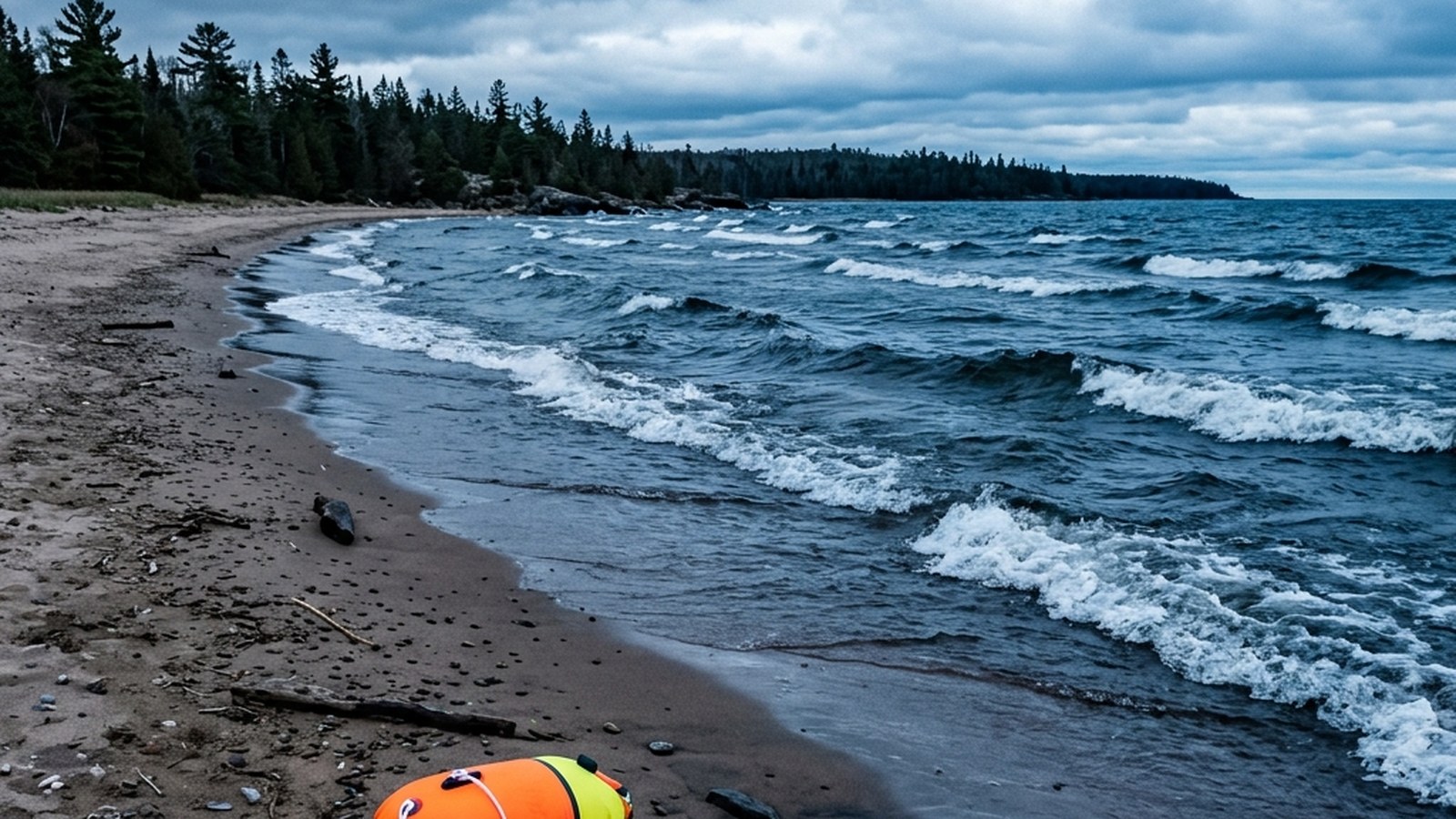
Wave and current dynamics. Georgian Bay regularly produces 1–2 metre waves under typical west and northwest wind conditions, and 2–3 metre waves are not unusual during fall storms. The shallow shoreline produces surf, longshore currents (water moving parallel to shore between the wave zone and the beach), and intermittent rip currents (offshore-flowing channels that develop when water piles up against the beach and finds a return route). Inland swimming pools and calm lakes have none of these features.
Distance perception. The wide, shallow bay means a swimmer can wade out 100 metres and still be in chest-deep water, then swim casually for 5 minutes and find themselves 200 metres from shore. The return distance is psychologically and physically larger than the outbound trip; offshore wind during the swim can multiply the return effort.
Cold-water shock: what it is and how to avoid it
Cold-water shock is the inhalational and cardiovascular gasp reflex triggered by sudden immersion in water colder than approximately 15°C. The physiology is well-established (Tipton 1989 is the foundational paper; subsequent work confirms the response is most intense in the first 60 seconds of immersion and reduces over 10–15 minutes of gradual acclimation): peripheral vasoconstriction spikes blood pressure, the gasp reflex causes involuntary inhalation (which can aspirate water if the swimmer’s head is below water), the heart rate increases sharply, and the cognitive function of the swimmer is impaired by the autonomic surge.
The fatality pattern from cold-water shock is straightforward: a swimmer enters cold water rapidly (jumping or diving), gasps and inhales water, panics and cannot regain breath control, and drowns within 1–3 minutes of entry. The Lifesaving Society Ontario reports of recent decades have documented this pattern as a leading cause of Great Lakes drowning.
The reduction protocol:
- Check the water temperature before entering. Most public beaches in the area post estimated water temperature; cool offshore winds can drop it 5–10°C in a single afternoon. A swimming watch with a temperature sensor confirms the actual entry conditions.
- Enter gradually, not by jumping or diving. Wade out from the shoreline, allowing 60–120 seconds of progressive immersion before submerging the head and chest.
- Acclimate for 10–15 minutes before swimming any meaningful distance. Float at chest depth, breathe slowly, and let the cold-shock physiology subside.
- Avoid alcohol or recent food; both impair the body’s thermoregulation and increase cold-shock vulnerability.
- Wear a thin neoprene shirt in water under 18°C. The 1–2 mm thermal layer dramatically reduces both cold-shock physiology and prolonged-immersion hypothermia.
Rip currents and longshore currents: how to recognise and escape
Rip currents are offshore-flowing channels of water that develop when surf-driven water piles up against the beach and finds a low-resistance return route. The hydrodynamics of beach rip currents have been well-studied in oceanography literature (MacMahan et al. 2006 reviewed the dominant mechanisms); the same physics applies to large lake beaches with active wave action.
The visual signature of a rip current includes:
- A channel of darker, deeper-looking water cutting through the wave zone
- A line of foam, sediment, or debris moving steadily seaward
- Reduced or absent breaking waves in a strip across the surf zone
- A choppy, churning patch of water in an otherwise smoother-looking surf area
If you find yourself caught in a rip current, the established protocol from the Lifesaving Society and the Great Lakes Surf Rescue Project is:
- Don’t fight it. Rip currents are typically 30–100 metres long and exhaust swimmers who try to swim directly back against them. The fatality mechanism is exhaustion, not the current itself.
- Float, signal, and breathe. Stay calm at the surface, wave one arm to attract attention, conserve energy.
- Swim parallel to shore until you exit the rip current channel (typically 30–60 metres of lateral movement).
- Then swim diagonally back to shore through the regular surf, taking advantage of waves that move toward shore.
Longshore currents (water moving parallel to shore) are different but related: they don’t pull you offshore, but they do push you laterally along the beach. A swimmer who entered the water in front of the lifeguard tower can find themselves 200 metres down the beach without realising it. The mitigation is to glance back at shore landmarks every 30–60 seconds during the swim.
Lifeguarded zones at Wasaga Beach
The Wasaga Beach Provincial Park provides lifeguard service at Beach Area 1 during the summer season (typically late June to Labour Day, hours posted daily at the beach access). The lifeguarded zone is marked with red flags at its boundaries and lifeguard towers at intervals along the swim area.
The safety differential between lifeguarded zones and unguarded zones is large. The Lifesaving Society Ontario’s 2022 drowning report (and prior years) consistently shows that the majority of drowning fatalities occur in unguarded waterways or outside lifeguard hours. The lifeguarded zone:
- Is monitored by trained surveillance from elevated positions with clear sightlines
- Has rapid-response rescue equipment immediately available
- Posts current water condition warnings (water temperature, undertow, recommended swim distance)
- Maintains perimeter buoys that mark the swim zone boundary
- Has trained staff who recognise distress signals before the swimmer can call for help
For families with children, swimmers learning the open-water environment, or swimmers at all uncomfortable with their water-safety judgment, swimming exclusively in the lifeguarded zone during posted hours is the single largest practical safety improvement.
Weather windows: when to swim and when not
Georgian Bay swim conditions vary substantially with weather. The decision-tree most local swimmers learn over time:
- Calm or light onshore wind, sunny: excellent conditions. Surf is small, water is well-mixed and warm-surface, visibility is good. Most reliable for long-distance swims and family use.
- Moderate onshore wind (15–25 km/h): swimming is feasible but surf rises noticeably. Cold-water surface is mixed up by wave action, so temperatures may drop 2–4°C. Children should stick to the chest-deep zone.
- Strong onshore wind (over 25 km/h): dangerous. Surf is at 1+ metres, rip currents are likely to develop, and lifeguards may suspend swimming or restrict zones. Don’t enter the water unless you’re an experienced surfer or strong swimmer in lifeguarded conditions.
- Offshore wind: deceptive. The surface looks calm because waves are pushed away, but the offshore current adds to swim distance back to shore. Inflatable toys (paddleboards, rafts, pool inflatables) blow offshore quickly — this is the leading cause of beach rescues at Wasaga in mild offshore-wind days.
- Approaching thunderstorm: exit the water immediately. Lake Huron storms produce dangerous lightning that strikes the water surface; even seeing distant lightning is a signal to clear the beach.
The exit protocol
The exit protocol is the most under-taught element of recreational open-water swimming. The principle: recognise the signs that demand an exit, and act on them immediately. Continued swimming past these signs is what produces fatalities.
Mandatory exit signs:
- Shivering that doesn’t stop within 30–60 seconds of treading water
- Loss of fine motor control (fingers feel uncoordinated, swim stroke degrades)
- Increasing breathlessness during a swim that started comfortable
- The sense of being pushed seaward (likely rip current or offshore wind)
- Cramps, particularly in the calves or hamstrings
- Mental fog or confusion (early hypothermia or excessive exertion signal)
- The shoreline appearing further than expected (drift or fatigue masking distance)
- Any other swimmer in your group needing help
The cognitive trap is the “just one more” pattern: a swimmer experiencing one of the above signs decides to swim a bit further before turning back, and the situation deteriorates faster than the swim home progresses. The discipline of exiting at first sign, before things get serious, is what experienced open-water swimmers do as a habit.
Children and family swimming
Wasaga Beach is one of the most family-friendly Great Lakes beaches; the long shallow profile means children can wade for 30+ metres before water reaches their chest. The pattern that maximises safety and benefit for families:
- Designate one adult as a continuous water watcher. Not multitasking. Not on a phone. Not reading. Just watching the kids in the water for the entire time they’re in.
- Stay in the lifeguarded zone during lifeguard hours.
- Use coast-guard-approved life jackets for non-swimming children, not pool inflatables. Pool inflatables blow away in offshore wind and provide no real water safety in open water.
- Set a chest-deep boundary for children and have them check in with the watching adult every 5–10 minutes.
- Establish a buddy rule between siblings: never out of sight of each other, and never swimming further out than the other.
- Watch the beach landmarks: longshore currents move children laterally without their realising it.
Useful gear for the open-water environment
Recreational swimmers don’t need much, but a few items make a meaningful difference for safety:
- Bright-coloured swim cap (orange, pink, or fluorescent yellow): visible to lifeguards and other watercraft from a distance.
- Swim buoy (the inflatable bright-coloured tow float): a flotation device the swimmer can grab in fatigue, plus visibility for boat traffic.
- Thin neoprene swim top or full wetsuit for cold-water training: extends the comfortable swimming season and reduces cold-shock vulnerability.
- Goggles with appropriate tint: clear for overcast days, light-mirror for sunny conditions. Sun glare on the bay surface is intense.
- A friend: solo open-water swimming is meaningfully riskier than swimming with a partner. The partner can summon help if you can’t.
Practical takeaways
- Cold-water shock kills below 15°C water when swimmers enter rapidly. Wade in gradually; acclimate 10–15 minutes before any distance swimming.
- Rip currents are escaped by swimming parallel to shore, not against the current. Float, signal, swim sideways out, then return diagonally.
- Lifeguarded zones produce dramatically lower fatality rates. Stay in them with kids and during posted hours.
- Offshore wind is more dangerous than it looks — calm surface masks the increased return distance. Inflatables blow seaward quickly.
- Exit at the first sign of cold, cramps, fatigue, or distance disorientation. The “just one more” pattern is what produces fatalities.
- A bright swim cap and a tow-float buoy are the cheapest safety upgrades for any non-lifeguarded swim.
Note: this article discusses water safety in a recreational context. Anyone in active distress in the water should call 911 immediately. The information here is educational and does not replace formal water-safety certification (Lifesaving Society Bronze Cross, Red Cross Water Safety) for anyone supervising others in the water.
References
Tipton 1989Tipton MJ. The initial responses to cold-water immersion in man. Clin Sci. 1989;77(6):581-588. View source →MacMahan et al. 2006MacMahan JH, Thornton EB, Reniers AJ. Rip current review. Coastal Engineering. 2006;53(2-3):191-208. View source →Lifesaving Society OntarioLifesaving Society of Ontario. Annual Drowning Reports. View source →Great Lakes Surf Rescue ProjectGreat Lakes Surf Rescue Project. Public-education resource on Great Lakes rip currents and surf safety. View source →Ontario Parks — WasagaOntario Parks. Wasaga Beach Provincial Park — visitor and beach safety information. View source →