The 60-second version
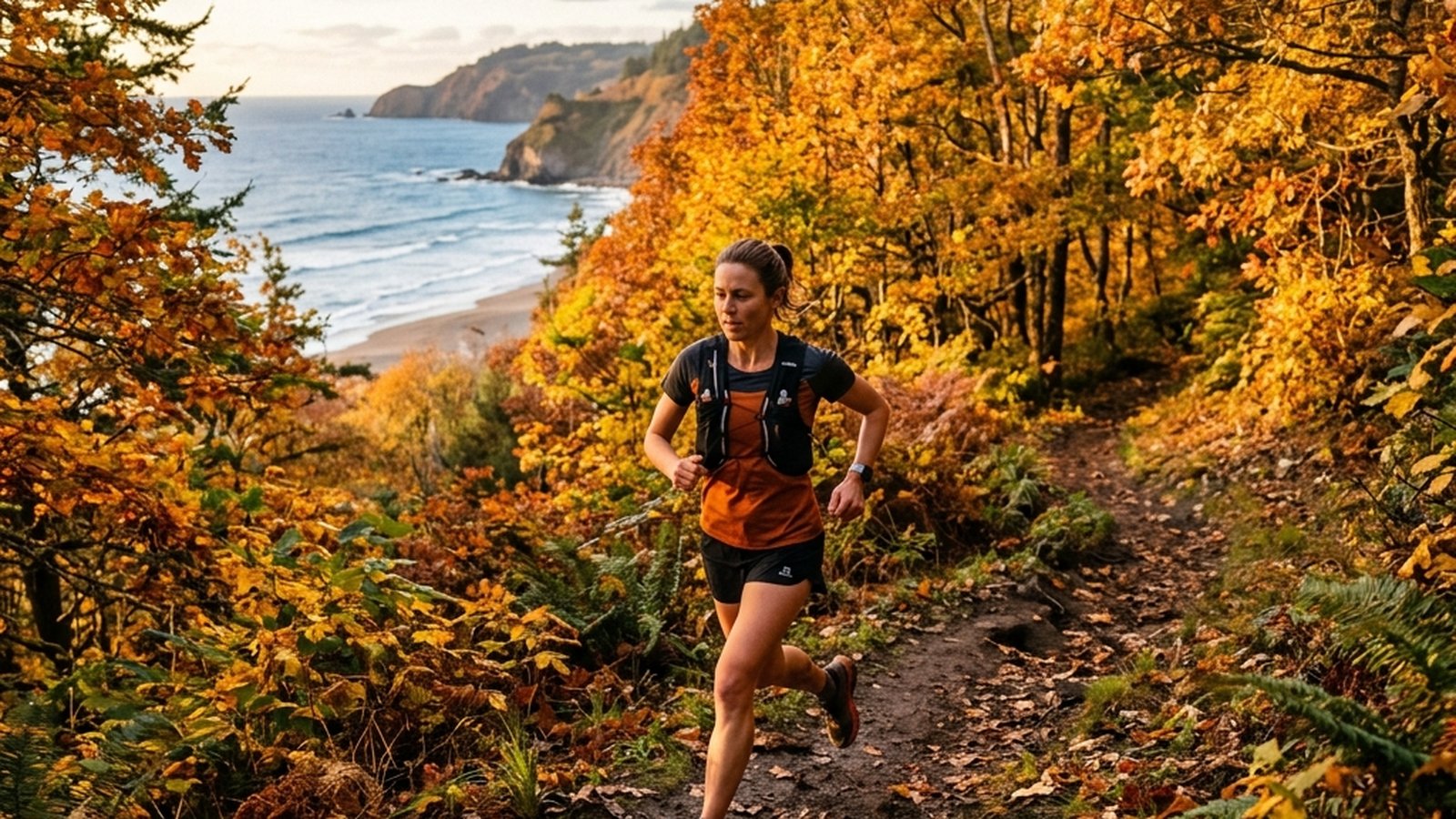
October in Wasaga is the shoulder-season month with the best trail-running conditions of the year. The Niagara Escarpment hardwood forest reaches peak autumn colour around mid-October, ambient air temperatures of 8–15°C are optimal for sustained-effort running, water has cooled past comfortable swimming, and the trail surfaces are dry but not yet frozen. The published research on cold-weather running (Cheuvront 2019; Kirkendall 2018) consistently shows performance gains over summer at equivalent paces — the cooler ambient air reduces thermoregulatory burden and the lower humidity supports sustained breathing rates. For Wasaga residents, October is the running-season culmination month: race-season peak, trail-system peak conditions, and the last block of comfortable outdoor training before the November transition. The protocol that works: distance-focused running on the Georgian Trail and forest trails, hill repeats at Devil’s Glen and Pretty River as quality work, layered apparel for the morning-cold afternoon-cool transitions, and respect for the rapidly-decreasing daylight that compresses the training window.
October weather: the runner’s month
October in Wasaga produces the most consistent training weather of the year for most outdoor activities:
- Average daily high: 14–17°C in early October, falling to 9–12°C by month-end. Frost becomes possible in the second half of the month.
- Average daily low: 6–9°C early, 2–5°C late. Below-freezing nights are common in the second half of October.
- Sun: declining. Daylight contracts from ~11.5 hours at month-start to ~10 hours at month-end.
- Humidity: typically 50–70% (drier than summer). Air feels crisp.
- Wind: storm systems become more common. Gusty days alternate with calm.
- Rain: 70–90 mm typical, with occasional intense fronts. Cold rain becomes possible.
- Lake water temperature: 14–18°C through October. Below the comfort threshold for most casual swimmers; cold-water swimmers continue with wetsuits.
- First snow: rare in October but possible in late month, particularly inland from the lake-moderating effect.
The practical implication: outdoor activity is excellent for almost the full month, with attention to layering for the temperature swings and earlier sunset. October running and hiking are widely considered the best of the year by Ontario fitness practitioners.
Autumn colour: the visual stimulus that sustains adherence
The Wasaga and broader Niagara Escarpment region is in the prime autumn colour zone. The progression:
- Late September: early colour change in birches and silver maples; predominantly green canopy.
- Early October: red maples and oaks begin shifting; 30–40% colour change.
- Mid-October (typically October 10–20): peak colour. The Niagara Escarpment forest displays full mixed palette; trails are spectacular for hiking and photography.
- Late October: declining. Many trees lose foliage by late month; the forest opens up visually.
- Early November: bare canopy in most species; ground litter dominates the visual.
For runners, hikers, and cyclists, the visual stimulus of changing colour is what supports the longer training durations October enables. The motivational effect of running through peak-colour forest is real and well-documented in the outdoor-exercise psychology literature; many trainers explicitly schedule key workouts during peak colour weeks for this reason.
The Bruce Trail Conservancy provides leaf-colour maps and updated reports through October. The Devil’s Glen, Pretty River, and the broader Bruce Trail sections through the Beaver Valley are particularly photogenic during peak weeks.
Why cool weather is faster
The published research on running performance and ambient temperature consistently shows performance gains in the 5–15°C range over warmer conditions. The mechanisms:
- Reduced thermoregulatory burden: cooler ambient air means less circulatory diversion to skin-surface cooling. More blood remains available to working muscles.
- Lower core-temperature drift: in long-duration efforts, body core temperature rises more slowly in cool conditions. Performance degrades less over the duration.
- Improved sweat efficiency: in cool dry air, sweat evaporates more efficiently. Hydration demands are lower.
- Lower respiratory humidity load: cooler air has lower absolute humidity; respiratory water loss is more manageable.
- Reduced perceived exertion: the same heart rate feels easier in cool conditions. Trainees often report being able to push harder.
The optimal temperature range for sustained running performance varies by individual and activity, but published studies generally identify 5–12°C as the cool-end optimal zone. October regularly produces these conditions, particularly in the late-morning and early-afternoon training windows. The summer pace that felt difficult at 28°C in 65% humidity often becomes a comfortable cruise pace at 12°C in 50% humidity.
A specific October protocol
For a Wasaga resident continuing the September build:
Week 1 (early October)
- 5× outdoor cardio: 1–2 quality sessions plus easy distance.
- 2× resistance training.
- 1× long outing: 90–120 minutes through trail system to absorb autumn colour beginning.
- Quality session focus: tempo run on Georgian Trail (6–8 km at half-marathon pace).
Week 2 (peak colour, mid-October)
- 5× outdoor cardio: peak training week if a goal race is upcoming.
- 2× resistance training.
- 1× long outing or destination hike at peak colour: Devil’s Glen or Pretty River, 2–3 hour duration.
- Quality session focus: hill repeats at the dune system (10–12× 30 seconds at 90% effort).
Week 3 (late October)
- 4× outdoor cardio: shorter sessions, conservative pacing as race day approaches.
- 1× resistance training (reduced volume in race week).
- 1× goal race or peak workout.
- Active recovery: post-race week with easy walking and trail recovery.
Week 4 (end of October, transition prep)
- 4× easy outdoor cardio: post-race or post-build absorption.
- 2× resistance training.
- 1× long outing: late-autumn experience, scout indoor options for November.
Cool-weather layering
October’s temperature variability requires layering that summer training doesn’t. The pattern:
- Base layer: technical synthetic or merino long-sleeve. Wicks sweat; provides warmth even when wet.
- Mid layer (optional): light fleece or wind-blocking running jacket. For colder runs (below 8°C) or windy conditions.
- Outer layer (optional): light running jacket with wind-blocking front and breathable back. Useful for shoulder-season conditions where rain is possible.
- Lower body: shorts above 12°C, capris 8–12°C, full tights below 8°C.
- Hands: thin running gloves are useful below 12°C; heavier gloves below 5°C.
- Head: a thin running hat is useful below 10°C. Full beanie below 5°C.
- Visibility: bright colours and reflective elements as daylight contracts. Headlamp or flashing red light becomes useful for evening runs.
The over-layering failure mode is common: trainees overdress for the start of a session and overheat 10 minutes in. The rule: dress for the temperature 10–15 minutes into the workout, not the temperature at the start. Some shivering at the start is normal and resolves with movement.
Trail conditions in October
October trail surfaces are at their annual peak quality:
- Wasaga Provincial Park trails: dry, packed, leaf-littered. The leaf cover can hide loose stones and roots; foot placement attention matters.
- Tiny Marsh: continuing peak migratory bird season. Trails are dry; viewing platforms accessible.
- Pretty River Valley: peak hiking conditions through mid-month. Trails dry; visibility through forest improving as understory dies back.
- Ganaraska Trail (Wasaga section): forest cover providing dramatic colour; ground footing is reliable.
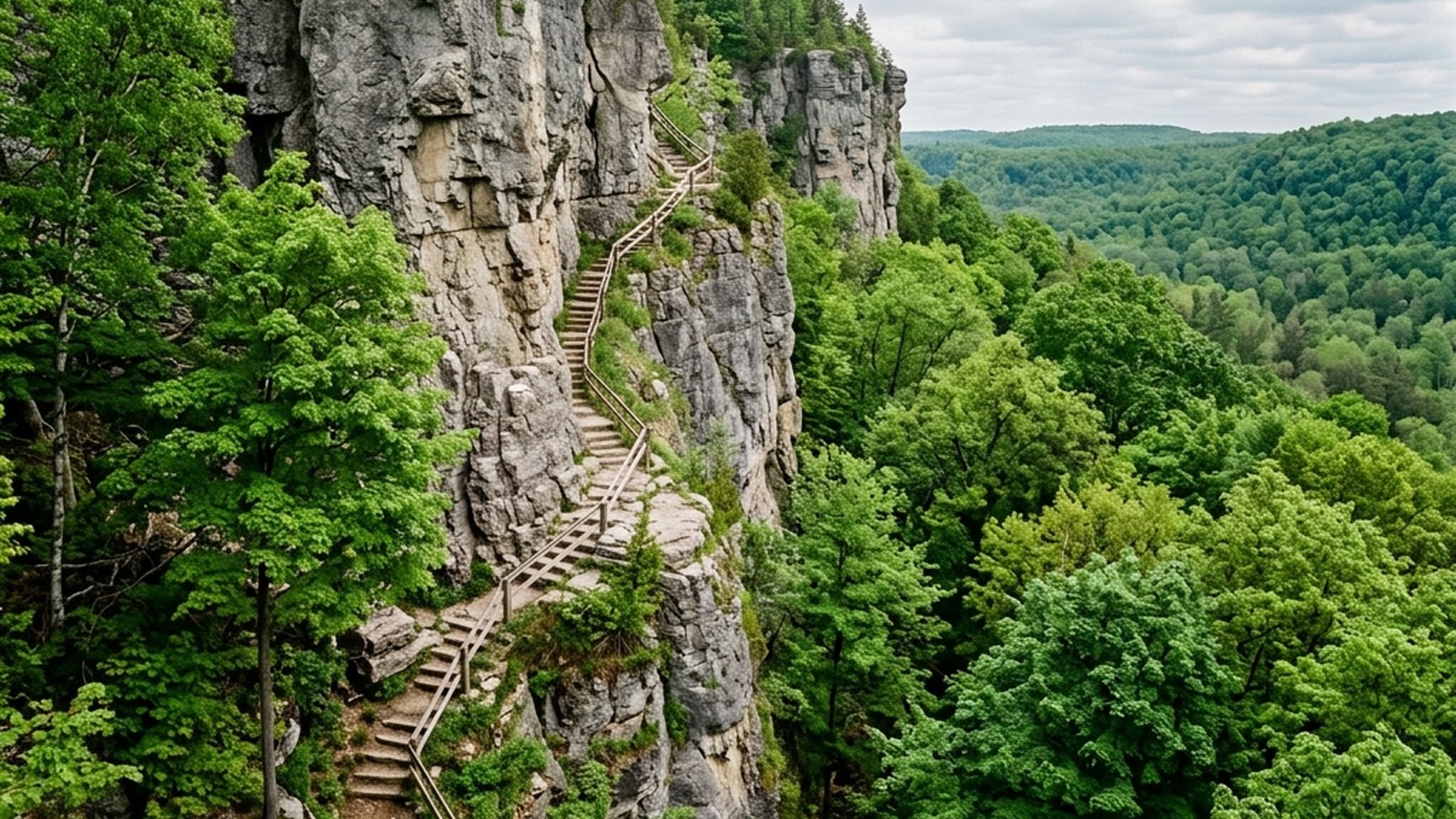
- Devil’s Glen: optimal vertical hiking. Cool ambient supports the climb; forest colour spectacular at peak.
- Georgian Trail: peak cycling conditions. Cool air, clear sightlines, low traffic. Probably the year’s best cycling weather.
- Blue Mountain side trails: dramatic vertical, Niagara Escarpment landscape with full autumn colour. The chairlift may operate for sightseeing in some seasons.
The trail safety considerations:
- Leaf litter hides hazards; pace conservatively on technical sections.
- Mud after rain takes longer to dry than summer; check conditions if you’ve had recent rainfall.
- Black bears are still active before hibernation; standard precautions on remote trails.
- Hunters in some sections (private land, designated areas); blaze-orange clothing useful in early morning and around dawn/dusk.
- Cell coverage is generally reliable but earlier sunset means a longer-than-expected hike can turn into a headlamp situation.
The autumn fitness adaptations
The biological adaptations during October training:
- Continued aerobic improvement: the cool weather allows higher-quality training, which produces continued cardiovascular gains in the September-October build.
- Reduced thermoregulatory expenditure: less of the daily caloric expenditure goes to managing heat. More can support training and recovery.
- Sleep quality improvement: cooler bedroom temperatures and longer night windows support better sleep.
- Mental health benefits: outdoor exposure during shoulder-season is associated with reduced depression risk and improved mood markers in the published literature.
- Vitamin D consideration: declining sun intensity reduces endogenous vitamin D production. Consider supplementation by late October if outdoor exposure is reduced.
For Wasaga visitors in October
October is excellent for active tourism, particularly for hikers and cyclists:
- Empty trails: weekday hiking on most regional trails is private-feeling.
- Spectacular autumn colour: peak weeks provide world-class scenery.
- Comfortable hiking weather: cool air, low humidity, no oppressive heat.
- Accessible accommodation: shoulder-season rates, easier reservations.
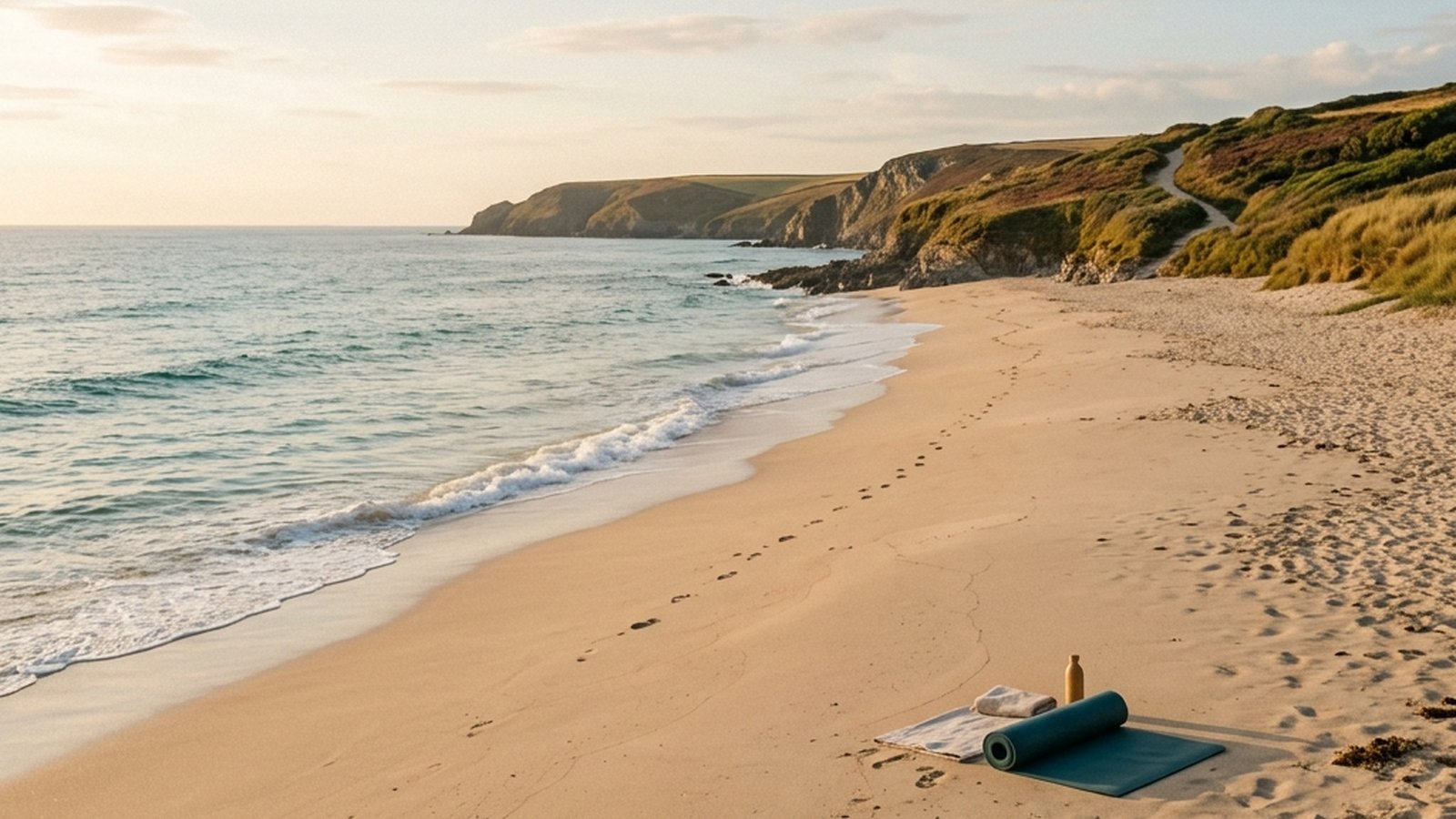
- Quiet beachfront: the boardwalk and beach are local-only outside specific weekend events.
- Active events: fall trail races, cycling events, organised hikes.
Recommended October visitor itinerary: 2–4 days centered on a peak-colour weekend, with a Devil’s Glen or Bruce Trail hike, a Georgian Trail cycling outing, and beach-side walking for sunrise/sunset. The combination of weather, scenery, and reduced cost is hard to beat.
Practical takeaways
- October is the runner’s month: optimal cool temperatures (5–15°C), spectacular autumn colour, peak trail conditions.
- Cool weather is faster: reduced thermoregulatory burden produces measurable performance gains over summer.
- Layering is essential: dress for the temperature 10–15 minutes in, not the start. Bring layers for variable conditions.
- Peak autumn colour is mid-October: schedule destination hikes (Devil’s Glen, Pretty River, Bruce Trail) during peak weeks.
- Race-season peak: October is when most local autumn races happen.
- Trail safety considerations: leaf litter hides hazards, hunters in some areas, earlier sunset extends shadow on long hikes.
References
Environment CanadaEnvironment Canada Climate Data — Wasaga Beach historical averages. View source →Cheuvront & Kenefick 2014Cheuvront SN, Kenefick RW. Dehydration: physiology, assessment, and performance effects. Compr Physiol. 2014;4(1):257-285. View source →Kirkendall & Sayers 2018Kirkendall DT, Sayers AT. Body temperature regulation in the heat: from past, present, and future. Sports Med. 2018;48(Suppl 1):1-3. View source →Bruce Trail ConservancyBruce Trail Conservancy — Trail information and seasonal updates. View source →Ontario Parks FallOntario Parks — Fall colour reports and seasonal information. View source →