The 60-second version
September is the secret-best month for serious fitness in Wasaga Beach. Tourist crowds collapse after Labour Day, water remains warm into mid-month, air temperatures cool from peak-summer to comfortable training conditions, bug pressure stays low, and the trail and beach surfaces become reliably available again to local users. For runners, cyclists, hikers, and open-water swimmers, the late-summer training window through October is when the biggest aerobic blocks of the year happen: 6–10 weeks of cool-but-not-cold weather with empty trails. The protocol that works: start a longer-week training cycle, exploit the empty boardwalk and Beach Drive corridor, take advantage of warm-water swim conditions while they last, and use the cooler evenings for the kind of distance work that summer heat made impractical. For race-focused trainees, September-October is the peak race season locally; for general-fitness users, it’s the consolidation month after the summer’s gains.
September weather: the goldilocks zone
September in Wasaga Beach has the most pleasant climate of any month in the year for outdoor fitness:
- Average daily high: 22–25°C in early September, falling to 16–19°C by month-end.
- Average daily low: 12–15°C early, 8–10°C late. Below-freezing nights are rare even in late September.
- Sun: declining intensity from peak summer; UV exposure remains meaningful through mid-month then drops.
- Humidity: typically lower than July/August. The crisper air feels noticeably more comfortable for exertion.
- Wind: variable; the lake-warming creates more stable patterns than spring. Strong storm systems possible from mid-month onward.
- Rain: 70–90 mm typical, distributed across multiple days.
- Lake water temperature: 22–25°C in early September; 18–22°C by month-end. Comfortable swimming through mid-month, marginal by late September.
The practical implication: outdoor activity is favourable for the full month with declining demands on heat and sun management. Long-duration sessions become more comfortable; the trail and boardwalk experience is pleasant rather than punishing.
Tourist crowds collapse after Labour Day
The annual transition from peak tourist season to off-season is sharp and well-defined:
- Labour Day weekend (early September): peak crowds for the final long weekend; the boardwalk and beach are at maximum density.
- The week after Labour Day: dramatic drop. Schools resume, weekday tourists vanish, weekend visitor counts drop 60–80%.
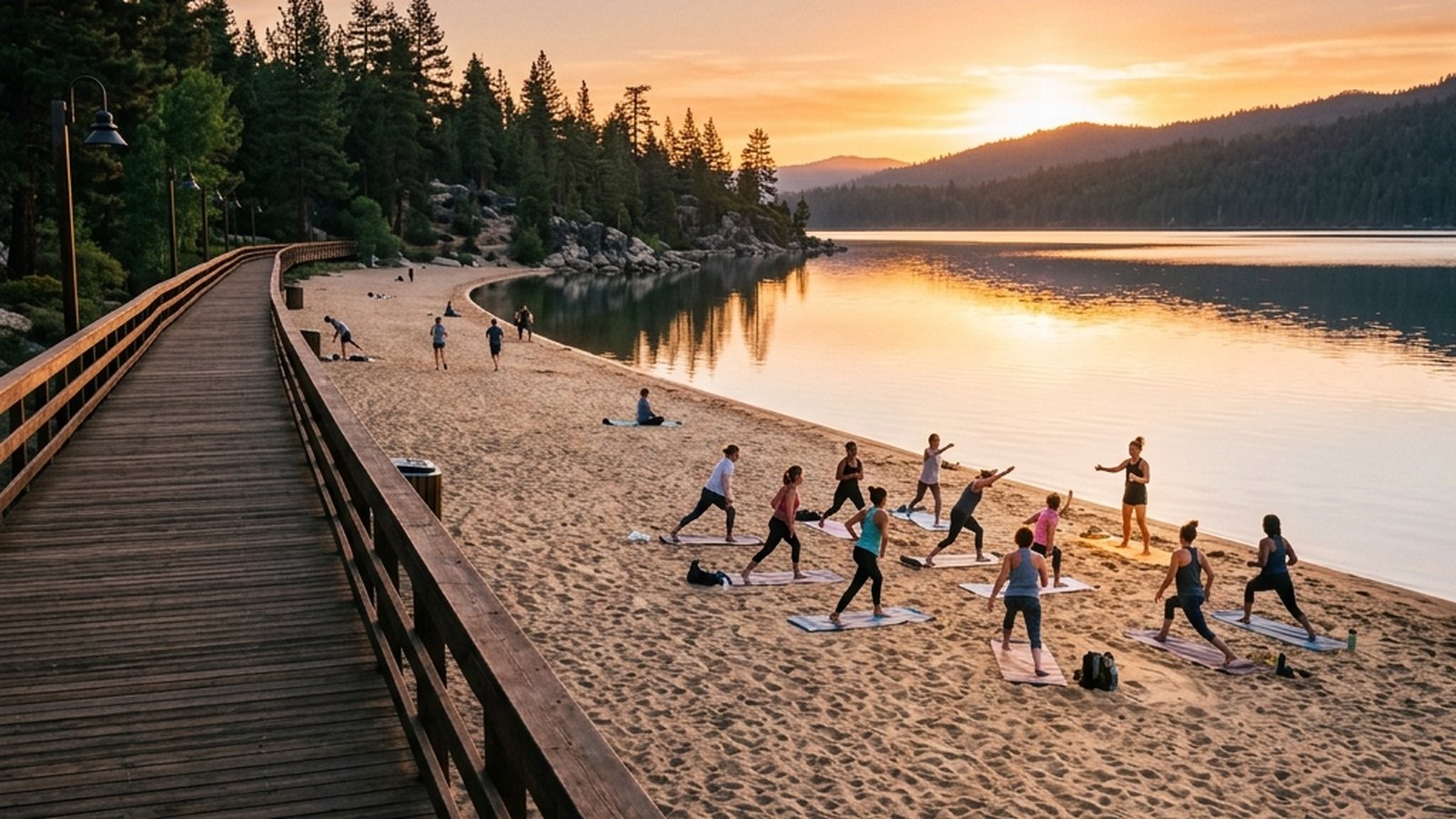
- Mid-to-late September: the boardwalk and main beach areas are largely populated by locals and a few empty-nester visitors. Restaurants are accessible without waits; parking is plentiful.
- Late September weekends: occasional surges from leaf-peeping tourists or specific events, but pressure is far below summer.
The pattern matters for fitness because it changes what’s feasible. The early-morning workout window that was the only realistic outdoor option in July–August is no longer the only option in September; mid-morning and afternoon sessions become workable again. The Beach Drive boardwalk transitions from “walking-pace tourist obstacle course” back to “running surface.”
The closing water window
Lake water temperatures in September follow a predictable cooling curve. The water’s thermal mass means it lags the air temperature by 4–6 weeks, which is what produces the September swimming opportunity:
- Early September (1–15): water 22–24°C. Comfortable swimming for full open-water sessions.
- Mid-September (15–25): water 20–22°C. Comfortable but slightly cooler; long swims need attention to thermal balance.
- Late September (25–30): water 17–20°C. Tolerable for shorter swims; many swimmers transition to wetsuit-only practice from this point onward.
For local open-water swimmers, late-summer through mid-September is when the longer-distance swim training peaks. Conditions allow 60–90 minute swims without the thermal stress that earlier-season swims produce. By late September, sessions shift to wetsuit and shorter durations as water cools.
The lifeguarded zone at Beach Area 1 typically closes after Labour Day. Open-water swimming after this date is at swimmer’s own risk; the standard safety protocols (buddy system, tow-float buoy, exit discipline) become more important.
Trail conditions in September
The trail system reaches its annual peak quality in September:
- Wasaga Provincial Park trails: dry, packed, mostly bug-free. Excellent conditions for running, hiking, and walking.
- Tiny Marsh: peak migratory bird season. Long walks combine with wildlife viewing.
- Pretty River Valley: trails dry; ferns and wildflowers fading; visibility through forest improving as understory dies back.
- Ganaraska Trail (Wasaga section): forest cover providing pleasant temperature, wildlife visible, the year’s best long-walking conditions.
- Devil’s Glen: optimal vertical hiking conditions. Cool ambient air makes the climb more comfortable; forest colour begins shifting to autumn palette by month-end.
- Georgian Trail: peak cycling conditions. Cool air, declining bug pressure, weekend traffic substantially lower than summer.
- Blue Mountain side trails: prime hiking. The chairlift may operate for sightseeing in some seasons; check current schedule.
The forest-bathing literature consistently identifies September-October as the optimal period for forest immersion experiences in deciduous forests — the visual stimulus of gradual colour change combined with cool comfortable temperatures and reduced insect pressure.
A specific September protocol
For a Wasaga resident who completed the summer training cycle:
Week 1 (early September, post-Labour Day)
- 5× outdoor cardio: morning, midday, or evening (heat is no longer the limiter). Easy to moderate pace; absorb the cumulative summer fatigue.
- 2× resistance training.
- 1× long open-water swim before the water cools.
- 1× long outing: hike, ride, or run of 90+ minutes.
Week 2–3 (mid-September)
- 5× outdoor cardio: include 1–2 quality sessions (intervals, tempo run, hill repeats) as cool weather supports harder efforts.
- 2× resistance training.
- 2× sport activity (pickleball, tennis, late-season swim).
- 1× long outing: 2–3 hours, destination format.
Late September
- 5× outdoor cardio: peak training week if a goal race is upcoming.
- 2× resistance training.
- 1× wetsuit swim if water has cooled below comfort threshold.
- 1× long outing: race-day distance for marathon prep, or destination hike for general fitness users.
The September pattern emphasises quality over volume relative to the summer peak. The cool air supports harder efforts; the extended daylight at the start of the month allows split-day workouts (morning session plus evening session).
The September-October race calendar
September and October host the densest local race calendar of the year. The general categories:
- Local 5K, 10K, half-marathon, marathon: the autumn race series in the Wasaga, Collingwood, Stayner, Barrie, and broader region produces 8–15 races per year accessible to local participants.
- Triathlon series finale: most regional triathlon series wrap in late September.
- Open water swim events: end-of-season open-water races and meet-ups.
- Cycling fall classics: longer-distance fall rides through the Niagara Escarpment region.
- Hiking events: fall colour hikes, Bruce Trail group walks, multi-day events.
- Pickleball and racquet-sport tournaments: end-of-season tournaments at varying skill levels.
For race-focused trainees, the 6–10 week build through August into September is when the goal race results are made. The September-October calendar is the test.
Recovery from the summer load
The transition from peak summer outdoor activity to September often produces a delayed-onset fatigue pattern in regular exercisers. The cumulative summer load — heat exposure, longer hours of sun, multiple races and events, broken sleep from longer days — catches up.
The September recovery emphasis:
- Sleep: longer nights are a cue to extend sleep duration. The cumulative sleep deficit from summer often shows up as September fatigue; an extra 30–45 minutes of sleep nightly through the month addresses it.
- Easy days: the first 2 weeks of September should include more easy days than the average summer week. The body needs absorption time before the next training cycle.
- Cross-training: incorporating modalities that weren’t emphasised in summer (yoga, swimming, cycling for runners, etc.) provides the variation that regenerates motivation.
- Skin recovery: cumulative summer UV damage manifests in September. Aggressive moisturisation, vitamin C topical, and broadband sun protection on continuing outdoor activity.
- Joint and tendon attention: high-volume summer activity sometimes produces September-onset overuse symptoms (Achilles, knee, plantar fasciitis). Address early with rest, ice, and modified activity.
For Wasaga visitors in September
September is one of the best months for active tourism in Wasaga Beach:
- Quiet beachfront after Labour Day: enjoy the boardwalk and beach without crowds.
- Comfortable weather: cool air, declining sun intensity, no oppressive heat.
- Warm water through mid-month: comfortable swimming continues for visitors with right timing.
- Restaurants and amenities accessible: peak-season wait times are gone; reservations easier.
- Accommodation pricing: typically 20–40% lower than peak summer rates.
- Mid-week empty: weekday visits provide near-private use of the beachfront.
- Trail access: empty trails, no parking issues, comfortable hiking conditions.
- Race events: fall race calendar provides destination-event options for active tourism.
Recommended September visitor itinerary: morning long walk on Beach Drive (sunset start), afternoon trail hike or cycling on the Georgian Trail, evening dinner without waits, repeat for 3–5 days. The combination of weather, quiet, and infrastructure availability is the best of any month in the year.
Practical takeaways
- September is the secret-best month for serious fitness in Wasaga: cool comfortable weather, empty trails, warm-but-cooling water.
- Tourist crowds collapse after Labour Day; weekday and most weekend boardwalk and trail use is local-only.
- The water window closes by late September: 22–24°C early-month is full-comfort swimming; wetsuit becomes useful by late month.
- Race calendar peaks in September-October: the build through summer culminates in the autumn races.
- Recovery from summer load matters: easy days, more sleep, attention to overuse symptoms.
- For visitors, September offers the best combination of weather, quiet, and accessibility of any month.
References
Environment CanadaEnvironment Canada Climate Data — Wasaga Beach historical averages. View source →Ontario Parks — WasagaOntario Parks. Wasaga Beach Provincial Park — visitor information and seasonal facility status. View source →Lifesaving SocietyLifesaving Society of Canada — Open-water swimming safety guidance. View source →Li 2010Li Q. Effect of forest bathing trips on human immune function. Environ Health Prev Med. 2010;15(1):9-17. View source →