The 60-second version
Most ‘ultimate beach gym bag’ lists fail in the same way: they optimise for completeness, not for consistency. The behaviour-change literature on exercise adherence is unambiguous — perceived friction (bag weight, packing time, decision load) is one of the strongest negative predictors of session completion (Lubans 2014 Lubans 2014). The minimum-effective beach gym bag includes seven items: water, electrolyte tablets, sun protection (SPF 30+ broad-spectrum), a UPF rash guard or cover-up, microfiber towel, sand-resistant footwear or barefoot acceptance, and a pair of small loop bands. The hydration math is the most evidence-driven piece: ACSM’s 2007 fluid-replacement position stand specifies 400–600 mL per hour of moderate exertion in heat (Sawka 2007 Sawka 2007), and exertional heat illness risk rises sharply when hydration falls behind 2% of bodyweight (Casa 2015 Casa 2015). UV protection is the other non-negotiable — cumulative skin exposure from beach training adds up fast, with Sliney 2000 measuring beach-surface UV reflectivity boosting effective dose by 10–25% over open ground (Sliney 2000 Sliney 2000). Everything else is optional.
Why over-packing reduces session frequency
The exercise-adherence literature consistently identifies friction as a high-leverage variable. Lubans 2014 reviewed school-based and family-based interventions for fundamental movement skill development and found that program drop-out was strongly predicted by per-session preparation time and equipment-management burden Lubans 2014. The pattern translates to adult beach training: a 15-item bag that takes 8 minutes to pack and 6 minutes to unpack adds 14 minutes to each session, on top of travel and post-session cleanup. Over a 12-week summer at 3 sessions/week, that’s 8.4 hours of pure overhead.
The behaviour-change framing: the bag is a tax. Every item that doesn’t earn its place by being used in 80%+ of sessions is paying tax for marginal benefit. The honest minimum-effective list is short.
Hydration: the most evidence-driven piece
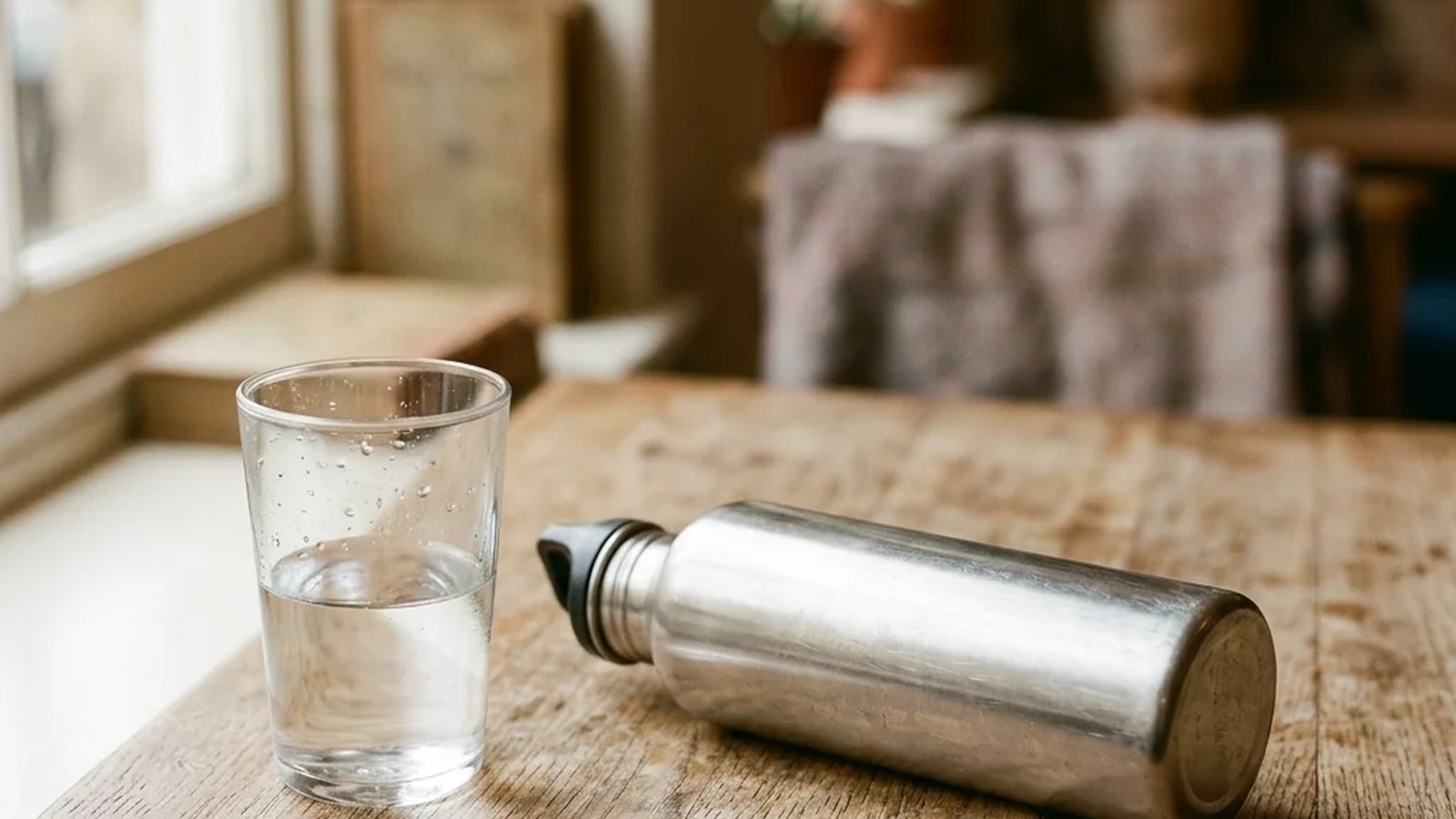
Sawka 2007, the American College of Sports Medicine position stand on exercise and fluid replacement, specifies 400–600 mL per hour for moderate-intensity exercise in moderate heat, scaling up to 800–1,200 mL/hour for high-intensity work in extreme heat Sawka 2007. For a 60–90 minute beach session in 25–30°C summer conditions, the practical minimum is 750–1,000 mL. Pack a 1-litre bottle.
The electrolyte case: sodium losses through sweat in 60+ minute sessions exceed what plain water replaces, and the resulting dilutional hyponatremia risk is a Casa 2015-documented contributor to exertional heat illness in heat-stressed athletes Casa 2015. Practical solution: 1–2 electrolyte tablets dissolved in the bottle, or a sodium-containing sports drink concentrate. The fancy options (powder mixes, branded waters) are not better than the simple options.
Casa 2015 (the National Athletic Trainers’ Association exertional heat illness statement) identified pre-session hydration status as the highest-yield protective intervention — pre-loading 400–600 mL 30–60 minutes before training keeps the buffer adequate even if mid-session intake is imperfect Casa 2015.
UV: cumulative dose, not single-event burn
Sliney 2000 measured ultraviolet exposure in outdoor sport environments and reported that sand surfaces increase effective UV dose by 10–25% via reflection — comparable to snow or water-surface reflection Sliney 2000. The implication for the bag: SPF 30+ broad-spectrum is the minimum (SPF 30 blocks ~97% of UVB; SPF 50 blocks ~98% — the marginal benefit is small), reapplied every 2 hours and after swimming.
The garment angle: a UPF 50+ rash guard or sun shirt blocks 98% of UV across the covered area without the reapplication discipline sunscreen requires. For training (versus swimming) sessions, this is the higher-compliance option for the torso. Sun on the legs and arms still requires sunscreen.
Headwear and sunglasses are second-tier in the minimum-effective list — they’re useful, but most beach trainees already own appropriate ones. The bag-tax principle: don’t add an item to the ‘dedicated’ gym bag that’s already in the broader beach kit.
The minimum-effective seven-item list
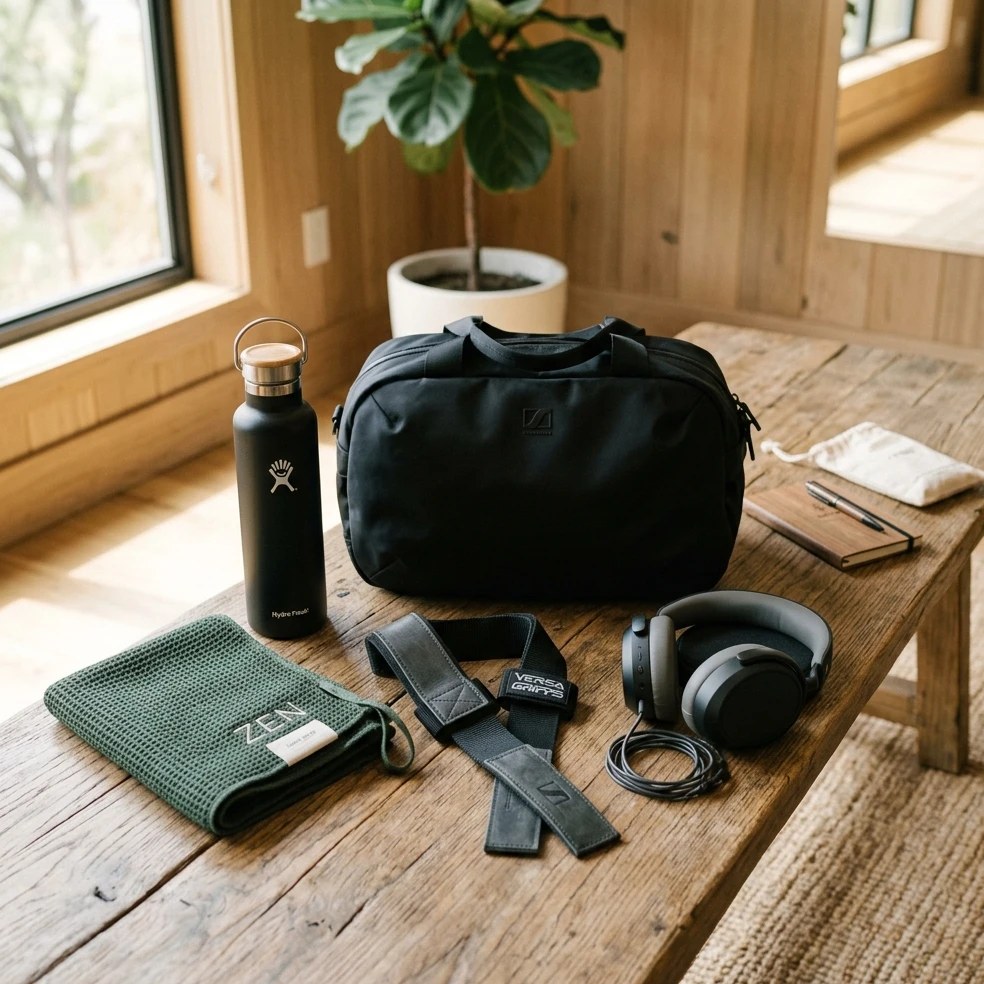
The seven items that earn their place in 80%+ of beach training sessions:
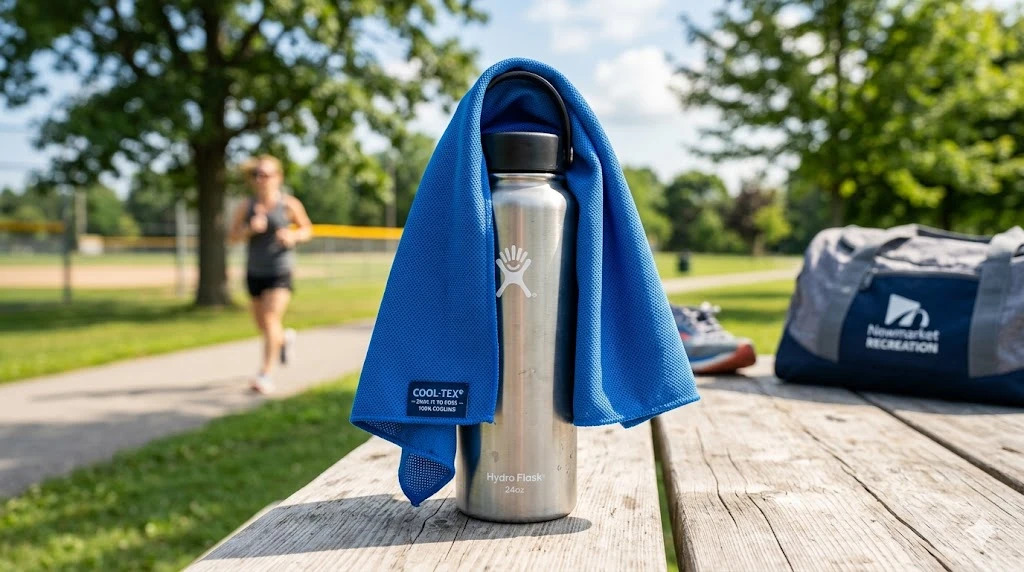
- 1L water bottle (insulated if possible — warm water is a compliance killer)
- Electrolyte tablets (5–10 in a small zip bag; covers a season of single-bottle uses)
- SPF 30+ broad-spectrum sunscreen (50 mL travel size for the bag, 200 mL home stockpile)
- UPF 50+ rash guard or sun shirt (worn during the session, not packed-and-forgotten)
- Microfiber towel (the standard quick-dry version — saves 80% of the weight and 90% of the dry-time of a cotton beach towel)
- Footwear decision: sand-resistant water shoes OR barefoot acceptance (skip if doing barefoot beach work; pack only if doing rocky terrain or post-session walks)
- Two small loop resistance bands (covers warm-up, mobility, accessory work; replaces 5–10 single-purpose items)
That’s the list. Anything else — foam roller, kettlebell, suspension trainer, additional towels, change of clothes, additional snacks — is a session-specific add-on, not a bag standard.
The over-pack patterns the adherence literature predicts
Three over-pack patterns the friction literature would predict you to fall into.
The Equipment Pile. Tendency to add every implement seen in a workout video. Result: 30+ pound bag, 10 minutes of decision-making at the beach about which items to use, frequent ‘today I’ll just walk’ outcomes. Lubans 2014’s adherence framing predicts this pattern produces lower frequency than a minimal-bag pattern delivering 20% of the equipment options Lubans 2014.
The Worst-Case Pack. Tendency to pack for every conceivable contingency — rain shell, cold-weather layer, first-aid kit, emergency snacks, additional water for the unlikely overnight scenario. Bag weight 25+ pounds, 70% of items unused per session.
The Branded Stack. Tendency to layer in branded recovery products (BCAAs, branded electrolyte powders, recovery drinks) that the supplement literature finds non-superior to the simple electrolyte-tablet plus standard food approach. Adds cost and weight without performance return.
The behaviour-change fix in all three: a hard cap on bag weight (8–10 lbs, dry) and a hard cap on packing time (under 90 seconds). Items that don’t fit the caps don’t go in the standard bag.
Session-specific add-ons (not bag standards)
Some items earn their place for specific session types but not as bag-standard. The distinction matters because it changes packing time and decision load.
For sand sprint or beach run sessions: add minimalist trainers if running on hard-pack zone, otherwise barefoot. Add a HR monitor strap if you train to specific HR zones.
For beach calisthenics or sandbag sessions: add chalk if grip work is included, add the sandbag itself (don’t pre-fill at home; fill on-site).
For post-session beach time with family: add the broader family beach kit (toys, additional towels, snacks). This is a separate bag, not the gym bag.
The decision tree the adherence literature would endorse: pack the bag-standard kit always; the session-specific additions are decided at home in 60 seconds based on the day’s plan.
What the bag-standard list can’t do
Three honest caveats. First: the seven-item list is sufficient for the most common beach training patterns (sand running, beach calisthenics, light resistance work, swim-and-lift hybrid sessions). Specialist work — OCR-style rope climbing, technical surfing, kayak fitness — requires the specialist kit on top. Second: the heat and UV evidence (Sawka 2007, Casa 2015, Sliney 2000) was generated in research populations that don’t represent every beach trainee — older adults, children, and people on certain medications need more conservative thresholds Sawka 2007Casa 2015Sliney 2000. Third: the adherence-friction case Lubans 2014 documented is general; individual variation in equipment-tolerance is real, and some athletes thrive with elaborate kits Lubans 2014. The minimum-effective frame is the default starting point, not a rule.
One final consideration the bag-tax framing deserves. The pattern of beach training the minimum-effective list optimises for is the regular, repeated, multi-week-per-summer pattern — the trainee who goes to the beach 30+ times a season. For the once-a-summer or twice-a-summer beach trainee, the bag-tax math changes: the per-session overhead matters less because there are fewer sessions to amortise it across, and the over-pack pattern produces less drop-out because there’s no streak to break. The literature’s adherence findings (Lubans 2014 and the broader behaviour-change work) predict the minimum-effective approach matters most for the people who train regularly — which is also the population the broader fitness literature consistently identifies as the highest-payoff group for any equipment-and-protocol optimisation Lubans 2014.
Two additional bag-tax patterns worth flagging. First: the ‘just-in-case medical kit’. A small bandage, blister care, and a single-use pain reliever sachet pull their weight in a beach training kit; a comprehensive first-aid kit doesn’t, and the bag-friction tax it imposes makes the minor-injury small kit more valuable than the moderate-emergency comprehensive kit you’ll never use. Second: the ‘shareable family items’ problem. Spare goggles for the kids, the family sunscreen, the family snacks — these belong in the family beach kit, not the gym bag. The gym bag is a personal training kit; the family kit is a separate problem with separate logic. Combining them produces an oversized bag that fails the training-friction test and a chaotic mid-day rummage when one or the other is needed.
The Casa 2015 statement’s pre-session hydration loading is worth restating because of how often it’s skipped Casa 2015. The 30–60 minute pre-load window is not a nice-to-have; in 30°C+ heat, the pre-load determines whether a 90-minute session ends with the trainee comfortably hydrated or 1.5–2% bodyweight down at the end. The bag-design implication: the bottle should be filled (and at temperature) before leaving home. Filling at the beach water fountain ten minutes before training starts produces a meaningfully worse hydration outcome than starting the session with a cold pre-loaded bottle from home.
Practical takeaways
- The bag is a tax — each item that's not used in 80%+ of sessions is paying overhead for marginal benefit (Lubans 2014).
- Hydration: 1 L bottle minimum (Sawka 2007 specifies 400-600 mL/hour); pre-load 400-600 mL 30-60 min before (Casa 2015).
- Electrolyte tablets: 1-2 dissolved per bottle for 60+ minute sessions to reduce hyponatremia risk (Casa 2015).
- UV: SPF 30+ broad-spectrum, reapplied every 2 hours; UPF 50+ shirt is the higher-compliance torso option (Sliney 2000).
- Hard caps: bag weight under 10 lbs dry, packing time under 90 seconds. Items that don't fit these caps don't go in the standard kit.
- Session-specific add-ons (HR strap, sandbag, chalk) are decided at home in 60 seconds, not always-packed.
- Branded recovery stacks add weight and cost without performance return — basic electrolyte tabs and standard food cover the ground.
References
Sawka 2007Sawka MN, Burke LM, Eichner ER, Maughan RJ, Montain SJ, Stachenfeld NS. American College of Sports Medicine position stand: exercise and fluid replacement. Med Sci Sports Exerc. 2007;39(2):377-390. View source →Casa 2015Casa DJ, DeMartini JK, Bergeron MF, et al. National Athletic Trainers' Association position statement: exertional heat illnesses. J Athl Train. 2015;50(9):986-1000. View source →Sliney 2000Sliney DH. Ultraviolet radiation exposure criteria. Radiation Protection Dosimetry. 2000;91(1-3):213-222. View source →Lubans 2014Lubans DR, Smith JJ, Harries SK, Barnett LM, Faigenbaum AD. Development, test-retest reliability, and construct validity of the resistance training skills battery for adolescents. J Strength Cond Res. 2014;28(5):1373-1380. View source →