The 60-second version
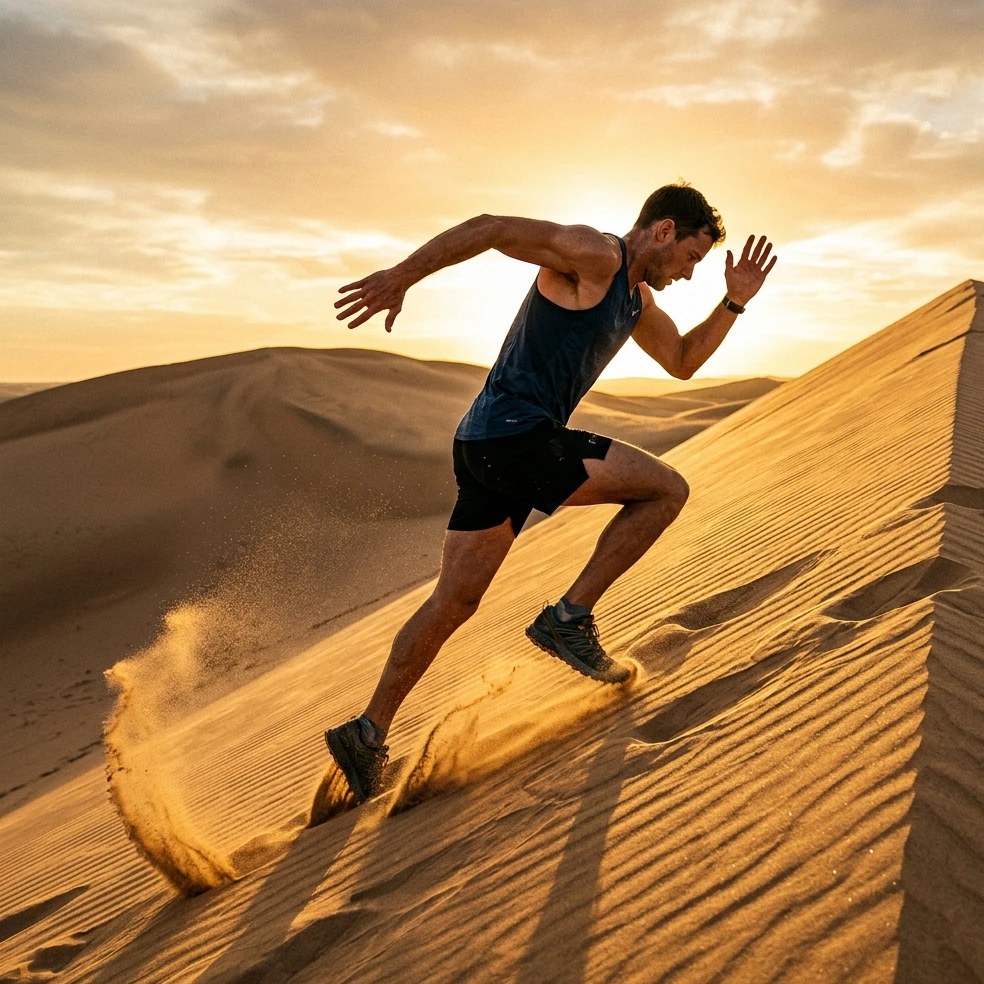
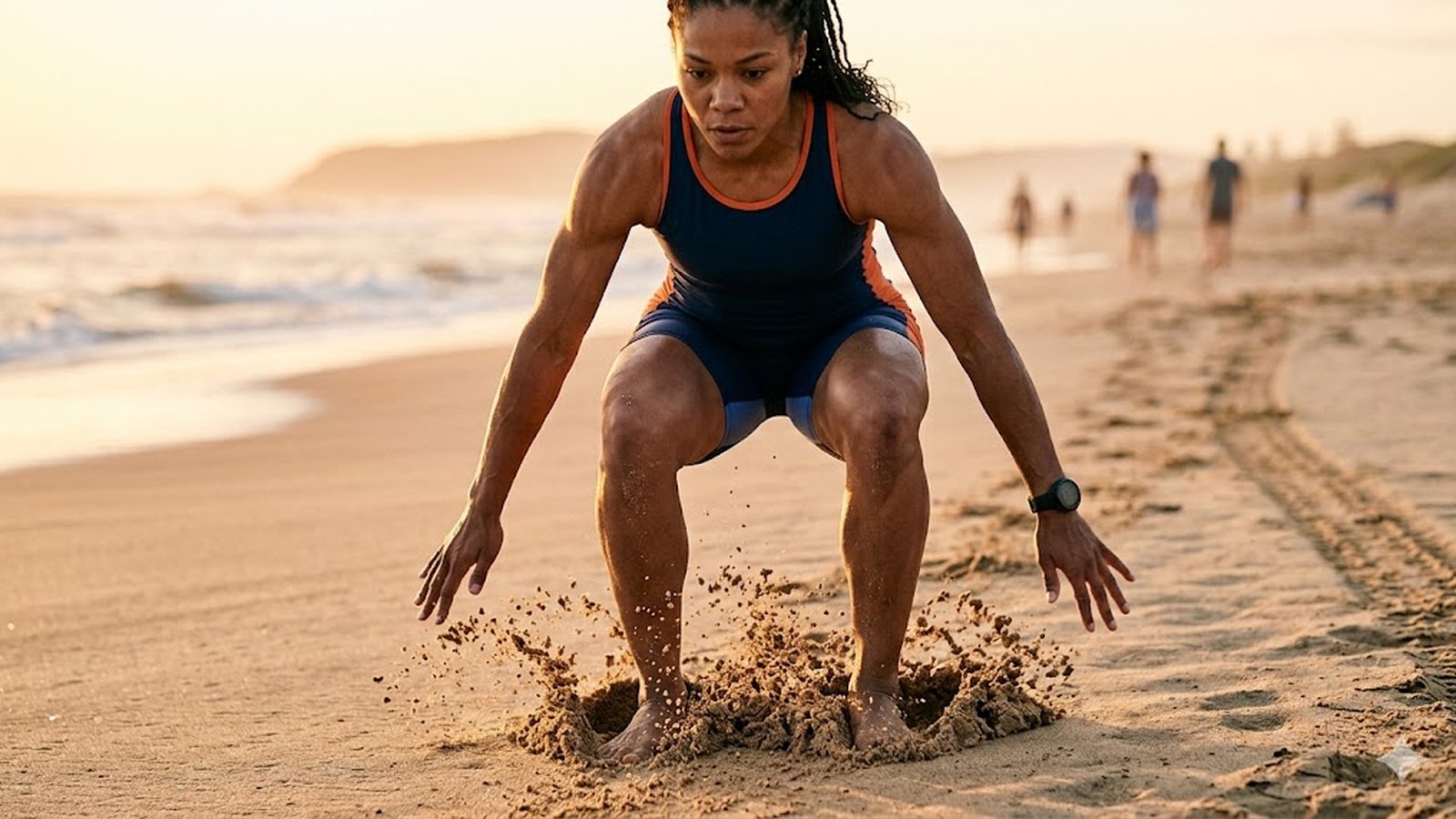
Plyometric training on uneven or yielding surfaces produces measurable adaptations in lower-limb power and ankle-joint stiffness Impellizzeri 2008. The popular claim that “sand plyometrics are safer than hard-surface plyometrics” is partially true: the soft surface reduces peak ground reaction forces by 25-50%, lowering immediate injury risk, but also reducing the elastic-energy return that drives the training adaptation Giatsis 2004. The sensible interpretation: sand plyometrics are an excellent introduction and rehabilitation tool but should not replace hard-surface jumps in athletes whose sport requires explosive ground contact.
What the evidence actually says
Impellizzeri compared a 4-week sand-based plyometric program against an equivalent grass-based program in soccer players. Both groups improved jump height and sprint speed, but the sand group reported significantly less muscle soreness and quadriceps tenderness during the program Impellizzeri 2008. The lower delayed-onset soreness reflects the lower eccentric loading on the yielding surface.
The trade-off shows up in performance specificity. Giatsis measured ground-reaction forces during identical jump tasks on hard ground vs sand. Sand reduced peak forces by 25-50% — protective for the joints, but it also means the lower-limb is being trained at a different intensity than competition demands Giatsis 2004. Beach-volleyball players adapt to and benefit from sand plyometrics directly because their sport is on sand. Land-sport athletes (basketball, soccer) need a mix.
How it actually works
Plyometric training drives adaptation via the stretch-shortening cycle: a rapid eccentric (lengthening) muscle action immediately followed by a concentric (shortening) action. The fast eccentric pre-loads the elastic components of the muscle and tendon, and the subsequent concentric action releases that stored energy Komi 2000. On hard ground, the ground reaction force during landing is high and brief, producing a strong stretch reflex. On sand, the ground deforms during the landing phase, dispersing some of the impact energy and slowing the transition between eccentric and concentric — a longer, gentler stretch-shortening cycle that develops different motor patterns.
“Sand training appears to be an effective alternative to grass training for plyometric exercises, with the additional benefit of less muscle soreness in the days after training.”
— Impellizzeri et al., British Journal of Sports Medicine, 2008 view source
The caveats people skip
The most common error in sand plyometric programming is excessive volume. Because perceived exertion per rep is lower (the soft landing feels easier), athletes often perform more total ground contacts than they would on hard ground. Total session ground contacts above 100-120 in beginners reliably produce calf and Achilles overuse symptoms within 2-3 weeks Davies 2015.
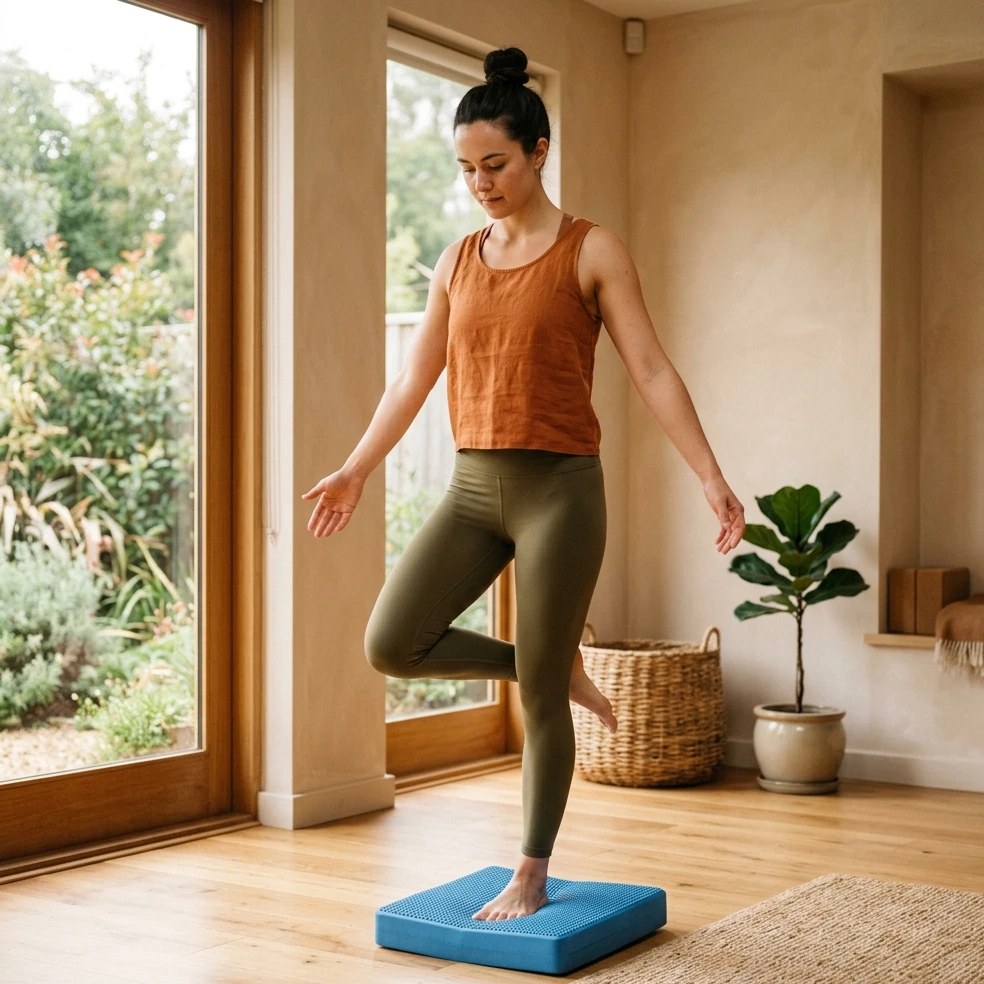
The second underdiscussed point is rotational injury risk. The yielding surface allows the foot to twist slightly during landing, which most athletes adapt to, but anyone with previous lateral ankle sprains or unrehabilitated meniscal issues should not perform single-leg plyometrics on soft sand without a proprioceptive base. Build the base on hard sand or grass first.
Practical takeaways
- Use sand plyometrics for introduction or recovery, not as a permanent replacement. The reduced impact is great for managing chronic load but reduces the stretch-reflex stimulus over time.
- Cap beginner sessions at 60-80 ground contacts. The lower per-rep stress is misleading; cumulative tissue load is similar.
- Skip single-leg plyometrics on soft sand if you have ankle-instability history. Rebuild proprioception on firm sand or grass first.
- For land-sport athletes, do 60-70% of plyometric volume on the surface you compete on. Specificity still matters; sand cannot fully replicate hard-court demands.
- Land softly with hip flexion. The temptation on sand is to land flat-footed because it feels safe; flat landings rob the stretch-shortening cycle of its main benefit.
References
Impellizzeri 2008Impellizzeri FM, Rampinini E, Castagna C, et al. Effect of plyometric training on sand versus grass on muscle soreness and jumping and sprinting ability in soccer players. British Journal of Sports Medicine. 2008;42(1):42-46. View source →Giatsis 2004Giatsis G, Kollias I, Panoutsakopoulos V, Papaiakovou G. Biomechanical differences in elite beach-volleyball players in vertical squat jump on rigid and sand surface. Sports Biomechanics. 2004;3(1):145-158. View source →Komi 2000Komi PV. Stretch-shortening cycle: a powerful model to study normal and fatigued muscle. Journal of Biomechanics. 2000;33(10):1197-1206. View source →Davies 2015Davies G, Riemann BL, Manske R. Current concepts of plyometric exercise. International Journal of Sports Physical Therapy. 2015;10(6):760-786. View source →