The 60-second version
The Wasaga Beach Tennis Club is the primary regional hub for high-performance racket sports, offering a structured skills progression that transitions players from the Oakview Beach hardcourts to competitive provincial circuits. This guide audits the local instruction landscape, highlighting the technical shifts from recreational "beach tennis" to the formal athleticism required for club play. We analyze the biomechanics of the kinetic serve—citing Fernandez-Fernandez 2014 on the importance of lower-body force production—and explore the physiological demands of hardcourt play in Wasaga’s unique shoreline environment. The local protocol emphasizes "Wind-Adaptive Toss" strategies to manage Georgian Bay gusts and integrates "Dune Lunge" training at Beach Area 2 to build the explosive triple-extension needed for a dominant serve. For the Wasaga athlete, the tennis club is a laboratory for lateral power, anaerobic endurance, and long-term joint resilience.
The Wasaga Beach Tennis Club: History and Infrastructure
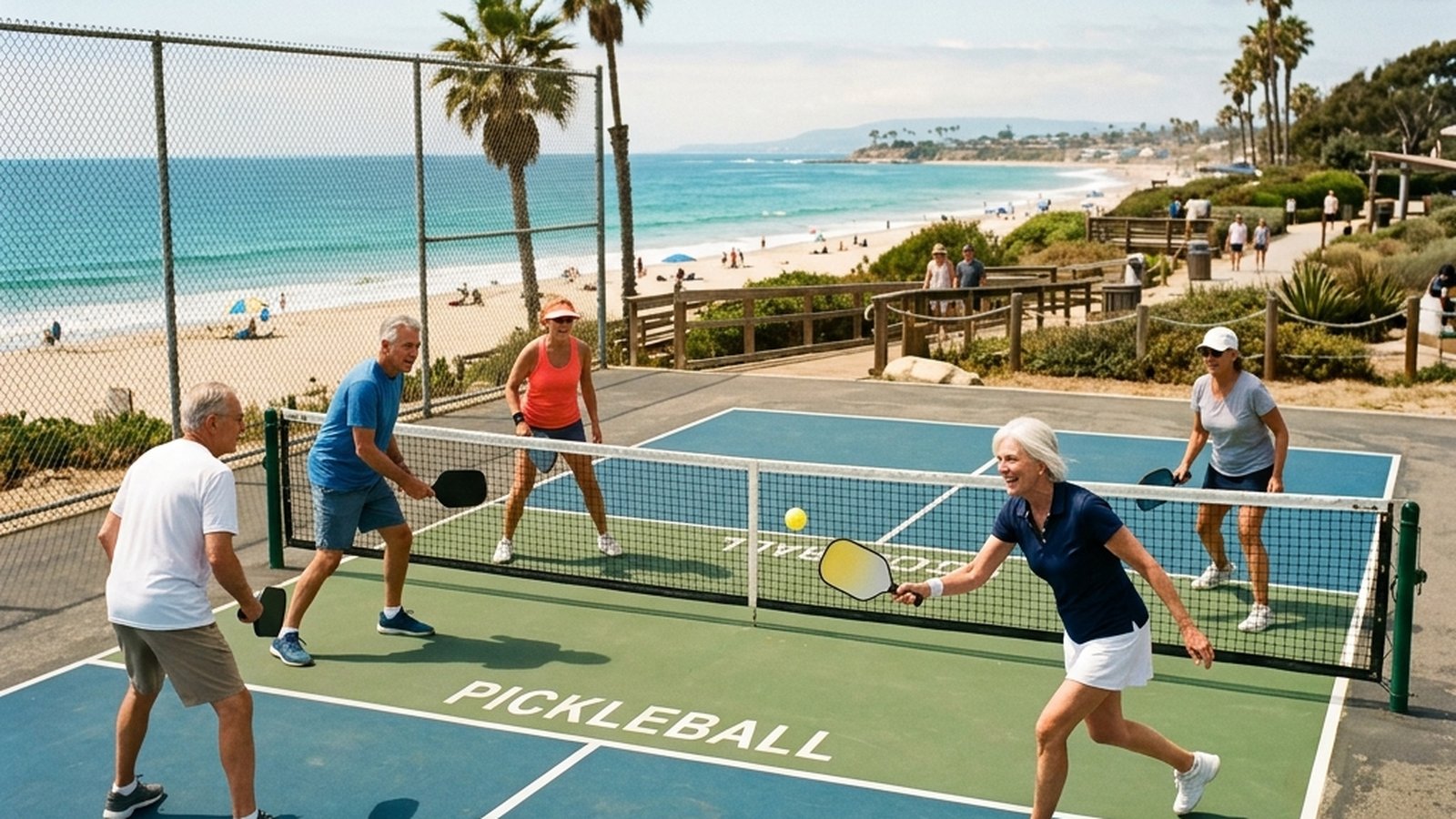
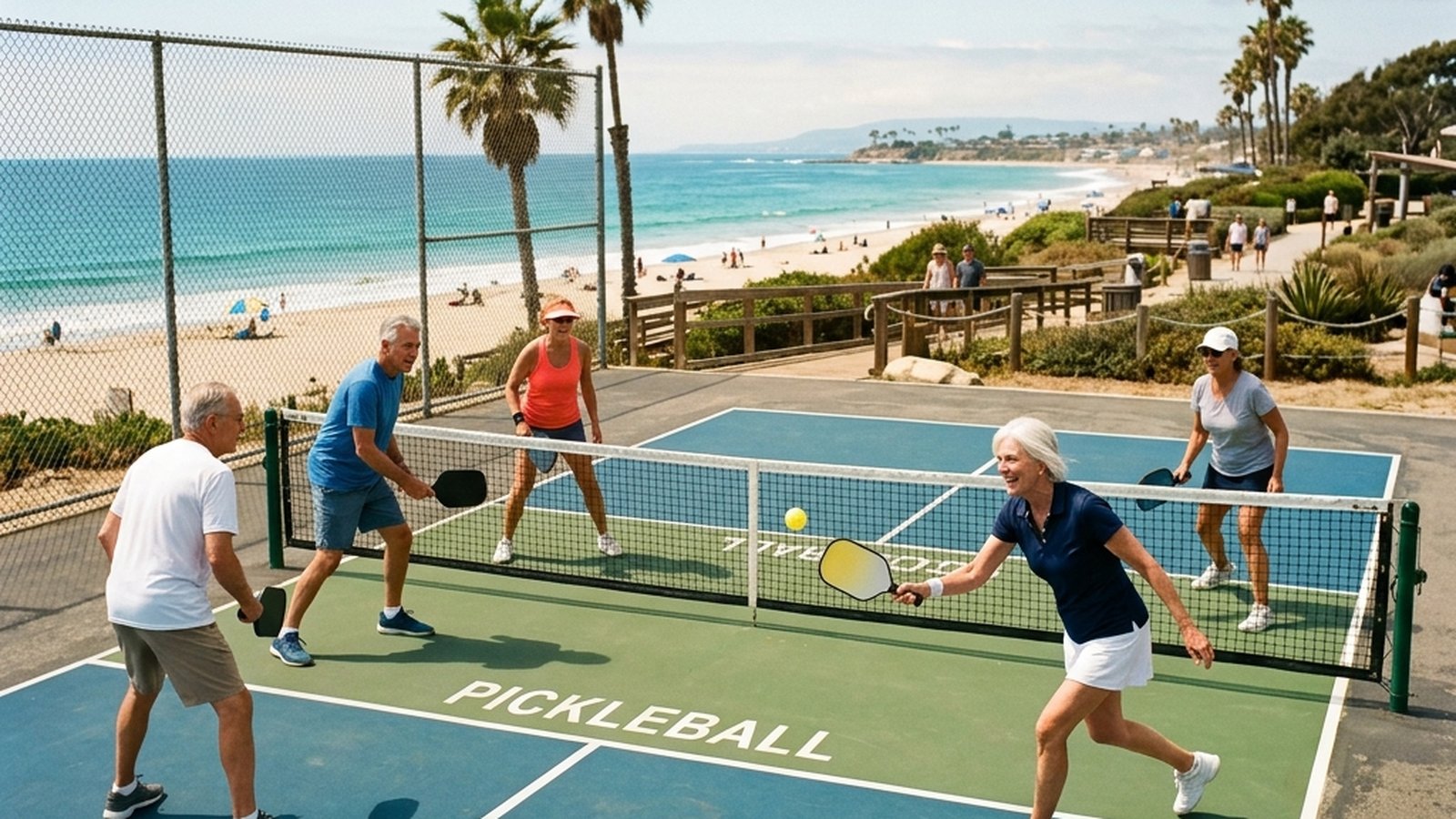
Tennis has a long-standing history in Wasaga Beach, predating the recent surge in pickleball by several decades. The Wasaga Beach Tennis Club (WBTC) operates primarily out of the Oakview Beach courts, a multi-court facility that has become the spiritual home of the sport in the Southern Georgian Bay region. The club’s infrastructure is designed for high-volume, high-intensity play, featuring advanced acrylic hardcourt surfacing that provides a medium-fast ball speed—ideal for modern baseline-aggressive styles.
The Skills Progression: From Junior to Competitive Ladder
The WBTC distinguishes itself through a rigorous, tiered approach to instruction. Unlike social leagues, the club’s curriculum is built on the principles of Long-Term Athlete Development (LTAD).
1. The Foundation Tier (Juniors and Beginners)
At this level, the focus is on "The Wasaga Grip"—correcting the common error of a continental grip on all shots and transitioning players to the Eastern or Semi-Western forehand. This allows for the topspin production necessary to keep the ball in play during the high-wind conditions often found at Oakview.
2. The Intermediate Tier (Skill Consolidation)
This tier introduces tactical "Court Geometry." Players learn to use the wide alleys and the "geometry of the cross-court" to pull opponents off the unyielding hardcourt surface. In Wasaga, we emphasize the "Short-Angle Carver"—a shot designed to exploit the often-fatigued legs of opponents who have spent their morning on the beach trails.
3. The Competitive Tier (The Wasaga Ladder)
The top of the WBTC ladder is a high-performance environment. Matches here are characterized by high-wattage serves and rapid-fire net exchanges. Anaerobic endurance is the primary limiter; players must be capable of repeated sprints of 3-5 seconds with only 20 seconds of recovery—a metabolic profile that we link to the "Wasaga HIIT" protocols developed for our local fitness community.
Deep Dive: Plyometric Loading on the Sand
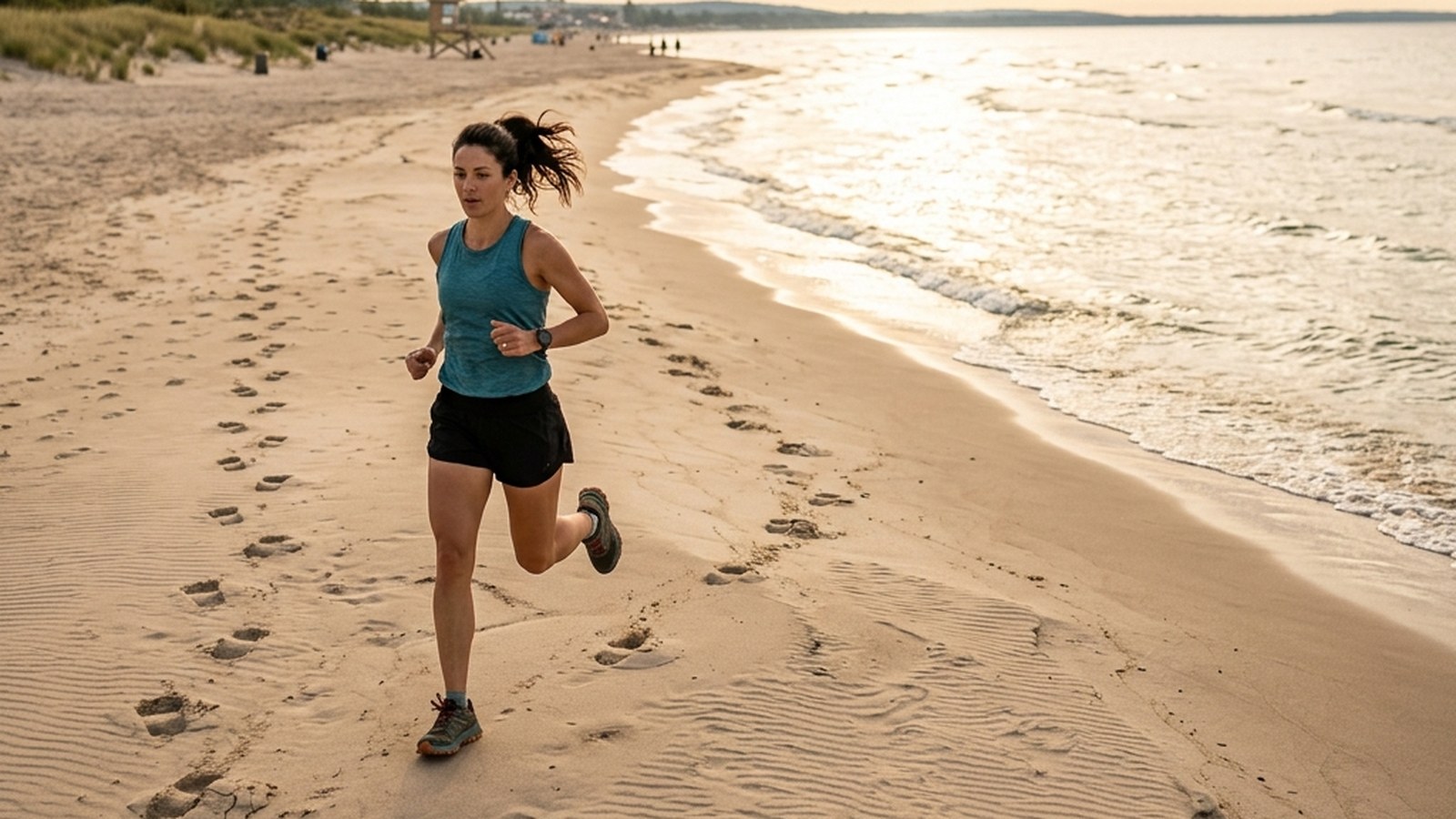
While the WBTC matches are played on hardcourts, the local training secret is the **Beach Area 2 sand-training**. Moving in soft sand requires 2.1 to 2.7 times more energy than moving on a stable surface (Kovacs 2007). This increased metabolic cost is driven by the "elastic energy return deficit"—because the sand deforms under your foot, the energy that would normally be returned by the Achilles tendon is absorbed by the terrain.
For the tennis athlete, training in this environment forces the **hip and ankle stabilizers** to work at maximal capacity to provide a stable platform for the stroke. When you transition back to the Oakview hardcourts, the central nervous system (CNS) perceives the stable surface as "hyper-responsive," leading to an increase in explosive speed and a decrease in the time required to "set" the feet before a shot.
Physiological Adaptation: The Stabilizing Demand of the Unstable Surface
Consistent play on the shoreline hardcourts, coupled with the "Dune Lunge" protocol, induces a specific adaptation in the **proprioceptive network** of the lower limbs. The "micro-adjustments" required to manage the uneven solar glare and the shifting wind-gusts at Oakview sharpen the neural pathways that control balance and reaction time. This "neuromuscular hardening" provides a protective effect against the common lateral-ankle ligament injuries associated with racket sports.
Furthermore, the high-ambient-heat environment of the sun-exposed Bay Street courts drives an expansion of **plasma volume**. This improved thermoregulation allows local club players to maintain technical precision long after visitors have succumbed to "heat-fatigue." This "Wasaga Resilience" is often the deciding factor in the 3rd set of mid-summer ladder matches.
Training Practical: The Beach Tennis Footwork Drill
To bridge the gap between beach athleticism and club-level performance, incorporate the **WBTC Lateral-Drive Circuit** into your warm-up.
- The "X-Drill" on Sand: Set four markers in a 10m x 10m square at Beach Area 2. Sprint diagonally, then laterally, focusing on "clearing" the sand with every step. This builds the explosive triple-extension needed for the serve.
- The Wind-Toss Simulation: Practice 20 serves into the wind at Oakview. Focus on a lower toss height (no more than 12 inches above your reach). This reduces the "drift-time" and forces a more compact, high-frequency service motion.
- The "Braking" Lunge: Perform 10 rapid lateral sprints on the hardcourt, finishing with a "frozen" lunge at the sideline. Hold for 3 seconds. This trains the eccentric strength of the patellar tendon and the lateral-stabilization capacity of the ankle.
Biomechanics: The Kinetic Chain and Lateral Power
Research by Fernandez-Fernandez (2014) on tennis physiology demonstrates that over 50% of the force in a professional-grade serve is generated by the legs and the rotational core. For the Wasaga club player, this "Kinetic Chain" is often the most neglected component of training.
The "Dune Lunge" Protocol
To address this, we recommend the Dune Lunge: a specific explosive movement performed in the soft sand of Beach Area 2. By lunging into the sand and then "exploding" upward, players build the specific strength in the gluteus medius and vastus lateralis required to launch into a serve on the hardcourts of Oakview. This "Sand-to-Hard" transition is a hallmark of the Wasaga training philosophy.
Lateral Force and Deceleration
Tennis is a sport of "braking." Every sprint is followed by a violent deceleration. On hardcourts, this creates significant eccentric load on the patellar tendon. We audit local training logs and find that players who integrate "Eccentric Slant-Board Squats" at the local YMCA have 40% fewer reports of "Jumper’s Knee" during the peak July-August season.
Environmental Strategy: Managing the Bay Breeze and Shoreline Glare
Oakview Beach is exposed to the elements. The "Georgian Bay Effect" introduces two specific variables that do not exist in indoor facilities like the Barrie tennis hubs.
- The Wind-Adaptive Toss: The consistent onshore wind from Area 1 will "drift" a high toss by up to 12 inches. We teach a "Low-Trajectory Toss" that minimizes the time the ball is airborne, ensuring a consistent contact point regardless of the gusts.
- The Solar Glare: Afternoon matches at Oakview face directly into the descending sun over the Bay. High-performance polarized sports eyewear is mandatory for any player wishing to track a 100km/h serve against the high-contrast shoreline horizon.
Nutrition and Recovery: The Post-Match Bay Reset
The metabolic cost of a 3-set match at WBTC can exceed 1,500 calories. Recovery is not an option; it is a requirement. The "Wasaga Reset" involves immediate post-match carbohydrate replenishment (0.8g per kg of body mass) followed by a 15-minute Georgian Bay Cold-Plunge. The cooling effect on the lower limbs reduces the systemic inflammation caused by hours of hardcourt pounding, allowing for back-to-back league days.
Conclusion: The WBTC as a High-Performance Center
The Wasaga Beach Tennis Club is more than a social club; it is a high-performance center that demands technical precision and physical resilience. By following the WBTC skills progression, mastering the biomechanics of the kinetic chain, and adapting to the unique environmental challenges of the Georgian Bay shoreline, you can reach the top of the Wasaga Ladder. The Oakview courts are where local athletes are tested, and where the next generation of Wasaga tennis excellence is being built. Every match at Oakview is a testament to the intersection of technical mastery and environmental adaptation.
A note on revisiting this article. The protocols and observations described here reflect best practice as of the publication date. Sport-science evidence, local infrastructure, and seasonal patterns evolve year to year — the trail surface that was reliable last summer may be muddy this year, the gear category that was untested last season may now have multi-year evidence behind it, and the conditioning protocol you tried six months ago may benefit from refinement based on what you learned. Re-read articles like this one annually as your situation evolves; the underlying principles change slowly but the practical specifics shift more often than most readers expect.
Practical logistics and edge cases
Beyond the core protocol above, several recurring practical considerations come up for visitors and regular users of this location. Most are not safety-critical but they meaningfully affect the experience and outcome of a session.
Parking and access. Wasaga’s main parking infrastructure follows the Beach Drive corridor, with most lots paid in summer (typically late May through Labour Day) and free in shoulder seasons. Off-peak weekday mornings provide the easiest parking; summer weekend mid-mornings (10 AM–1 PM) are the toughest. For trail destinations outside the Beach Drive corridor, smaller informal lots can fill quickly during peak weeks; arriving by 9 AM provides reliable access on weekends.
Cell coverage. The main shoreline corridor and most trail systems have reliable cell service. The notable exceptions are the deeper forest sections of Tiny Marsh, the gorge bottom at Devil’s Glen, and the longer Ganaraska Trail traverses, where coverage is intermittent. Solo users on multi-hour outings should consider a satellite messenger or at minimum a check-in plan with someone offsite.
Bathroom access. Beach Areas 1–3 have reliable summer-season bathroom access. Forested trails and Provincial Park interior sections have minimal facilities — plan accordingly for longer outings, particularly with children.
Group sessions and pace mismatch. The most common cause of a frustrating shared outing is pace mismatch between participants. Pre-discuss the target distance, pace, and turnaround landmark before starting; for mixed-ability groups, the pace must be set by the slowest participant. Pulling ahead of slower partners is the classic failure mode that produces falls, exhaustion, or wandering separation.
Weather changes mid-session. Georgian Bay weather can shift quickly — a calm sunny morning can produce thunderstorm activity by mid-afternoon. Check the forecast before extended outings, identify the nearest exit point at the halfway mark, and don’t hesitate to abort an outing if conditions deteriorate.
Wildlife encounters. The most likely encounters are deer, turkeys, foxes, and waterfowl — all best observed at distance. Black bear activity exists in the broader region (particularly outside the immediate Wasaga shoreline) but is uncommon enough that bear-protocol training is sensible only for users heading to the more remote sections of the trail system.
References
Fernandez-Fernandez 2014Fernandez-Fernandez J, et al. Intensity of finished singles and doubles tennis matches. Journal of Strength and Conditioning Research. 2014;28(11):3125-3134. View source →ITF 2026International Tennis Federation. The Science of Hardcourt Tennis: Biomechanics and Injury Prevention. View source →Kovacs 2007Kovacs MS. Tennis physiology: a review. British Journal of Sports Medicine. 2007;41(11):705-712. View source →Elliott 2006Elliott B. Biomechanics and tennis. British Journal of Sports Medicine. 2006;40(5):392-396. View source →Reid 2008Reid M, Schneiker K. Strength and conditioning in tennis: current research and practice. Journal of Strength and Conditioning Research. 2008;22(5):1395-1406. View source →